 Nominated for the EMYA2026 award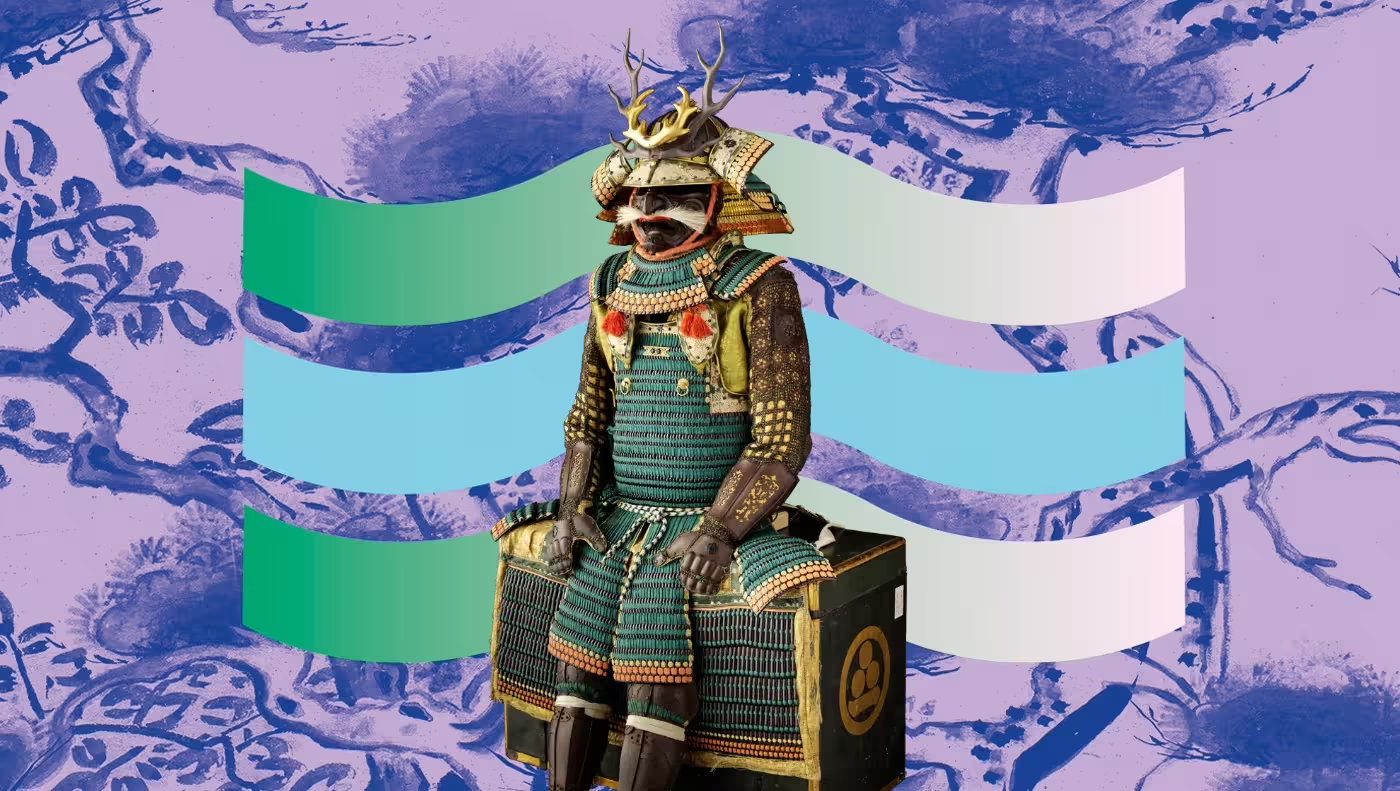
On 9 August 1543, Japanese warfare changed forever. Portuguese traders landed on the island of Tanegashima, bringing two arquebus muskets with them. Within months the first Japanese copies were being made. Within decades, Japan had more firearms than any European nation.
What is Tōsei Gusoku?
Tōsei Gusoku (当世具足 — “modern complete armour”) is the umbrella term for the modern plate armours of the Sengoku and Edo periods, which replaced the lamellar systems of the Ō-Yoroi. The decisive feature: solid iron plates instead of small lamellae. Whereas the Ō-Yoroi consisted of hundreds of small lamellae joined by cords, the Tōsei Gusoku used larger, often one-piece plates — horizontally stacked strips (Yokohagi Okegawa) or vertical half-plates (Tatehagi) — joined by hinges or flaps.
Absolon describes the engineering advance: the hinges made it possible to firmly join solid plates to one another without sacrificing mobility.
The Answer to the Arquebus: Tameshi Gusoku
The most important innovation of the Tōsei Gusoku was the Tameshi Gusoku — the bullet-tested armour. The Tameshi (bullet test) was a proofing procedure: the smith fired an arquebus at the finished breastplate and documented the result on the inside. If the dent was small and the plate held, the bullet-test stamp was applied: date, place, distance, result. Absolon describes these stamps as the most honest certificates of quality that an armour could bear.
The Bear Fur: More Than Decoration
The armour in display case C16V bears something unusual: black bear fur on the breastplate. In the Sengoku period, when battles increasingly took place amid smoke, dust and chaos, recognisability became a matter of survival. Unusual materials — bear fur, deer antlers as helmet crests — made commanders unmistakable on the battlefield.
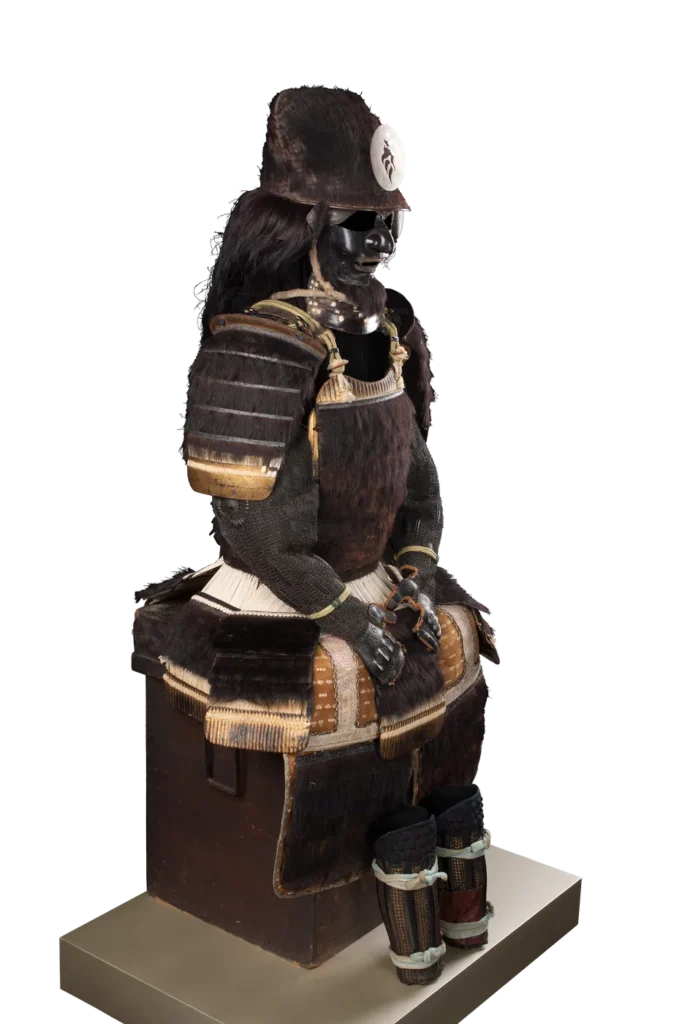
The bear fur signalled strength and rawness — a deliberate provocation: I am the one you should be afraid of. In practical terms it also protected the underlying metal structure from direct rain.
The Myōchin School and the Tōsei Gusoku
The Myōchin school began as helmet specialists in the Heian period and developed into generalists for all armour components. In the Sengoku period, Myōchin armours were so renowned for their quality that patrons commissioned them from all over Japan. Their characteristic hallmark: the Suji-Kabuto (ribbed helmet) with clearly visible ridges between the plates.
Weight and Mobility: The Comparison with Europe
A common misconception: that Japanese armour was much lighter than European armour. Absolon corrects this with data: a complete Tōsei Gusoku could weigh 20 to 25 kilograms — comparable to European field armour of the 16th century. The difference lay in the distribution of weight: European plate armour concentrated the weight on the shoulders and chest; the Japanese construction with hip armour and hinge technology distributed the weight more onto the hips and allowed better mobility.
Okashi Gusoku: Armour for the Masses
Okashi Gusoku — loan armour from the lord’s arsenal — was issued to ashigaru (foot soldiers). This armour was more simply constructed, but similar in its essential protective functions. This democratisation of armour protection was one of the profound changes of the Sengoku period.
Nanban Dō: The European Influence
Along with the trade that brought the arquebus to Japan came another armour design: the Nanban Dō — the “Southern Barbarian cuirass”. Japanese smiths copied the characteristic central ridge of European breastplates and developed from it a breastplate that combined both the Japanese craft tradition and the European principle of deflection.
Kawari Kabuto: The Helmet of the Tōsei Gusoku
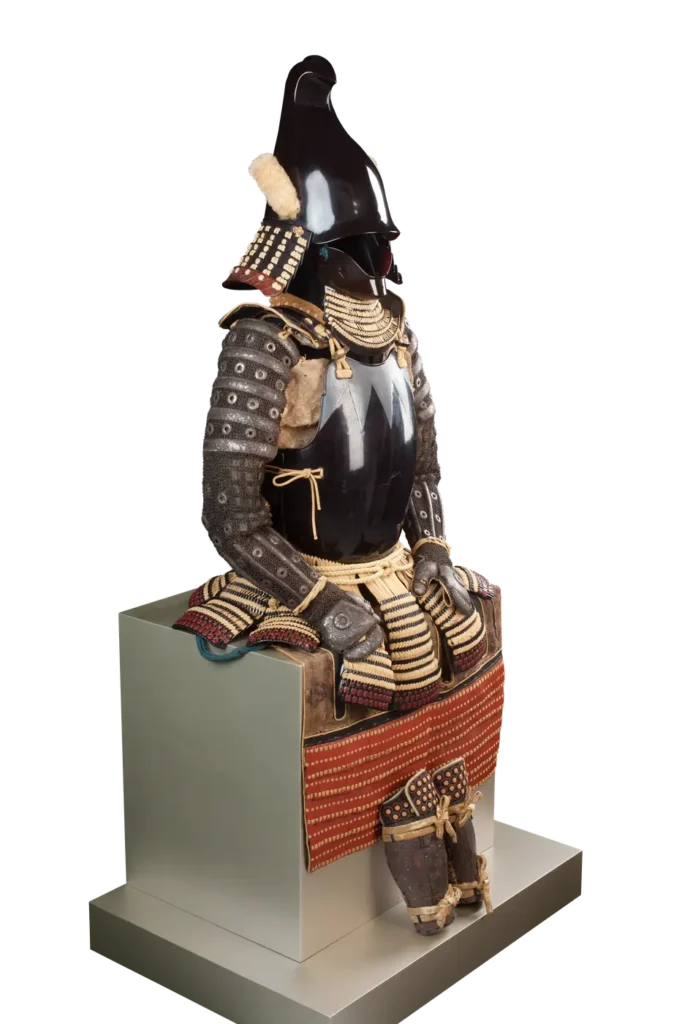
The Kawari Kabuto — the “extraordinary helmet” — is the most theatrical element of the Tōsei Gusoku aesthetic. Deer antlers of leather or wood, gilded shell shapes, enormous fan-shaped crests, animal motifs of lacquered paper — the Kawari Kabuto of the Sengoku period are the most intense expression of the Basara aesthetic. The purpose was pragmatic: recognisability on the battlefield.
Obata Nobusada and the Genuine Marks of Combat
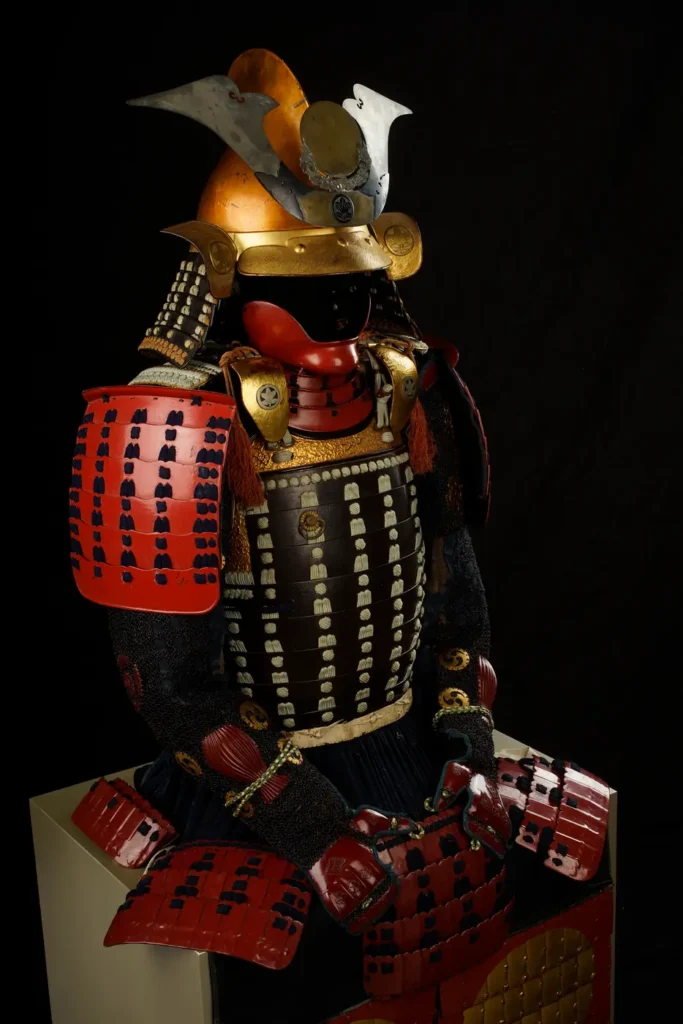
One of the most revealing armours of the Samurai Museum Berlin is found in display case C05H: the dō of Obata Nobusada (1540–1592), a feudal lord from Kōzuke Province who served under Takeda Shingen. This breastplate may indeed have been worn in actual battles. The crackling in the lacquer surface is either a sign of ageing or genuine wear from combat use.
Frequently Asked Questions about the Tōsei Gusoku
What does Tōsei Gusoku mean?
Literally “modern complete armour” (当世具足). The term denotes the modern plate armours of the 16th and 17th centuries, which replaced the lamellar systems of the Ō-Yoroi.
Why was the Ō-Yoroi replaced by the Tōsei Gusoku?
Primarily through the introduction of the arquebus (1543): lamellar armour offered insufficient protection against lead bullets. At the same time, warfare changed from mounted individual combatants to mass infantry — which required a lighter, more mobile construction.
What is Tameshi Gusoku?
Bullet-tested armour. The smith fired at the finished breastplate and documented the result on the inside. The bullet-test stamp was the most honest certificate of quality that an armour could bear.
How heavy was a Tōsei Gusoku?
20 to 25 kilograms — comparable to European field armour. The distribution of weight through hip armour and hinge construction, however, allowed better mobility than that of European counterparts.
Visit the Samurai Museum Berlin
Display case C16V of the Samurai Museum Berlin shows a complete Sengoku-period Tōsei Gusoku with black bear fur — solid iron plates, hinge construction, an armour concept for the age of firearms. Open daily from 10 a.m. to 7 p.m., Auguststraße 68, Berlin-Mitte.
Related Articles
- Ō-Yoroi: The Great Armour of the Heian Samurai
- Dō: The Breastplate of the Samurai
- Kabuto: The Helmet of the Samurai
- Sengoku Jidai: The Age of the Warring Provinces
List of Sources
- Absolon, Trevor (2017): Samurai Armour, Volume I: The Japanese Cuirass. Osprey Publishing.
- Sakakibara Kōzan (1800/1962): The Manufacture of Armour and Helmets. Translated by Robinson.
- Turnbull, Stephen (2022): War in Japan 1467–1615. Osprey Publishing.
- Samurai Museum Berlin (2021): Armours of the Samurai.
© Samurai Museum Berlin – All rights reserved
You might also like
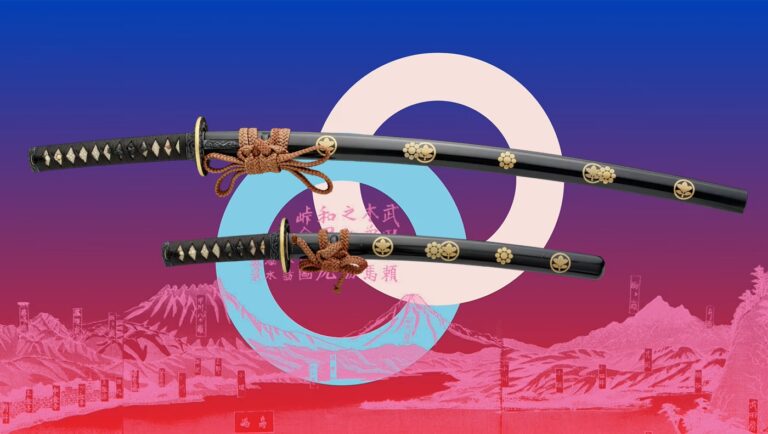
Daishō: The Pair of Swords of the Samurai — Symbol and Meaning
The daishō – two swords, one status badge. History, symbolism & craftsmanship of the samurai pair of swords, with originals…
Read the article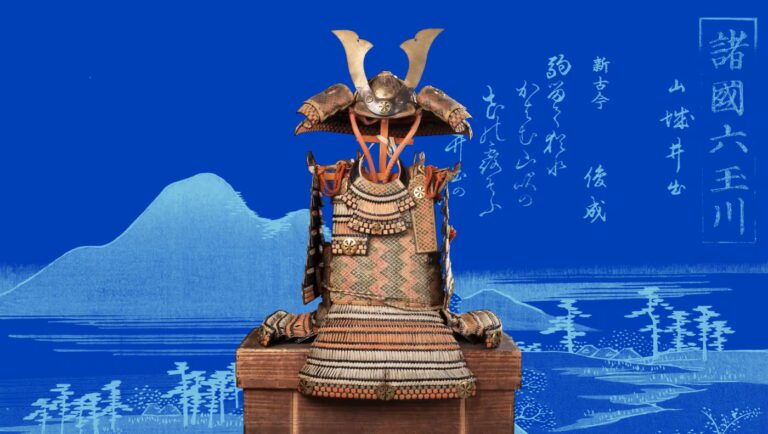
Ō-Yoroi: The Great Armour of the Heian Samurai
Ō-Yoroi – the great armour of the Heian samurai. Not decoration, but a machine for the mounted archer. History &…
Read the article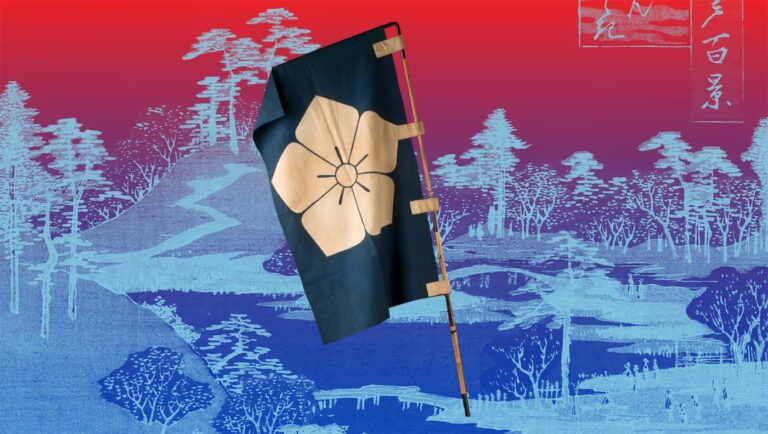
Sashimono: The Back Banners of the Samurai
Sashimono — the back banners of the samurai. History, function, motifs, clans. Authentic examples at the Samurai Museum Berlin.
Read the article