 Nominated for the EMYA2026 award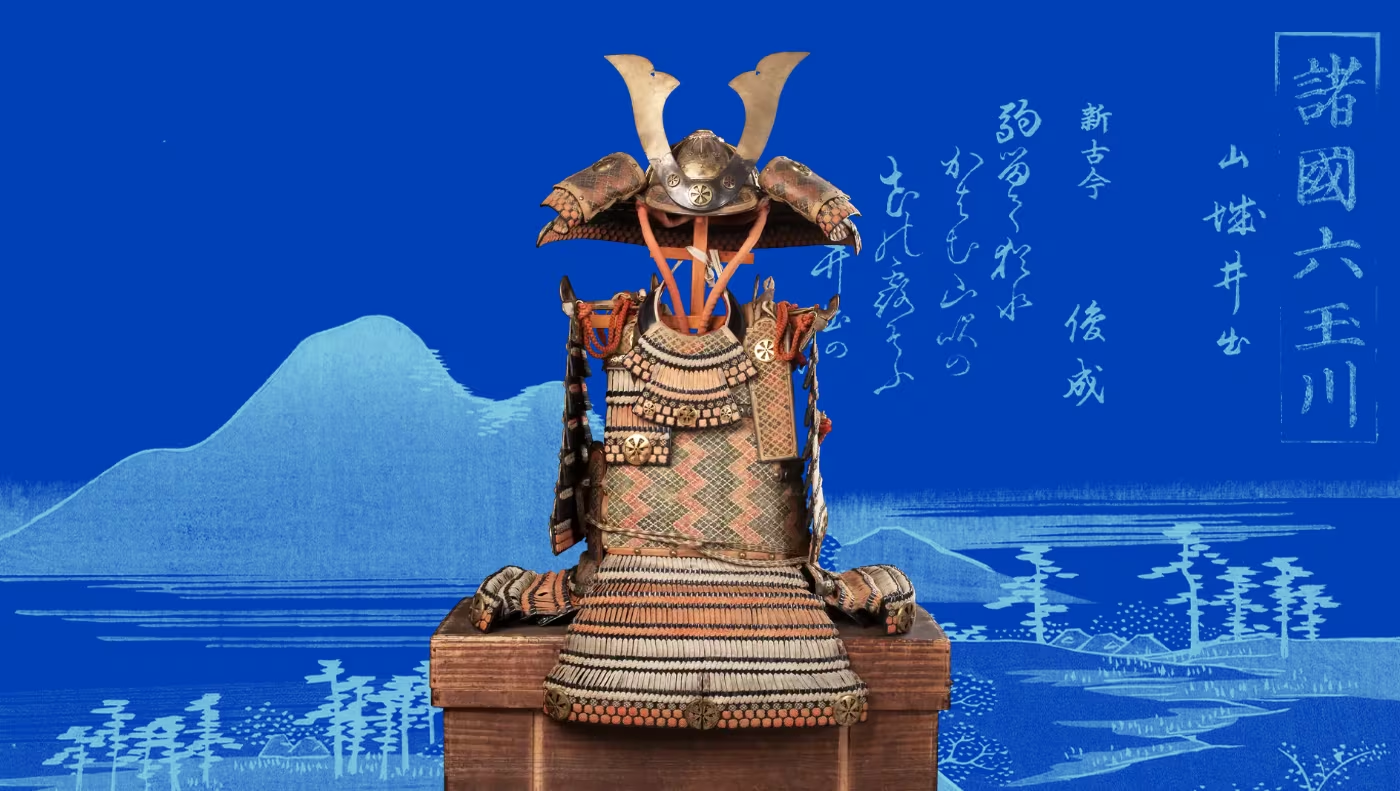
Anyone who looks at an Ō-Yoroi today sees opulence: hanging shoulder plates as broad as shields, gleaming silk cords, lacquered iron lamellae in geometric patterns. It is the most iconic image of samurai aesthetics.
Anyone who understands it sees something else: a machine for an archer on horseback.
The Ō-Yoroi was not built for sword combat. The broad Ō-Sode — the sweeping shoulder plates — served as mobile shields while shooting from horseback. The open underside and the loose connection of the plates allowed the upper body to turn freely in the saddle. On foot it was unwieldy, heavy, ill-suited to quick movement. As armour for the mounted archer, it was a masterpiece of functionality.
Karl Friday puts it precisely: “The o-yoroi was a magnificent piece of technology… but it was a specialized tool for a specific type of warfare: mounted archery. As a suit for infantry melee, it was a liability.” (Friday 2004, p. 95)[1]
Construction: Kozane and Odoshi
The basic principle of the Ō-Yoroi is lamellar construction: hundreds of small iron scales (Kozane) or leather scales (Nerigawa-Kozane) are individually lacquered, pierced, and then joined into larger panels with silk cords (Odoshi).
The joining technique is complex. Each lamella has holes drilled along its upper and lower edges. The cords connect the lamellae horizontally and vertically — in a pattern that varies by style (Kebiki-Odoshi, Sugake-Odoshi, etc.). The result is a flexible, multi-layered scale-armour system that deflects blows and arrows without being rigid.
Absolon stresses the functional importance of the lacing: it is not decoration — it distributes the force of a blow across the entire plate surface. A poorly laced armour became structurally unstable under stress, even if the individual lamellae were perfect.[2] Sakakibara Kōzan, whose manual on armour-making was the standard work of the 19th century, describes the lacing technique as the most demanding craft element of the entire armour production.[3]
The Ō-Sode: shields, not shoulder plates
The most striking element of the Ō-Yoroi are the Ō-Sode — the large shoulder plates, broader than the wearer’s shoulders.
Western observers often interpret them as shoulder pieces or decoration. Their function is more precise: they are mobile shields for the arms during mounted archery. When a warrior draws back and looses an arrow, the Ō-Sode move with him and protect the upper and lower arm from arrows.
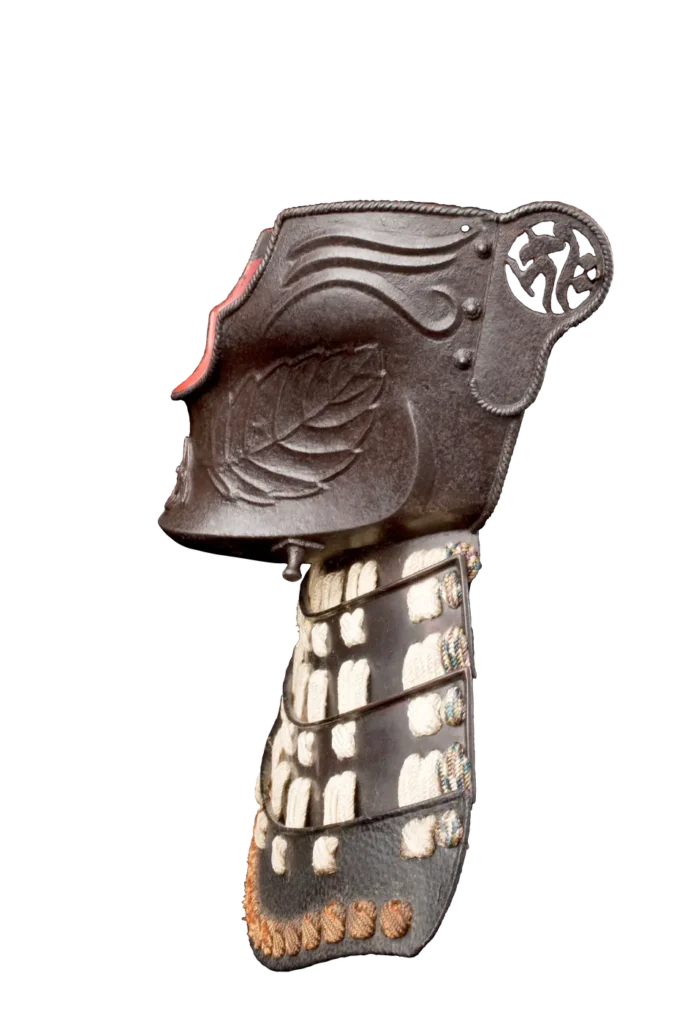
On foot, the same element is a hindrance: the broad plates restrict arm movement, collide with the helmet during quick sword strokes, and create leverage points for opponents. As warfare shifted to mass infantry in the Muromachi period, the Ō-Sode were made smaller or omitted entirely.[1]
Material: iron, leather, lacquer — no bamboo
One of the most persistent misconceptions about Japanese armour concerns the material.
Absolon refutes it directly: “The idea that Japanese armour was made of wood or bamboo is arguably the most common misconception… In reality, iron and leather were the only primary materials used for the construction of the armour plates themselves.” (Absolon 2017, p. 28)[2]
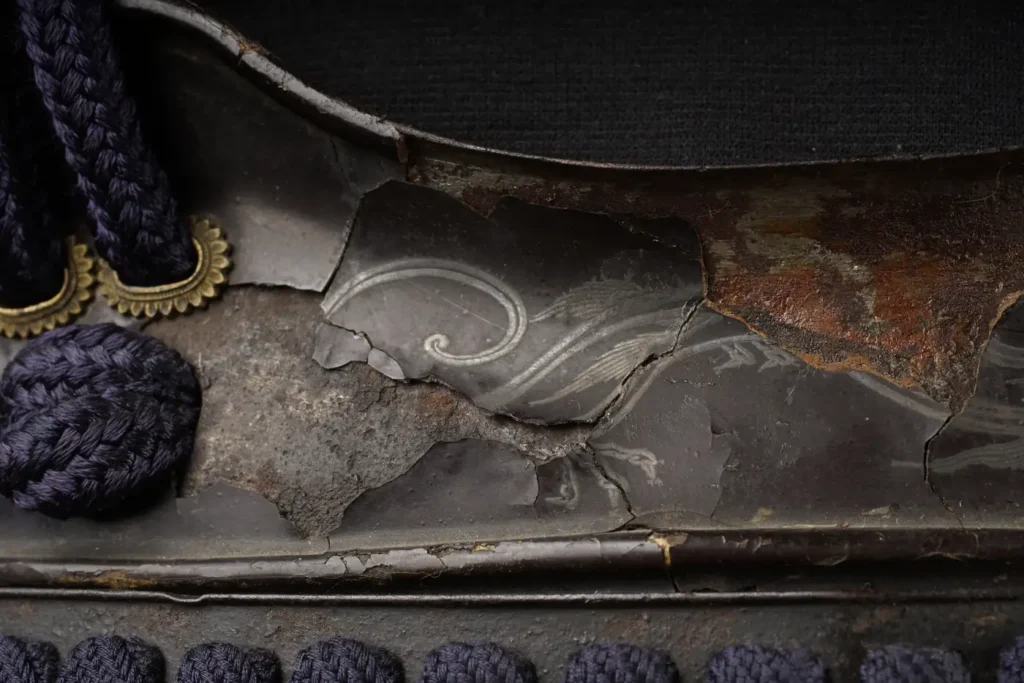
Bamboo was used in Japan for scabbards, grips, bows, and countless other things — but not for armour lamellae. The lamellae were made of iron or of Nerigawa — hardened, pressed leather that, through lacquering, could become as hard as thin metal. Urushi lacquer had a dual function here: it protected the iron from Japan’s humid climate and gave the armour its characteristic glossy surface.
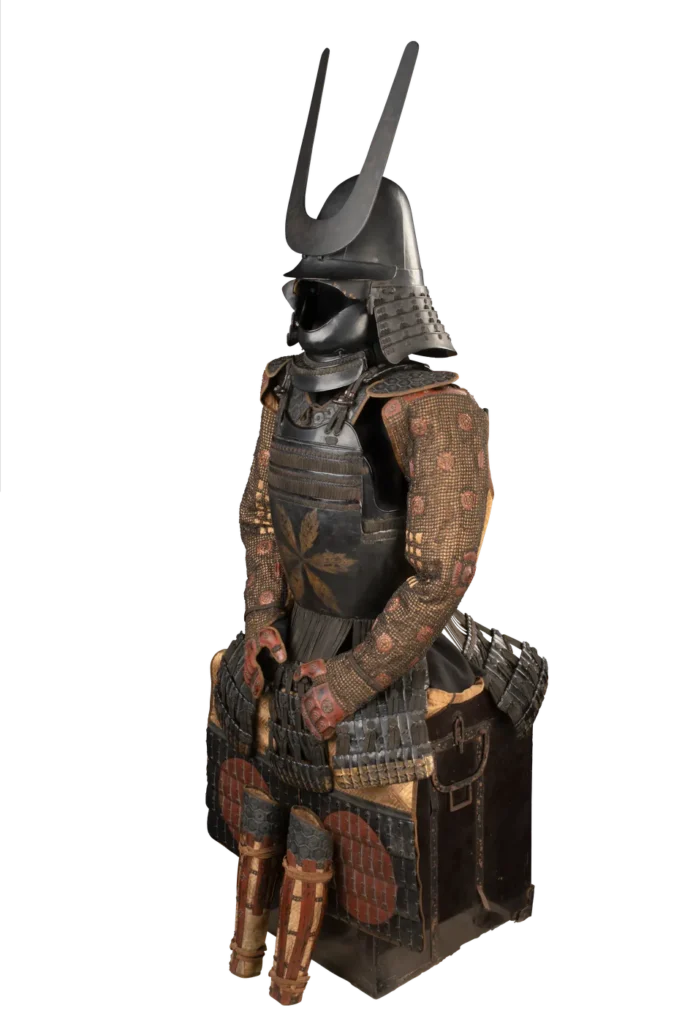
The replica of an Ō-Yoroi in display case C02V of the Samurai Museum Berlin shows this materiality directly: black-lacquered iron plates, silk cords, gilded fittings. The weight of a complete armour of this type was up to 40 kilograms.
Rebirth in the Edo period
The Ō-Yoroi disappeared as combat armour with the transition to mass infantry and the arquebus. It experienced a rebirth in the peace of the Edo period.
As the SMB catalogue describes: nostalgic samurai longed for the heroic battles of their ancestors. Armourers of the Myōchin school met this demand and produced near-perfect reproductions in the style of the archaic Ō-Yoroi — for parades, ceremonies, representation.[4]
The example in display case C02V is one such reproduction: made in the 19th century by armourers of the Myōchin school, following the style and construction of a genuine Heian–Kamakura armour. The black-lacquered Suji-Kabuto belongs to it: with a striking pair of horns as helmet ornament.
This is not deception. It is craft tradition: smiths preserving knowledge that no longer had a military function — because the knowledge itself was worth preserving.
The Ō-Yoroi in social context: class in iron
In the Heian period, a complete Ō-Yoroi was the equivalent of a modern sports car: it signalled wealth, status, and membership in the elite of the warrior class. A high-ranking samurai without proper armour was unthinkable.
As the Cambridge History of Japan documents, the samurai class in the Heian period was not yet a strictly defined caste but a functional elite: men who could fight and were paid for that ability. The Ō-Yoroi was the visible symbol of this function — to wear it was to say: I am one of those who fight.[5]
The silk cords (Odoshi) of the Ō-Yoroi were not arbitrary: cherry-blossom Odoshi, plum patterns, red or purple cords — every colour combination carried a social meaning that contemporaries read instantly.
The Genpei War and the Ō-Yoroi in action
The classic Ō-Yoroi faced its first great test in the Genpei War (1180–1185) — the civil war between the Taira and the Minamoto that founded the first shogunate.
The Heike monogatari describes at length the image of the mounted warrior in his Ō-Yoroi: announcing his name, reciting his ancestors, riding toward the enemy, loosing arrow after arrow until one strikes or the quivers are empty. Then, perhaps, the sword.
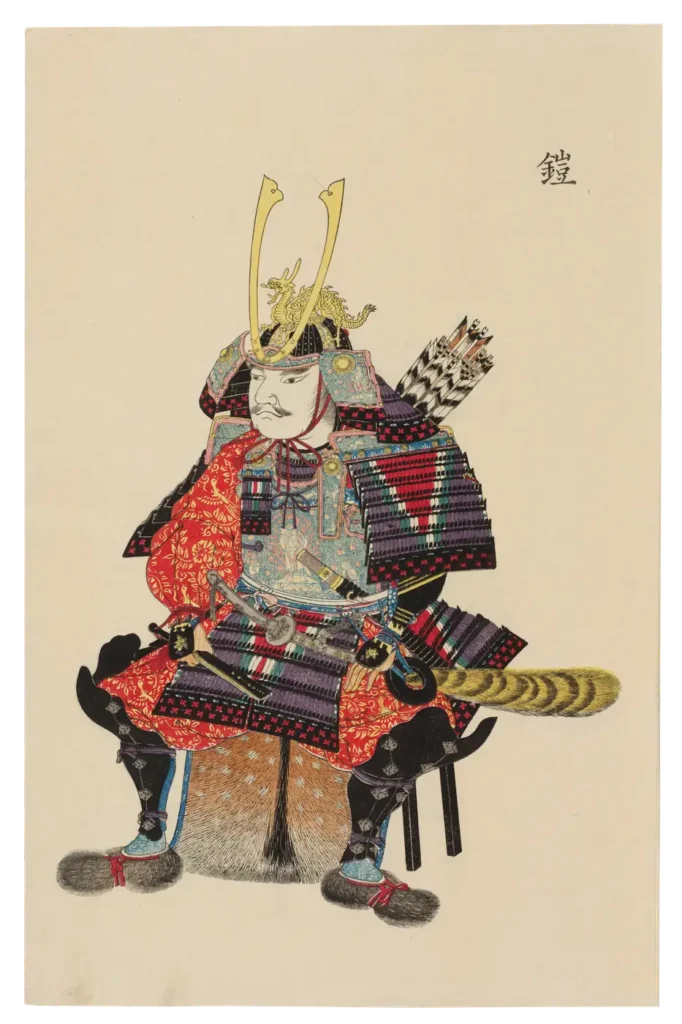
In his study of the war tales, Varley analyses how the Heike monogatari transforms these battles into literature: the real tactics — volleys of arrows, group formations, ambushes — become an aesthetic staging of single combat.[6] The Ō-Yoroi in these stories is at once prop and marker of identity.
What research shows today: Conlan’s wound analyses from the 14th century prove that arrow wounds dominated, not sword wounds. The aestheticised version of the Heike monogatari is a literary construct. But the Ō-Yoroi was real — and perfectly suited to the tactics of arrow combat.[2]
From archer’s armour to status object
In the Muromachi period (1336–1573), the decline of the Ō-Yoroi as combat armour and its rise as a status symbol began.
With the transition to mass infantry, the sweeping Ō-Sode became a problem: they hindered the arm when using the spear and were dangerous in the dense press of an infantry battle. The Dō-maru and the Haramaki — more compact, lighter, without large shoulder plates — replaced the Ō-Yoroi as combat armour.
At the same time, the Ō-Yoroi remained as a ceremonial object. At processions, audiences at court, important rituals — there a high-ranking warrior continued to wear the magnificent old armour, even though he no longer used it in battle. It became the iconic costume of a romanticised warrior past.
The Edo-period rebirth of the Ō-Yoroi by smiths such as the Myōchin school is the end product of this transformation: armours made as art objects, for samurai who would never wear them in battle. Perfect craft reproductions of a system that had lost its functional context.
The example in display case C02V of the Samurai Museum Berlin is one such Edo-period reproduction. It is authentic in its craftsmanship — and historical in the time of its making. It documents both the technique of Heian armour and the nostalgia that revived it in the 19th century.
The weight of the Ō-Yoroi
A complete Ō-Yoroi weighed up to 40 kilograms. That sounds like a lot — and it is, for European notions of samurai armour, which is often described as light and elegant.
Absolon puts it in perspective: European field armour of the 15th and 16th centuries weighed 20 to 25 kilograms. The Ō-Yoroi was in a comparable range.[1] The difference lay in distribution: European armour concentrated weight on the shoulders and chest; the Ō-Yoroi distributed it differently through its lamellar structure.
For a mounted warrior who fought from horseback, the weight was less of a problem: the horse carried it. When warfare shifted to fighting on foot, the weight became a real problem — another reason for the transition to lighter infantry armour.
Frequently asked questions about the Ō-Yoroi
What does Ō-Yoroi mean?
Literally “great armour”. The term distinguishes this elaborate armour from simpler variants such as the Dō-maru or Haramaki, which were developed for foot soldiers.
When did the Ō-Yoroi fall out of use?
As combat armour, it lost its primary function with the transition to mass infantry in the Muromachi period (14th–15th century).
Was the Ō-Yoroi really built for archery combat?
Yes. Friday and Absolon agree: the broad Ō-Sode (shoulder plates) protect the arms while shooting from horseback. The loose construction allows the upper body to turn in the saddle. On foot it was unwieldy.
Visit the Samurai Museum Berlin
A replica of an Ō-Yoroi in display case C02V shows the complete construction of this type of armour. Open daily from 10 a.m. to 7 p.m., Auguststraße 68, Berlin-Mitte.
Related articles
- Kabuto: The Helmet of the Samurai
- Tōsei Gusoku: The Modern Samurai Armour
- Dō: The Cuirass of the Samurai
- Yumi & Ya: The Bow of the Samurai
Show sources
[1] Friday, Karl F. (2004). Samurai, Warfare and the State in Early Medieval Japan. Routledge. Used: o-yoroi as archer’s armour (pp. 92–95).
[2] Absolon, Trevor (2017). Samurai Armour, Volume I: The Japanese Cuirass. Osprey Publishing. Used: material debunking (p. 28), composite construction, lacing.
[3] Sakakibara Kōzan (1800/1962). The Manufacture of Armour and Helmets. Translated by Robinson. Used: lacing technique, construction details.
[5] Shively, Donald H. & McCullough, William H. (eds.) (1999). The Cambridge History of Japan, Vol. 2: Heian Japan. Cambridge University Press. Used: samurai as elite, Ō-Yoroi as status marker.
[6] Varley, H. Paul (1994). Warriors of Japan as Portrayed in the War Tales. University of Hawaii Press. Used: literary depiction of the Ō-Yoroi in the Heike monogatari.
[4] Samurai Museum Berlin (2021). Armours of the Samurai. Display case C02V (Ō-yoroi, Myōchin school, 19th c.); display case C03V (Hoshi Kabuto).
You might also like
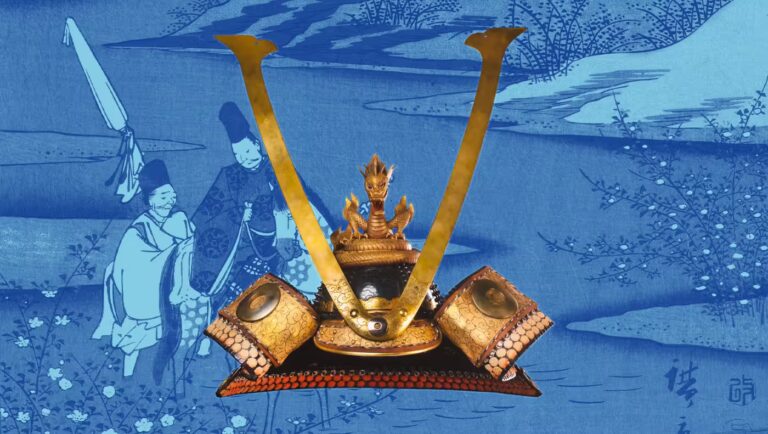
Kabuto: The Helmet of the Samurai – History & Construction
The kabuto – protection, identity, and work of art in one. History, anatomy & smithing traditions of the samurai helmet.…
Read the article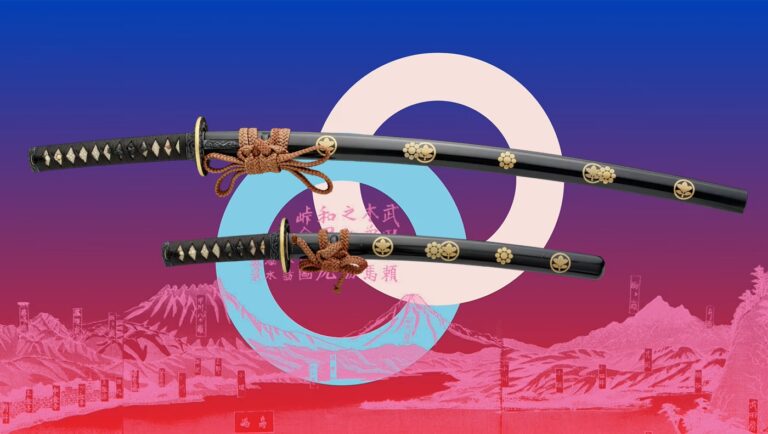
Wakizashi: The Second Sword of the Samurai — and Why It Was the Core of Their Identity
Wakizashi — the short sword of the samurai pair (daishō). History, length, use, role in seppuku. Exhibits at the Samurai…
Read the article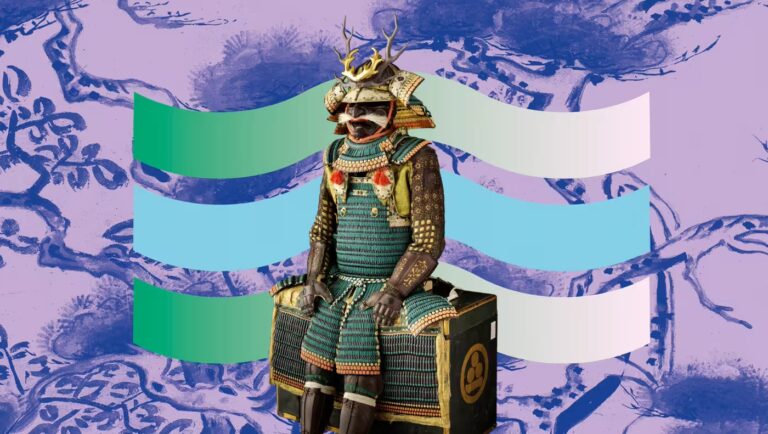
Tōsei Gusoku: The Bulletproof Armour of the Sengoku Era
The Tōsei Gusoku replaced the Ō-Yoroi after 1543. How iron plates and hinges answered the arquebus. With original exhibits at…
Read the article