 Nominated for the EMYA2026 award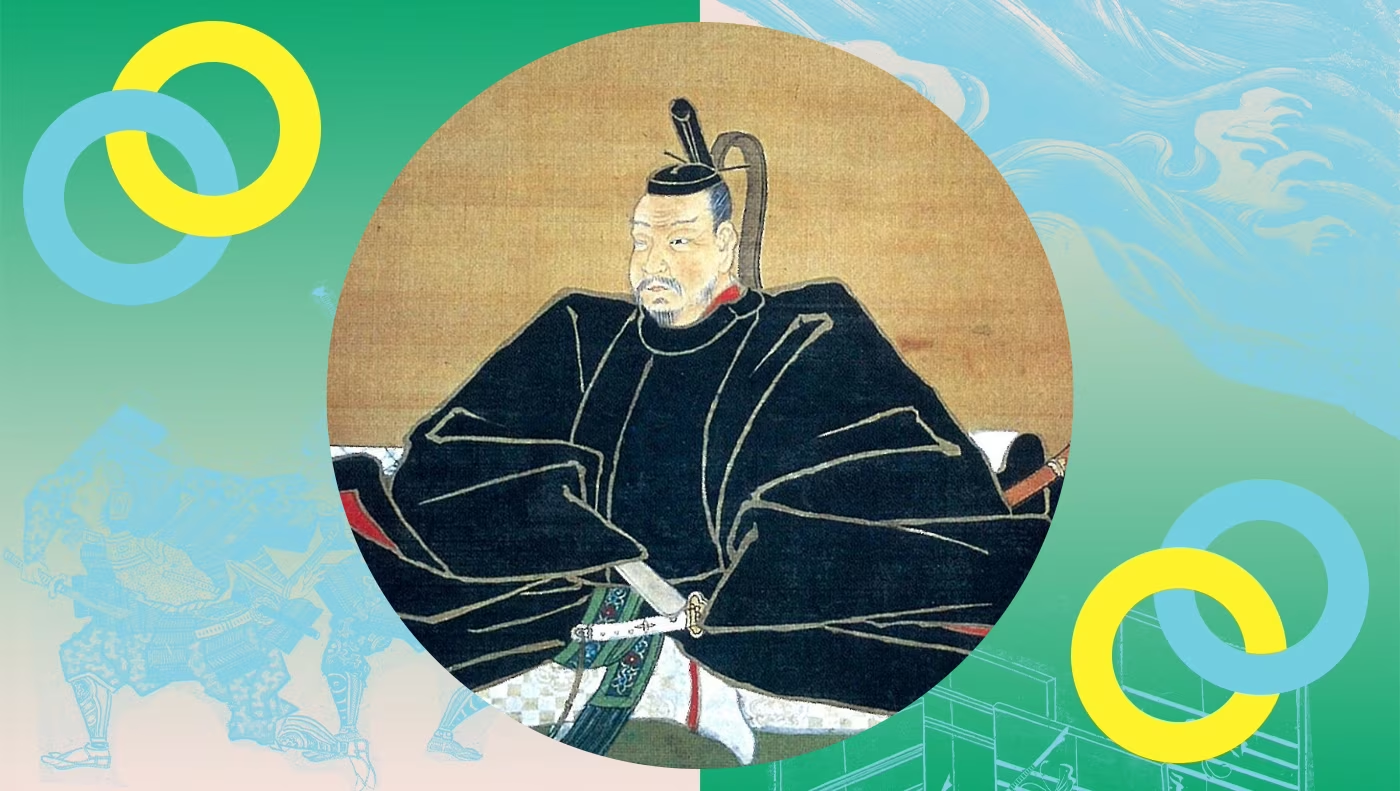
He had lost his right eye to smallpox as a child.
Because of this, some people called him Dokuganryū in his youth — the One-Eyed Dragon. He himself is said to have liked this nickname. Whether this is true cannot be proven. But it fits the image that Date Masamune shaped of himself: ruthless, determined, bound by no convention.
At seventeen he took control of the Date clan in Oshu Province — present-day northern Japan. By nineteen he had subjugated most of his neighbours. At twenty he was on the verge of ruling the whole of north-eastern Japan — before Toyotomi Hideyoshi told him that the unification of Japan had already taken place. Without him.
That was the moment that defined Date Masamune: not the rise, but the reaction to the end of his ambitions.
Oshu: The Forgotten North
The Oshu region — roughly present-day Tōhoku (north-eastern Japan) — was a periphery in the Sengoku period.
Far from Kyoto and the power centres of central Japan, a drama of its own played out here: dozens of small and medium-sized daimyō feuded with one another, without any one of them having the strength to subjugate the others permanently. The Date clan was one of the oldest in this region — rooted in Oshu since the 13th century, with a long history of wars of expansion against its neighbours.
Masamune was the eldest child of Date Terumune. His upbringing was marked by early combat training, by the expectations placed on a clan chief-in-waiting and — as Turnbull describes — by an intellectual ambition that carried him beyond the usual limits of a regional daimyō.[1]
Masamune spoke and wrote elegantly. He was interested in art, tea and literature.
Cambridge describes the Sengoku daimyō as a generation that competed in a system that tolerated no half measures: whoever did not expand was absorbed. The house laws of the great clans — Masamune’s Date house law is one of the best preserved — show how these lords organised their territories as mini-states with their own legal systems, tax rules and military obligations.[3]
Rise: How to Subjugate a Region at 17
In 1584, after his father’s death, Masamune took over the leadership of the clan. He was seventeen years old.
Over the following five years, he led campaigns that were remarkable for their systematic approach and their speed. The Hatakeyama, the Ashina, the Soma, the Ōtomo, the Satake — one after another. Not always through open battle: Masamune understood diplomacy, marriage politics and the strategic value of betrayal. He offered vassalage where war was too expensive, and fought mercilessly where war was quicker.
In 1589 he defeated the Ashina at the Battle of Suriagehara — one of the greatest battlefield successes of his career, against a clan that had until then kept the Date in check. Afterwards, his direct sphere of influence extended over large parts of north-eastern Japan.
Turnbull emphasises a peculiarity of Masamune’s warfare: he used firearms early and systematically, more consistently than many of his northern neighbours. Arquebus units in his infantry, combined with fast cavalry tactics — the pattern was the same one that Nobunaga had perfected in the west, but in Oshu it was an innovation.[1]
The Encounter with Hideyoshi: The End of Ambition
In 1590 everything changed.
Toyotomi Hideyoshi had Japan almost completely under his control. He was just then besieging the Hōjō at Odawara — the last major bastion of resistance to his unification. And he called on all the daimyō of Japan either to submit or to bear the consequences.
Masamune was 22 years old and had just completed a series of campaigns that had secured him control over several provinces. But he had ignored Hideyoshi’s unification campaign — not out of defiance, but because the north had its own dynamics.
The encounter between Masamune and Hideyoshi is steeped in legend: Masamune appeared at Odawara too late (after Hideyoshi had set him a deadline), dressed in death robes as a sign of his readiness to be executed — a dramatic spectacle that was at once submission and self-promotion. According to tradition, Hideyoshi was impressed. He let Masamune live.
But he punished him. The Date territory was drastically reduced. Masamune received Mutsu Province — respectable, but far smaller than what he had just held. The One-Eyed Dragon, who had almost unified Oshu, was reduced to a fief that allowed him to survive, but no longer to threaten.
Conlan uses primary sources to show how Hideyoshi used the allocation of land after unification as an instrument of political control: daimyō who had cooperated early received good lands in Japan. Daimyō who had come late received worse ones or were transferred. The system rewarded loyalty and punished wilfulness — even when, as in Masamune’s case, the wilfulness arose from geographical remoteness.[2]
Sekigahara and the Second Submission
In 1600, at Sekigahara, Masamune was nominally on Tokugawa Ieyasu’s side.
Masamune held back with his army, watched the main battle unfold, and in the meantime began taking over territory from rival daimyō in northern Japan — in the hope that Ieyasu would be generous in the event of a victory, or that a victory by the Western Alliance would offer new opportunities.
Ieyasu won. And he was not generous — at least not as generous as Masamune had hoped. Masamune received somewhat more land, but nowhere near the large estates he had hoped for. He remained daimyō of Sendai — which made him one of the wealthiest daimyō in Japan, but never again a serious rival.
Cambridge describes Ieyasu’s allocation policy after Sekigahara as masterful: he rewarded allies sufficiently to secure their loyalty, but not so generously that they became strong enough to threaten him. Masamune fell into a middle category: large enough to be respected; small enough to pose no danger.[3]
Sendai: The Daimyō as City Founder and Diplomat
After Sekigahara, a different career began for Date Masamune — that of city builder, patron of the arts and unusual diplomat.
In 1601 he began building Aoba Castle in what is now the city of Sendai. He drew up city plans, organised the settlement of craftsmen and merchants, and promoted agricultural reforms that increased the productivity of his fief. Under him, Sendai became one of the most important cities in northern Japan.
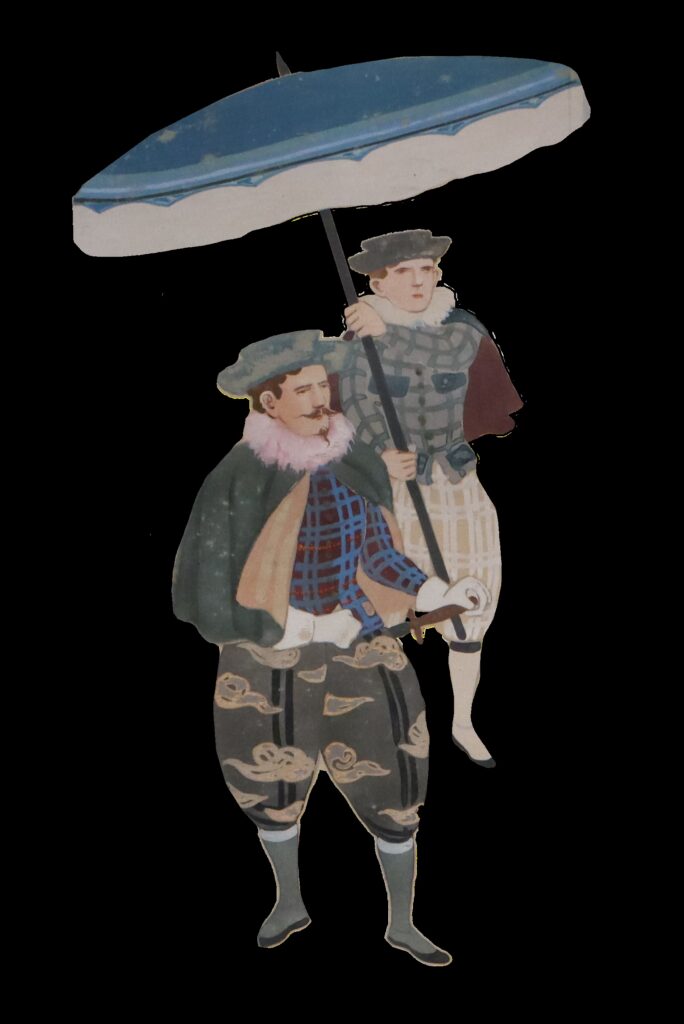
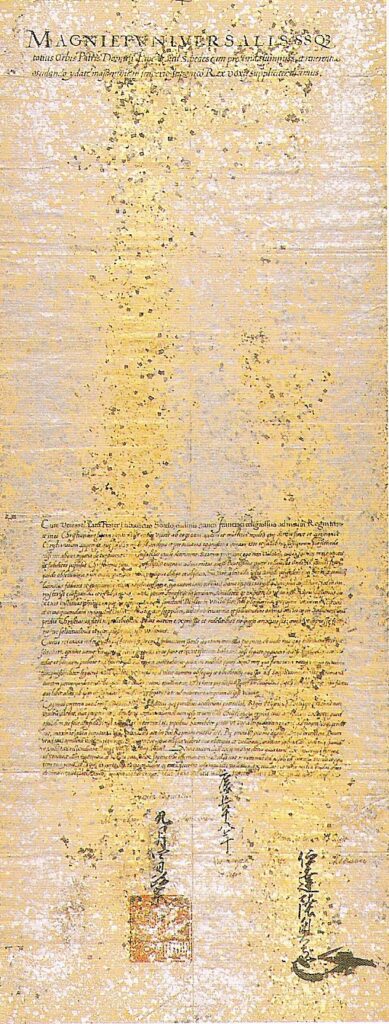
In 1613 he sent a diplomatic mission to Europe — the Keichō Embassy. The leader of the mission was Hasekura Tsunenaga, a vassal of Masamune. The goal: to make contact with Spain and the Vatican, establish trade relations, perhaps forge an alliance against the Portuguese.
The mission failed diplomatically — Tokugawa Ieyasu and his son Hidetada had meanwhile begun to persecute Christians and were isolating Japan from European influences. Hasekura returned in 1620 without the hoped-for agreements. The mission is nevertheless historically significant: it documents that a Japanese daimyō in the early 17th century had global diplomatic ambitions — unusual for an era in which Japan was heading towards isolation.
Turnbull sees in Masamune one of the few Sengoku daimyō who experienced the transition to the Edo period not as a defeat but as a reinvention: the man who had not managed to win Oshu with the sword built it with administration and culture.[1]
The Legacy: The One-Eyed Dragon in Cultural Memory
Date Masamune died in 1636, aged 69 — remarkably old for a man who had begun a life of military campaigns.
He left behind a well-ordered clan, a flourishing city, a tradition of art patronage and the reputation of being the most dangerous daimyō never to unify Japan.
In Japanese popular culture he is one of the most present historical figures. Sengoku BASARA — a video game and anime franchise — made him an iconic figure: blue armour, two swords, one eye, English phrases in his mouth. That has little to do with the historical Masamune, but a great deal to do with the survival of myth and history in present-day Japan.
Conlan urges caution with all romanticised images: Masamune was a 16th-century warlord who expanded his territory through campaigns that caused considerable human suffering. The honour-killing story surrounding the death of his own father — Terumune is said to have been taken hostage by rivals and to have signalled to his son to kill the enemies even if he himself died in the process — is exactly the image that later generations romanticised. It is also the image of a man who had his father killed because his father had told him to.[2]
The Man behind the Dragon: Art, Literature and Strategy
There is a side of Date Masamune that is almost always missing from popular portrayals: that of the educated man.
He corresponded with the imperial court in cultivated classical Japanese. He was a patron of painters and poets, and the culture that developed under his patronage in Sendai — the so-called Sendai-Shingaku — was a regional variant of Confucianism and scholarship.
This side is not unconnected with his military career. Cambridge shows how the great daimyō of the Sengoku period understood that cultural patronage had a political function: a daimyō who attracted poets and artists signalled stability and civilised aspiration — he was not a mere warlord, but a prince.[3]
Masamune pursued this particularly systematically after Sekigahara, when the opportunities for war disappeared. He invested in infrastructure — irrigation systems, rice production, trade links — and in culture. Sendai’s growth into an important city was his work.
The paradox of the One-Eyed Dragon: his greatest lasting legacy is not a victory on the battlefield, but a city and a cultural region.
The Tactics of the North: What Masamune Did Differently
Masamune fought in a region that was relatively isolated from the military innovations of central Japan. What the Oda and Toyotomi commanders practised with muskets and mass infantry was less widespread in the north.
Masamune caught up — systematically. Turnbull shows that he integrated arquebus units into his army early on and made tactical flexibility a principle: no rigid battle order, but a response to the situation. In a region where many daimyō still fought according to old patterns, that was a decisive advantage.[1]
His tactics at Suriagehara (1589) against the Ashina illustrate this: he used a feigned retreat to lure the Ashina troops out of a fixed position, and then attacked in open battle. A classic decoy tactic — but precisely executed.
That explains how a 22-year-old gained control within five years over a region for which older generations had needed decades.
The Keichō Embassy: Masamune’s Global Ambitions
In 1613 Masamune sent the Keichō Embassy to Europe — under the leadership of Hasekura Tsunenaga, one of his vassals.
That was unusual. Almost all Japanese daimyō of the early Edo period looked inwards. Masamune looked west.
The goal: trade relations with Spain and Portugal, contact with the Pope, perhaps an alliance against the VOC (Dutch East India Company), which threatened to cut Japan off from direct trade with Europe. Hasekura travelled to Mexico, Spain, Rome — met the King of Spain and Pope Paul V.
What Masamune could not have foreseen: in precisely these years, Tokugawa Hidetada began systematically persecuting Christians in Japan. When Hasekura returned in 1620, the political climate for Christian alliances had been poisoned. The mission failed.
But it is historically unique. Hasekura Tsunenaga is the first known Japanese person to have crossed the Atlantic and travelled to the Americas. A portrait of him hangs in the Vatican. He is the first Japanese ambassador to Europe.
All of this goes back to Masamune — to a daimyō in northern Japan who was thinking in terms of global connections in 1613, just as Japan was heading towards isolation.
Masamune’s Vulnerability: The Moment at Odawara
In 1590, when Masamune came to Odawara, he was 23 years old, had just achieved the greatest successes of his military career — and stood before Hideyoshi in death robes.
Hideyoshi loved such gestures. A man who was prepared to risk his head by appearing late — but then appearing like that — demonstrated strength of will and submission at the same time. Masamune had understood what Hideyoshi wanted: not obedience out of weakness, but respect out of strength.
Hideyoshi’s generosity was not selfless. He needed daimyō who governed well and stabilised the periphery, not just those who fought on command. Masamune, for all his wilfulness, was exactly that — a competent administrator with military talent.
Turnbull shows that Hideyoshi’s Korea campaign (1592–1598) relied on the northern Japanese daimyō whom he had bound to himself through such encounters. Masamune took part — without enthusiasm, but more loyally than many.[1]
The Shadow of Takeda: Masamune as Shingen’s Successor?
Early in his career, Masamune fought against remnants of the Takeda clan — the clan that Oda Nobunaga had destroyed in 1582. This gives his story a mirror image: Takeda Shingen, Kenshin’s rival and once the most powerful force in central Japan, had failed because of Nobunaga. Masamune, who dominated the north, was stopped by Hideyoshi.
Both — Shingen and Masamune — were commanders of exceptional talent who failed because of the political architecture of their time: because someone else changed the entire structure faster.
Cambridge describes the Sengoku period as one in which tactical superiority at the local level was not enough if another actor was operating strategically at the national level.[3] Shingen lost not because he fought badly — but because Nobunaga was playing a different game. Masamune lost not because he failed — but because Hideyoshi unified Japan faster than Masamune could subjugate Oshu.
Frequently Asked Questions about Date Masamune
Who was Date Masamune?
Date Masamune (1567–1636) was daimyō of Oshu in north-eastern Japan and one of the most capable commanders of the Sengoku period. Known as the “One-Eyed Dragon” (Dokuganryū), he subjugated most of his neighbours as a teenager and was briefly the most powerful daimyō in the north. Toyotomi Hideyoshi stopped his expansion and limited his sphere of power. He built up what later became Sendai and died in 1636 as one of the wealthiest daimyō in Japan.
Why is he called the “One-Eyed Dragon”?
As a child, Masamune lost his right eye to smallpox. He adopted the resulting nickname Dokuganryū (One-Eyed Dragon) as part of his identity. Legends say he removed the dead eye himself — historically unproven, but it fits the self-image he cultivated.
Why did he not become the unifier of Japan?
He came too late. When Date Masamune achieved his greatest success in 1590, Toyotomi Hideyoshi already had Japan largely under control. Masamune had ignored the unification process in the north — geographically understandable, politically fatal. Hideyoshi forced him to submit and drastically reduced his territory.
What is the Keichō Embassy?
A diplomatic mission that Masamune sent to Europe in 1613 — under the leadership of Hasekura Tsunenaga. The aim was trade relations with Spain and the Vatican. The mission failed because Japan began to persecute Christians at the same time. It is, however, the first known example of a Japanese diplomatic mission to Europe.
How old was Date Masamune when he died?
69 years (1567–1636) — unusually long for an active warlord of the Sengoku. He outlived Hideyoshi (died 1598), Ieyasu (died 1616) and most of his contemporaries.
Visit the Samurai Museum Berlin
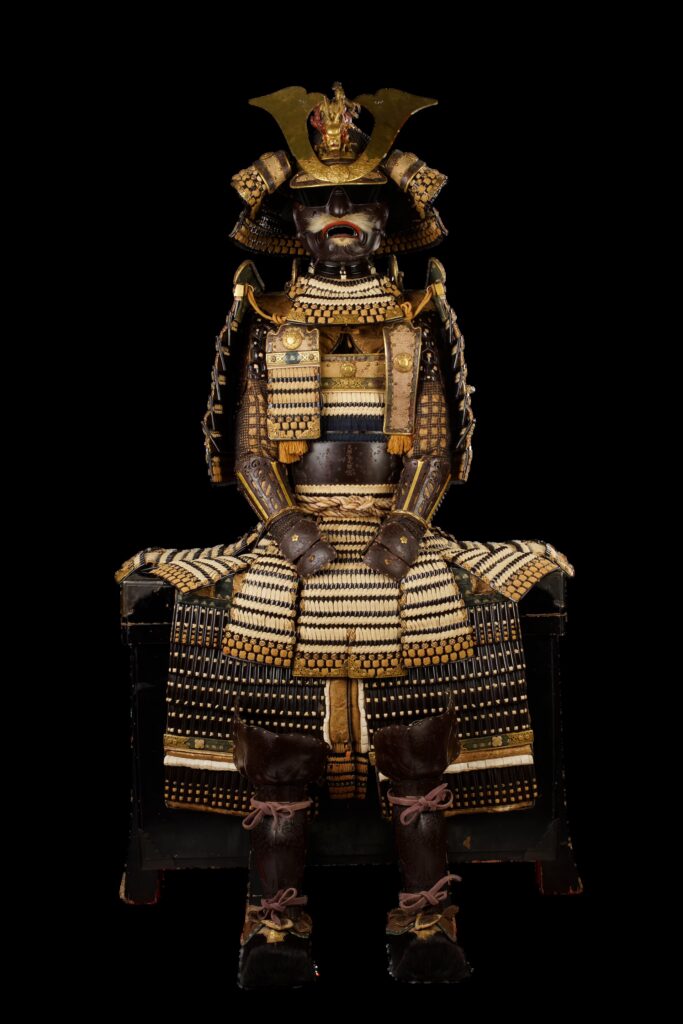
The Samurai Museum Berlin displays a complete daimyō armour from the Momoyama period (1573–1615) — the era in which Date Masamune subjugated Oshu and almost unified Japan. Open daily from 10 a.m. to 7 p.m., Auguststraße 68, Berlin-Mitte.
Related Articles
- Toyotomi Hideyoshi
- Tokugawa Ieyasu
- Sengoku Jidai: The Age of the Warring Provinces
- Sanada Yukimura: The Last Warrior
Sources and Further Reading
- [1] Turnbull, Stephen (2022). War in Japan 1467–1615. Osprey Publishing. Used: Masamune’s tactics; use of arquebuses; Sendai; reinvention after Sekigahara.
- [2] Conlan, Thomas D. (2022). Samurai Sourcebook. Hackett Publishing. Used: Hideyoshi’s land allocation policy (primary sources); daimyō house laws; romanticisation of historical violence.
- [3] Hall, John Whitney (ed.) (1991). The Cambridge History of Japan, Vol. 4: Early Modern Japan. Cambridge University Press. Used: daimyō house laws; Ieyasu’s allocation policy after Sekigahara; structures of the Sengoku.
- [4] Varley, H. Paul (1994). Warriors of Japan as Portrayed in the War Tales. University of Hawaii Press. Used: formation of legends around Sengoku daimyō.
© Samurai Museum Berlin – All rights reserved
You might also like
The 47 Rōnin: Japan’s Legendary Revenge Story
The true story of the 47 Rōnin: how 47 masterless samurai avenged their lord in 1703 – and why not…
Read the article
Honda Tadakatsu: The Unbeatable Warrior of the Tokugawa
When Honda Tadakatsu died in 1610 at Kuwana Fortress at the age of sixty-two, he left behind a record unparalleled…
Read the article
Toyotomi Hideyoshi: From Peasant’s Son to Ruler of Japan
Toyotomi Hideyoshi (1537–1598): how a nameless foot soldier became the unifier of Japan. History, reforms & exhibits at the Samurai…
Read the article