 Nominated for the EMYA2026 award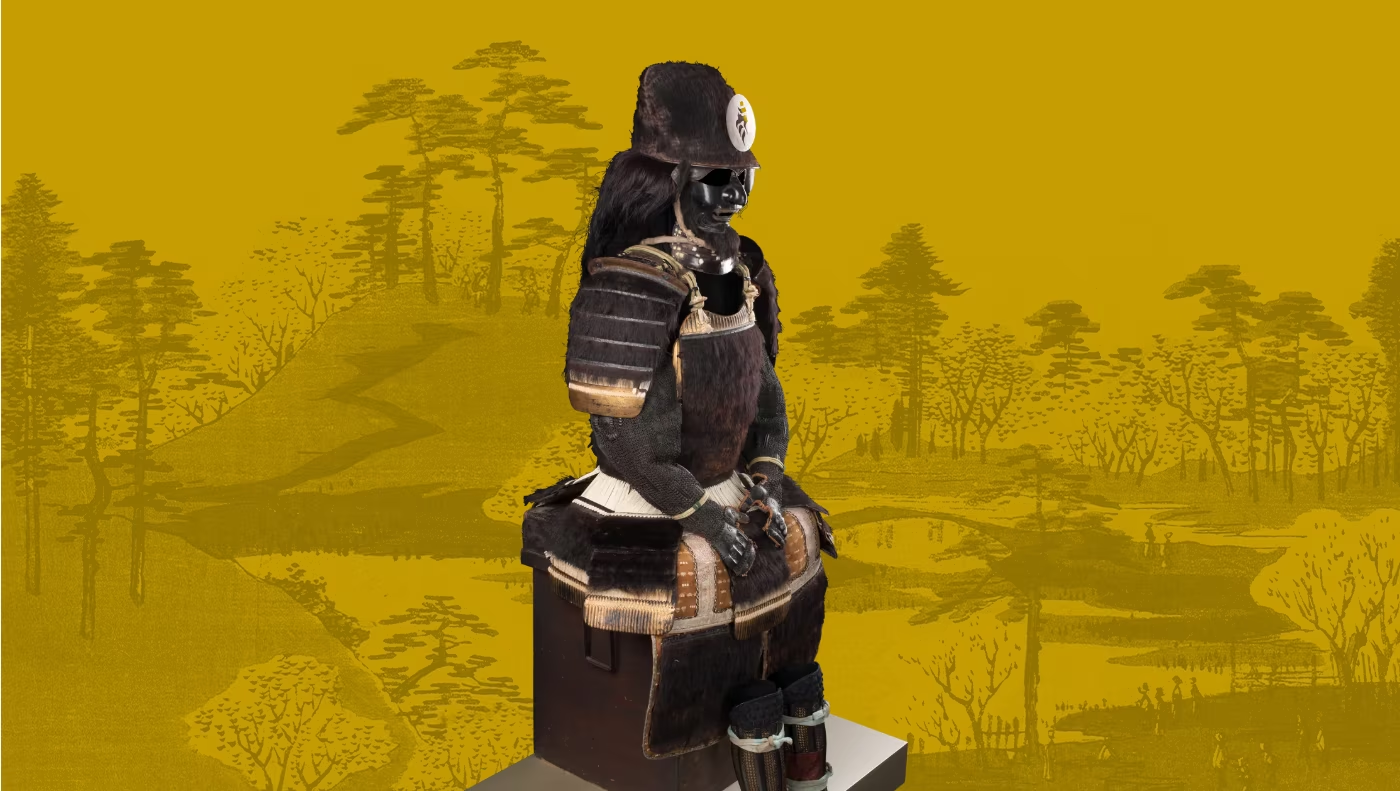
Anyone who looks today at Japanese battle depictions of the 16th and early 17th centuries — the byōbu folding screens of the Battle of Sekigahara, the ukiyo-e woodblock prints of the Siege of Osaka, the portraits of the great daimyō — sees them almost all wearing a jinbaori over their armour. The sleeveless overgarment in bright red, deep blue or rich green falls over the black lamellar harnesses, bears the family crest on the back and marks its wearer visibly from afar.
What is a Jinbaori?
The word jinbaori is composed of jin (陣, “field camp”) and haori (羽織, “overjacket”) — literally “field-camp jacket”. The jinbaori is a sleeveless overgarment worn over a samurai’s armour. It served as protection against rain and cold, as a command marker on the battlefield, and as a display of status and wealth.
The form was largely standardised: a rectangular cut, open at the front, fastened with buttons or ties, wide armholes, a long slit at the back. The central identifying feature was the family crest (Kamon) on the back — from a command hill, the direction in which a unit was moving could be read from the back crests of the commanders.
Rasha — The Wool from Europe and Japan’s Global Entanglement
The wool from which many examples were made bore the name rasha in Japan — derived from the Portuguese raxa. When the Portuguese landed at Tanegashima in 1543, rasha was among the first fabrics they brought to Japan. Until then, wool was unknown in Japan; sheep were not kept on the Japanese archipelago.
Rasha became a luxury good in Japan. A jinbaori made of rasha was therefore not just a garment but proof of economic status. European wool dyers mastered shades that could not be achieved with Japanese plant dyes — intense reds from cochineal, brilliant blues from indigo. A commander’s red jinbaori was clearly visible from several hundred metres away.
The Jinbaori in the Field Camp — Function on the Battlefield
Three central areas of use: First, weather protection — rasha was water-repellent and heat-retaining. Second, command marking — a daimyō on his command hill signalled his position via Sashimono (back banners), Gunbai (war fans) and the jinbaori. Third, display at meetings between daimyō — whoever could wear rasha demonstrated access to international trade.
With the end of the great battles after 1615, its use shifted. The Sengoku field jinbaori became inherited showpieces; new jinbaori were increasingly made for the ceremonial needs of the Pax Tokugawa: for the sankin-kōtai processions, for hunts, for receptions.
Ornament and Meaning — How a Jinbaori Was Read
Every motif, every pattern, every colour could carry a meaning. A competent contemporary observer could “read” a jinbaori — the wearer’s rank, family tradition, political sympathies and spiritual convictions.
Perhaps the most striking example at the Samurai Museum Berlin is the Shishi jinbaori (C27V_29) — made of blue and red wool as well as golden silk weave, with a relief-like shishi lion and blooming peonies in appliqué technique on the back. The collar shows the Kikkōmon — the tortoiseshell pattern that symbolises longevity. The shishi lion is the classic guardian animal of Buddhism in East Asia.
The Hachisuka clan jinbaori (C36V_34) bears both the manji crest of the Hachisuka and the paulownia of the Toyotomi — a compromise object: one’s own history is not denied (the Toyotomi crest remains visible), but the Hachisuka crest dominates.
From War Object to Work of Art — The Edo-Period Evolution
The Pax Tokugawa (1615–1868) transformed the jinbaori fundamentally. The military function receded; the ceremonial one came to the fore. At the sankin-kōtai processions — the daimyō’s obligation to reside alternately in Edo — presentation was a central element. New jinbaori were made of the finest rasha or Chinese brocade silk, embroidered with gold threads, set with rare fittings.
With the Meiji Restoration in 1868, the use of the jinbaori as samurai clothing came to an end. The dissolution of the samurai class, the introduction of Western military uniforms, the sword ban of 1876 — all of this brought an institutional end to the traditional samurai equipment.
Frequently Asked Questions
What is a Jinbaori?
The jinbaori (陣羽織) is a sleeveless overgarment worn by samurai over their armour. It emerged in the 16th century and originally served as weather protection in the field camp. In the Edo period it developed into a ceremonial garment of splendour.
What material was a Jinbaori made of?
Among other things, of imported European wool (rasha) — a coarse woollen cloth that the Portuguese and later the Dutch brought to Japan. Since no sheep farming took place in Japan, wool was an exotic and expensive import. There were also jinbaori made of brocade, silk and velvet.
What do the motifs on a Jinbaori mean?
The motifs were iconographically charged. Family crests marked clan affiliation. Dragons stood for power, shishi lions for Buddhist protection, peonies for prosperity, hexagonal patterns (kikkōmon) for longevity. An experienced observer could read a jinbaori like a text.
What is rasha?
Rasha (羅紗) is a coarse woollen cloth of European origin that was imported into Japan by Portuguese and Dutch traders from the mid-16th century onwards. Since no sheep farming took place in Japan, wool was a rare luxury good that only wealthy samurai could afford.
Visit the Samurai Museum Berlin
The Samurai Museum Berlin presents in its permanent exhibition an outstanding selection of jinbaori documenting various aspects of this clothing tradition — from the plain white Katō clan coat to the elaborately embroidered shishi jinbaori with gold and appliqué embroidery. Open daily from 10 a.m. to 7 p.m., Auguststraße 68, Berlin-Mitte.
Related Articles
- Tōsei Gusoku: The Bulletproof Armour of the Sengoku Era
- Kabuto: The Helmet of the Samurai
- Dō: The Cuirass of the Samurai
- Battle of Sekigahara 1600
List of Sources
- Samurai Museum Berlin (2025): SMB Katalog 2025.
- Absolon, Trevor (2017): Samurai Armour Vol. I. Osprey Publishing.
- Turnbull, Stephen (2005): Warriors of Medieval Japan. Osprey Publishing.
- Hall, John Whitney (ed.) (1991): The Cambridge History of Japan, Vol. 4. Cambridge University Press.
- Cooper, Michael (ed.) (1965): They Came to Japan. University of California Press.
© Samurai Museum Berlin – All rights reserved
You might also like
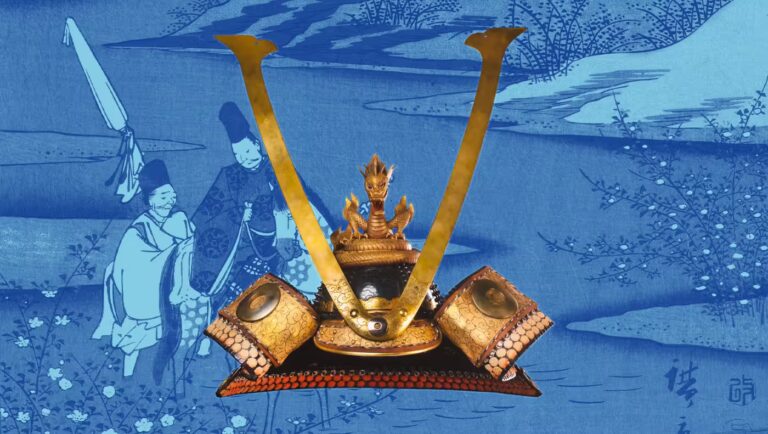
Kabuto: The Helmet of the Samurai — History & Anatomy
The kabuto – protection, identity, and work of art in one. History, anatomy & smithing traditions of the samurai helmet.…
Read the article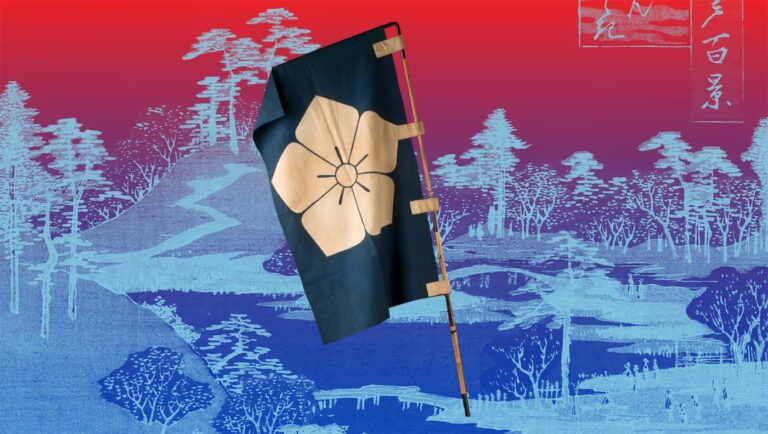
Sashimono: The Back Banners of the Samurai
Sashimono — the back banners of the samurai. History, function, motifs, clans. Authentic examples at the Samurai Museum Berlin.
Read the article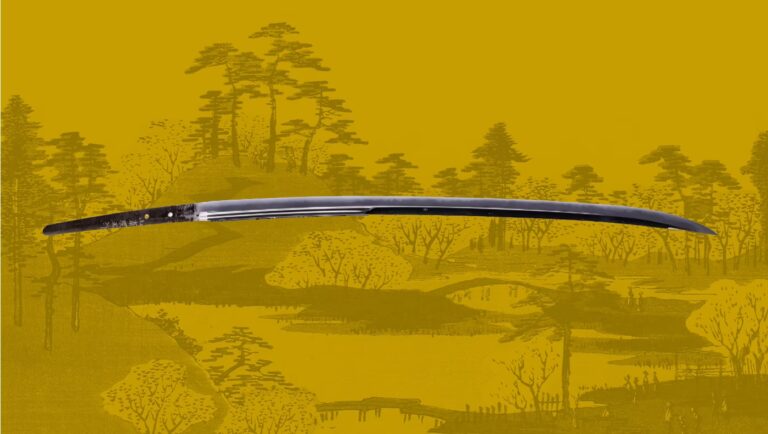
Japanese Swordsmithing: How a Katana Is Made
Japanese swordsmithing: how a katana is made from black iron sand. Tamahagane, hamon & master smiths explained – with original…
Read the article