 Nominated for the EMYA2026 award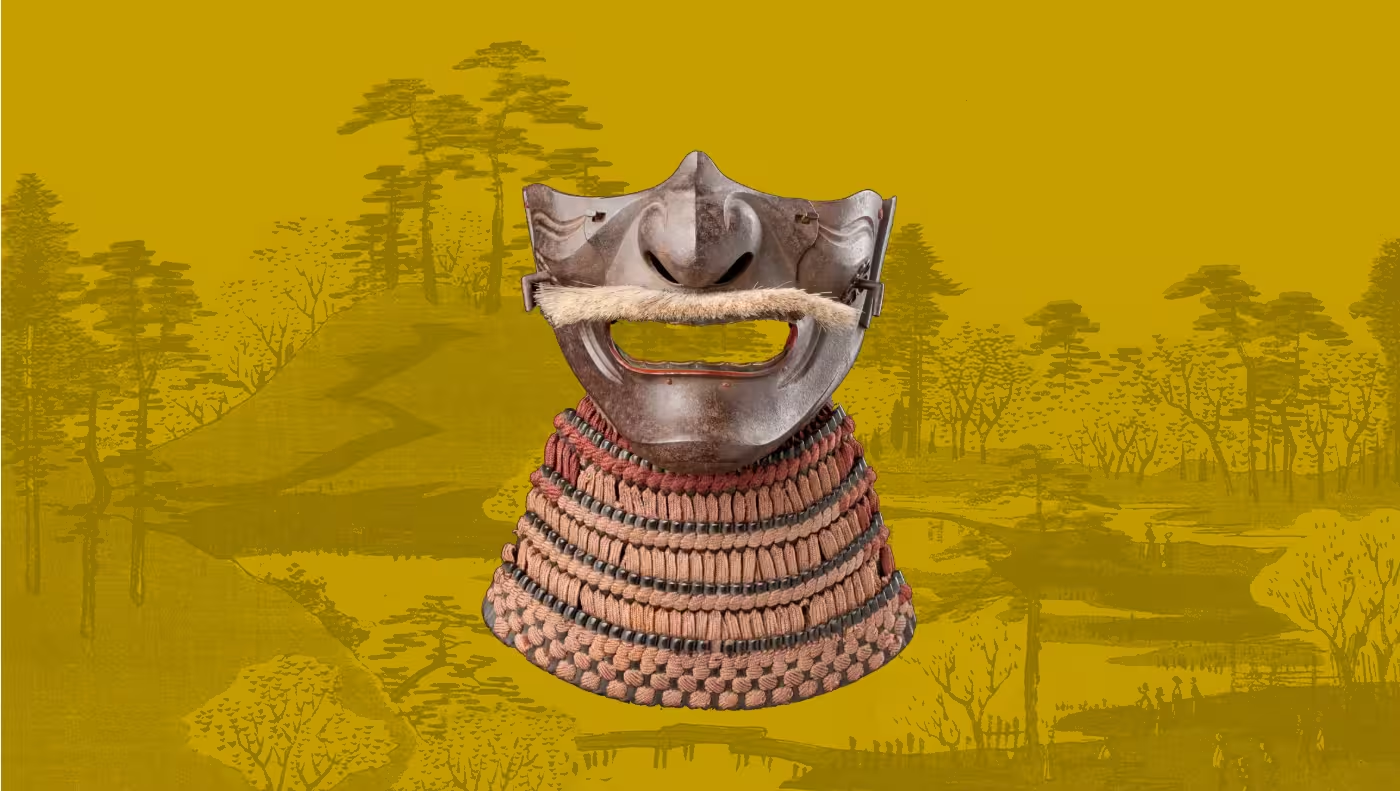
A samurai in full armour no longer looked like a human being. Above the lamellar harness towered the kabuto helmet with its curved bows. Beneath it, an iron half-mask covered the face from the chin up to the bridge of the nose — the Menpō. Together, helmet and mask created an alien, almost demonic figure: angry creases around the mouth, bared teeth, a bushy moustache. The human being behind the armour disappeared.
The Menpō is more than just a functional piece of armour. It is perhaps the psychologically densest object of the entire samurai equipment. It concealed the warrior’s individual face and replaced it with a codified physiognomy — a mask that communicated character, rank and intention before the first word was spoken.
What is a Menpō?
The Menpō (面頬) — literally “face and cheeks” — is an iron half-mask worn as part of the complete samurai armour. It covers the face from the chin up to roughly the bridge of the nose and leaves the eye area free. At its lower edge it typically bears a throat guard (tare) made of several lamellar rows.
Japanese armour studies make precise distinctions: Menpō = classic half-mask (nose and mouth covered, eyes free). Sōmen (総面) = full mask covering the entire face — less commonly used because of restricted vision. Hanbō (半頬) = small mask that covers only the chin — lighter, but less protection. Happuri (八幡) = narrow forehead and cheek guard plate without chin and mouth covering, primarily against arrows.
The Mask Types — An Iconography of Expression
Ressei-Men (烈勢面) — “angry, fierce face” — is one of the most widespread types. The mask shows pronounced creases around the nose and mouth, an open or snarling mouth with visible teeth, bushy eyebrows, often a moustache. The Samurai Museum Berlin preserves a Ressei-Menpō by Munehiro (Fujiwara-Myōchin line, early 17th century) in display case E02V. A special variant is the adjustable Ressei mask: four parts joined by hinges allowed adaptation to the individual face shape of the wearer.
Ryūbu-Men — “mask with a noble expression” — is the counterpart to the Ressei. Calm facial features, plump cheeks, soft skin without creases. This type was especially popular in the Edo period, when the samurai increasingly understood themselves as an administrative class and warlike self-presentation receded in favour of scholarly dignity.
Okina-Men — the mask of the old man. The wrinkle-lined face of an elder with long eyebrows — a signal: “I am the experienced veteran, not the hot-headed youth.”
Tengu-Men — the mask in the form of the Tengu, a creature of Japanese folk religion regarded as a mountain ascetic with outstanding martial-arts abilities. With a Tengu mask by Fukushima Denbei Kunitaka (1631–1685) in display case F05V, the Samurai Museum Berlin preserves an exceptional example: the mask shows a beak with two small nostrils and a large mouth opening.
Craftsmanship and Technique — How a Menpō Was Made
The base material was iron. The smith began with a flat iron plate, which was hammered into shape and gradually bent into the geometry of the face. High-quality masks were assembled from several parts — nose, cheeks and chin could be separate, riveted elements. The characteristic expressive features were worked into the surface by hammering and repoussé.
Smith’s signatures (Mei) today make it possible to attribute masks to particular schools. The Munehiro example and the Kunitaka example at the Samurai Museum Berlin can both be attributed to precise master workshops through signature and comparison with surviving compendia (Meikō zukan zokushū, Dokka kessaku Ryō’ei zukan).
Regional craft traditions shaped characteristic features: the Kaga smiths (Kaga Province, today Ishikawa Prefecture) developed washers with incised radiating lines as well as throat guards of textured, gold-leaf-coated leather. The main Myōchin line in Kyōto was known for high technical precision.
Function in Combat — Protection, Signalling, Psychological Effect
Physical protection: The Menpō protected against sword blows coming from the side and deflected arrows. Particularly important was protection against close-combat blows, in which even the tsuba (sword guard) was used as a weapon against the face.
Technical auxiliary function: The lateral hooks (ore kugi) secured the helmet cord. A kabuto without a Menpō could slip during rapid movements; with the Menpō, the ensemble stayed firmly in place. The throat guard (tare) protected the vulnerable throat.
Psychological effect: The masked appearance of a fully armoured samurai was meant to intimidate the opponent. The distorted, demonic faces communicated: “You no longer face a human being.” At the same time, the mask affected the wearer himself: the masked identity allowed a distancing from the individual self and an attunement to the collective role of the warrior.
Five Myths about the Menpō
Myth 1: “All samurai masks are called Menpō.” The terminology is more precise: Menpō = half-mask, Sōmen = full mask, Hanbō = chin mask, Happuri = forehead guard.
Myth 2: “Menpō were worn only in combat.” In the Edo period they were increasingly worn in ceremonial contexts as well. The late Edo masks are often no longer designed for practical combat at all.
Myth 3: “The grim face was pure intimidation.” The effect was not only external intimidation of the opponent, but also internal transformation of the wearer.
Myth 4: “Menpō were uniform standard objects.” The range of expressive types made the Menpō a highly individualised piece of equipment.
Myth 5: “Menpō were omnipresent in Japan.” High-quality signed Menpō were luxury objects. Many simpler ashigaru wore no masks at all.
Frequently Asked Questions
What is a Menpō?
The Menpō (面頬) is an iron half-mask worn by samurai as part of the complete armour. It covers the face from the chin up to roughly the bridge of the nose and leaves the eye area free.
What do Ressei and Ryūbu mean?
Ressei-Men (烈勢面, “angry, fierce face”) and Ryūbu-Men (“mask with a noble expression”) denote the two most important expressive types. Ressei masks show aggressive physiognomies with creases and bared teeth — intimidation. Ryūbu masks show calm, noble features — the dignified warrior spirit of the Edo period.
What function did the Menpō have in combat?
Three main functions: protection against sword blows and arrows. Fastening of the helmet by the lateral hooks. Psychological effect — intimidation of the opponent and transformation of the wearer into his warrior role.
What is a Tengu mask?
Tengu masks depict the Tengu — a figure of Japanese folk religion regarded as a mountain ascetic with extraordinary martial-arts abilities. With a Tengu mask by Fukushima Denbei Kunitaka (1631–1685), the Samurai Museum Berlin preserves a rare example.
Visit the Samurai Museum Berlin
The Samurai Museum Berlin shows an exceptional collection of Japanese Menpō — from signed Ressei masks of the Fujiwara-Myōchin line through dignified Ryūbu examples to rare Tengu masks. Open daily from 10 a.m. to 7 p.m., Auguststraße 68, Berlin-Mitte.
Related Articles
- Kabuto: The Helmet of the Samurai
- Tōsei Gusoku: The Bulletproof Armour of the Sengoku Era
- Jinbaori: The Armour Surcoat of the Samurai
List of Sources
- Samurai Museum Berlin (2025): SMB Catalogue 2025.
- Bottomley, Ian; Thatcher, K. (2013): The Samurai Armour Glossary. Royal Armouries.
- Absolon, Trevor (2017): Samurai Armour Vol. I. Osprey Publishing.
- Cummins, Antony; Minami, Yoshie (2015): The Book of Samurai. Watkins Publishing.
- Sánchez-García, Raúl (2019): The Historical Sociology of Japanese Martial Arts. Routledge.
© Samurai Museum Berlin – All rights reserved
You might also like
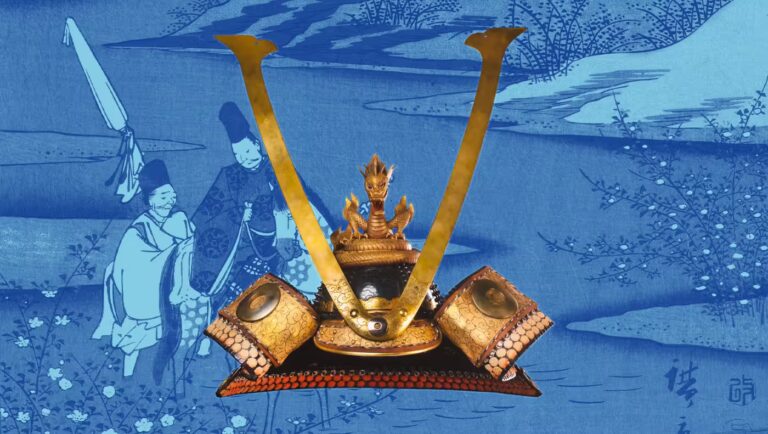
Kabuto: The Helmet of the Samurai — History & Anatomy
The kabuto – protection, identity, and work of art in one. History, anatomy & smithing traditions of the samurai helmet.…
Read the article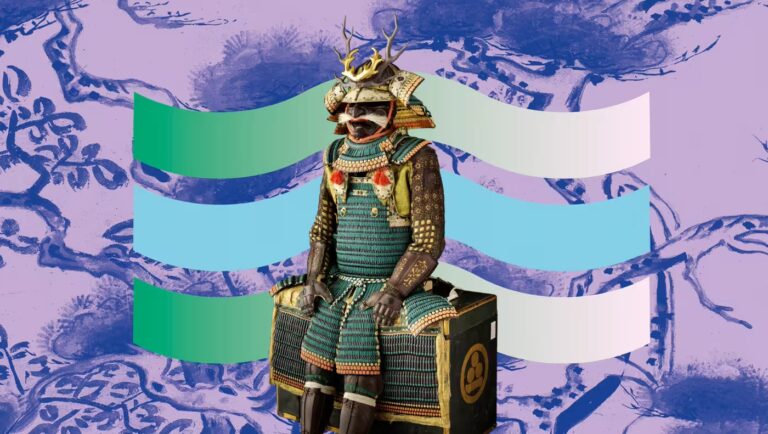
Tōsei Gusoku: The Bulletproof Armour of the Sengoku Era
The Tōsei Gusoku replaced the Ō-Yoroi after 1543. How iron plates and hinges answered the arquebus. With original exhibits at…
Read the article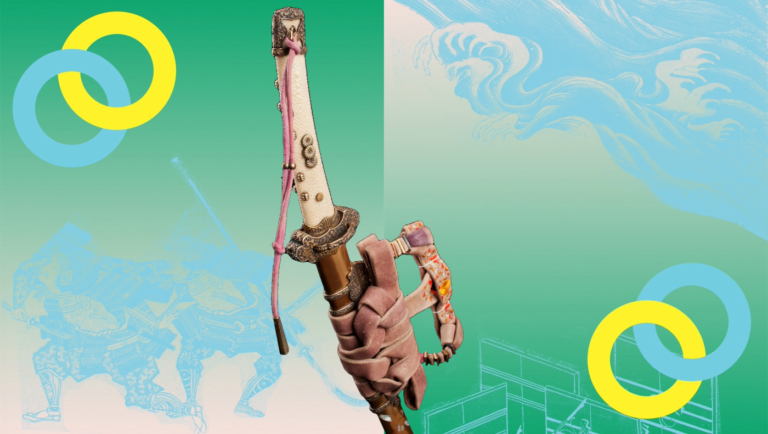
Tachi: The Magnificent Long Sword of the Heian Samurai
The tachi – the long sword of the Heian samurai. History, manner of wear, gokaden & the path to the…
Read the article