 Nominated for the EMYA2026 award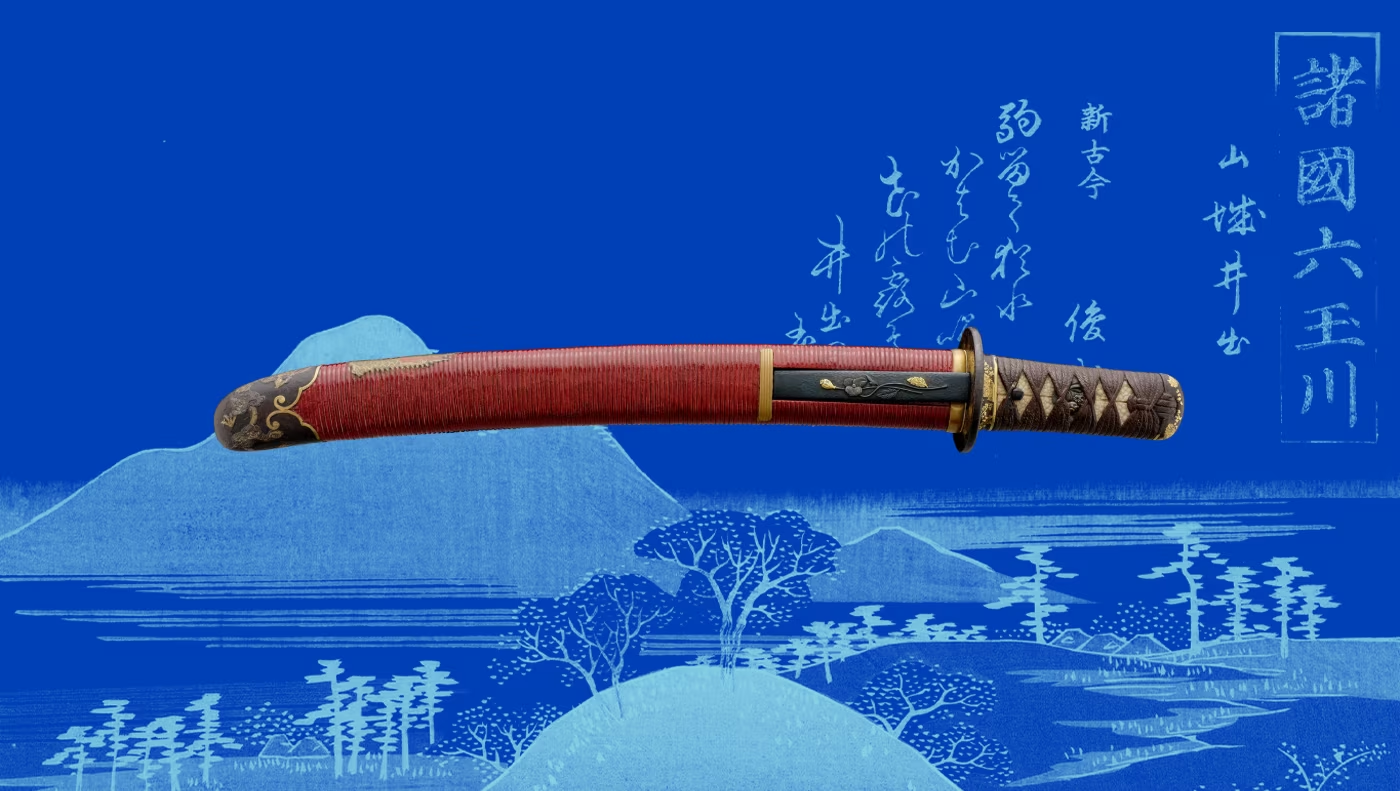
The tantō (短刀) is a Japanese short dagger with a blade length of under 30 cm. Originally developed as an emergency weapon and tool for samurai, it became known from the Edo period onward primarily as a ritual blade for seppuku. Despite its small size, the tantō was one of the most personal and versatile weapons of the warrior.
What is a tantō? – Definition and classification
The name says it already: 短刀 (tan = short, tō = sword). A tantō is technically a single-edged short sword with a blade length between 15 and 30 centimeters. Anything below that falls into the category of kogatana (small knife), anything above becomes a wakizashi (companion sword).
In the Edo period (1615–1868), only samurai were allowed to carry the daishō, the pair of swords consisting of katana and wakizashi. The tantō fell into a gray area: it was small enough to pass as a tool, yet effective enough to be deadly. Merchants, craftsmen, and even women carried tantō – officially for self-defense, unofficially as a hidden weapon in a society that strictly regulated violence.
History of the tantō – From the Heian period to the modern era
The history of the tantō mirrors the history of Japan itself: from a practical tool to a combat weapon to an art object, from the battlefield to the seppuku ritual to the museum display case.
Heian and Kamakura: Tool and emergency weapon
The earliest tantō date from the Heian period (794–1185), when they served primarily as tools: repairing armor, cutting linen, sealing letters. They were functional, not ceremonial.
In the Kamakura period (1185–1333), this changed fundamentally. The warfare of this era was based on mounted archers, and the renowned military historian Karl Friday emphasizes that the sword was always the weapon of last resort: “The sword was the weapon of last resort… closing to grapple with swords and daggers occurred only when arrows were exhausted” (Friday, p. 69). In precisely these desperate close-combat situations – when the bow was empty and the spear broken – warriors needed a compact thrusting weapon. The tantō became part of the standard equipment, small, easy to conceal, always at hand.
Nanboku-chō: The era of oversize
The Nanboku-chō period (1336–1392) marks an idiosyncratic special path in the history of the tantō. As warfare shifted from mounted single combat to mass-infantry battles, the tantō blades grew as well. The so-called Enbun-Jōji-sugata – named after the Enbun (1356–1361) and Jōji (1362–1368) eras – describes oversized blade forms that blurred the boundary between tantō and wakizashi (Sesko, p. 55). Some “tantō” of this era reached a blade length of 40 cm, technically already short-sword format.
Muromachi and Sengoku: Mass production and specialization
The Sengoku period (1467–1615) produced the most functional tantō. The constant warfare required mass production, and smiths specialized in yoroi-dōshi (“armor piercers”) – heavy blades with a reinforced back, specifically constructed to thrust through the gaps in lamellar armor.
Edo period: From combat steel to work of art
The Edo period (1615–1868) transformed the tantō fundamentally. Under the strict rule of the Tokugawa, open combat became a rare exception. Tantō lost their military function and gained an aesthetic one. Smiths invested their art in elaborate mountings (koshirae): gold-lacquer decorations, ray-skin coverings, sword needles (kōgai), and accessory knives (kozuka) as decorative additions. The tantō became a status symbol, a wedding gift, a family heirloom – and a ritual instrument for seppuku.
Meiji to the present
The Meiji Restoration (1868) and the sword ban (Haitōrei) of 1876 ended the samurai era. The art of tantō forging survived as cultural heritage: organizations such as the NBTHK (Nihon Bijutsu Tōken Hozon Kyōkai, “Society for the Preservation of the Japanese Art Sword”) classify and certify historical blades to this day. Master smiths such as Gassan Sadakazu (1836–1918) created tantō that combined tradition with technical perfection – one of them is housed at the Samurai Museum Berlin.
Construction and blade forms: The anatomy of the small blade
A tantō is not a miniaturized katana. It follows its own design principles, which reflect its specific function. While a katana is designed primarily for the cut, the thrust dominates with the tantō.
Hira-zukuri: The flat standard blade
The most common tantō form is hira-zukuri (平造), a flat blade without a central ridge (shinogi). The flat cross-section made it comparatively easy for smiths to produce and easy for the owner to sharpen – ideal for everyday use as a tool and emergency weapon.
Kanmuri-otoshi and yoroi-dōshi: The armor piercers
For military purposes, smiths preferred kanmuri-otoshi (冠落), a form with a reinforced back whose cross-section resembles a helmet. These blades were thicker, heavier, and triangular in profile – optimized to penetrate metal plates and chain armor.
Shōbu-zukuri, kissaki-moroha-zukuri, and other special forms
The shōbu-zukuri (菖蒲造) combines elements of both worlds: a central rib near the back lends structural strength. One of the rarest forms is kissaki-moroha-zukuri (切先両刃造): the tip is sharpened on both sides. An outstanding example is housed at the Samurai Museum Berlin: the tantō by Gassan Sadakazu, an imperially authorized master smith of the late Meiji period.
Special forms: More than just a blade
Aikuchi and hamidashi: Mountings with and without a tsuba
The two most important mounting types of the tantō differ by a single element: the tsuba (sword guard). With the aikuchi (合口), the grip meets the scabbard directly, without any barrier in between. The hamidashi (食み出し) forms the middle path: a tiny tsuba offers minimal hand protection.
Kaiken: The dagger of the samurai women
Female warriors (onna-bugeisha) often carried a special tantō called kaiken (懐剣, “bosom dagger”), hidden in the obi (belt). This compact tantō in aikuchi style served two purposes: defense against attackers and the possibility of jigai (suicide by cutting the throat). At weddings it was presented as part of the dowry – a symbol of female autonomy and honor.
Tantō Teppō: The firearm disguised as a dagger
One of the most surprising special forms is housed at the Samurai Museum Berlin: the Tantō Teppō, a firearm disguised as a short sword from the Edo period. The scabbard, the kozuka, and the pommel bear the Tokugawa family crest (aoi mon) in gold, which points to a connection with the ruling shogunate.
Use in combat: The hidden weapon of last resort
On the battlefield, the tantō had a simple task: to kill when everything else had failed. In the hierarchy of samurai weapons it stood at the very bottom – after the bow, spear, and sword. That is precisely what made it indispensable.
Karl Friday describes this sequence as a military reality: the early samurai defined himself as a fighter on the “way of horse and bow” (Kyūba no michi). Only when the arrows were spent and the spears broken did he reach for the close-combat weapon (Friday, pp. 69–75). The gaps in samurai armor – under the arms, at the neck, on the inner thighs – were protected by cloth or leather, not by metal. A well-aimed thrust with a yoroi-dōshi could sever an artery.
Tantō and seppuku: The ritual dimension
The tantō is inseparably linked with seppuku (切腹, “belly cutting”). The historian Andrew Rankin sums it up: “What we call ‘classical seppuku’ – white kimono, death poem, ritual dagger – is an Edo-period codification, not medieval practice. Earlier seppuku varied wildly in form and setting” (Rankin, p. 123).
The idealized ritual, as it was standardized in the Edo period, proceeded as follows: the condemned man sat in a kneeling position on white mats. A sanbo (ceremonial tray) was presented, on it the tantō, wrapped in white paper. The warrior wrote a death poem, bared his upper body, performed the cut from left to right – and the kaishakunin (second) ended the suffering with a precise sword blow.
Tantō masterpieces at the Samurai Museum Berlin
The collection of the Samurai Museum Berlin comprises numerous historical tantō, which document the spectrum of this weapon type across eras and functions.
Gassan Sadakazu: Imperial master smith — This tantō is the work of Gassan Sadakazu (1836–1918), one of the last great shinshintō smiths. The 25.7 cm long blade exhibits a kissaki-moroha-zukuri form: the tip is sharpened on both sides, a rare type that dates back to the Nara period.
The Oni dagger — This extraordinary ensemble from the late Edo period completely blurs the boundary between weapon and work of art. The dagger and scabbard take the form of a standing oni (demon), accompanied by an elongated dragon. In the front section, a petal can be opened, revealing a small seated Buddha figure.
Whaling scene in gold — Among the tantō koshirae of the museum, one mounting stands out through its unusual motif: a whaling scene in maki-e, executed in gold on a crimson lacquer scabbard.
Frequently asked questions
What is the difference between tantō, wakizashi, and katana?
The distinction is made primarily by blade length: tantō = under 30 cm, wakizashi = 30–60 cm, katana = over 60 cm. Only samurai were allowed to carry the daishō (katana + wakizashi). Tantō fell into a gray area and were often permitted for non-samurai as well.
Was the tantō really used for seppuku?
Yes, historically documented. From the Kamakura period onward, seppuku became established as the privileged form of death for samurai. The tantō was, due to its length and symbolism, the preferred weapon. The “classical” ritual was only codified in the Edo period (Rankin, p. 123).
Could tantō penetrate armor?
Specialized tantō such as the yoroi-dōshi were designed precisely for that. They had triangular cross-sections and reinforced backs in order to thrust through the gaps in lamellar armor – under the arms, at the neck.
Why did samurai women carry tantō?
Women of the samurai class received systematic combat training. The kaiken served for self-defense and made jigai (suicide by cutting the throat) possible if capture threatened. It was presented at weddings as part of the dowry.
What is a “Western tanto” – and what does it have to do with the Japanese tantō?
The term Western tanto denotes modern tactical knives with an angular, chisel-shaped tip, popularized from the 1980s onward. They share little more than the name with the historical Japanese tantō: Japanese tantō are forged from tamahagane steel and follow centuries-old forging traditions.
Conclusion: The underestimated weapon
The tantō is neither as iconic as the katana nor as imposing as the naginata. But it was the most personal weapon of the samurai – the blade he reached for last when everything else failed. In combat it was the weapon of last resort. In ritual it became an instrument of honor. And in the hands of a master smith like Gassan Sadakazu, it became a work of art.
Visit the Samurai Museum Berlin
The Gassan Sadakazu tantō, the Oni dagger (display case C11H), and the Tantō Teppō with hidden barrel (display case C40V) can be seen daily. Open from 10 a.m. to 7 p.m., Auguststraße 68, Berlin-Mitte.
Related articles
- The Katana: Myth and Reality
- Seppuku: The Ritual Suicide of the Samurai
- Dō Cuirass: The Breastplate of the Samurai
List of sources
- Friday, Karl (2004): Samurai, Warfare and the State in Early Medieval Japan. Routledge.
- Ikegami, Eiko (1995): The Taming of the Samurai. Harvard University Press.
- Rankin, Andrew (2011): Seppuku – A History of Samurai Suicide. Kodansha USA.
- Sesko, Markus (2014): Encyclopedia of Japanese Swords. Lulu Enterprises.
- Turnbull, Stephen (2010): Katana – The Samurai Sword. Osprey Publishing.
- Yamamoto Tsunetomo (ca. 1716): Hagakure. Translation after Anaconda 2021.
- SMB catalog (2025): Samurai Museum Berlin – object database.
© Samurai Museum Berlin – All rights reserved
You might also like
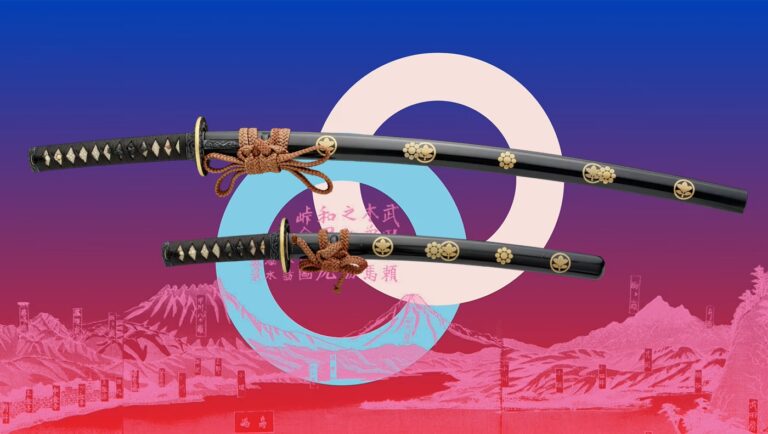
Wakizashi: The Second Sword of the Samurai
Wakizashi — the short sword of the samurai pair (daishō). History, length, use, role in seppuku. Exhibits at the Samurai…
Read the article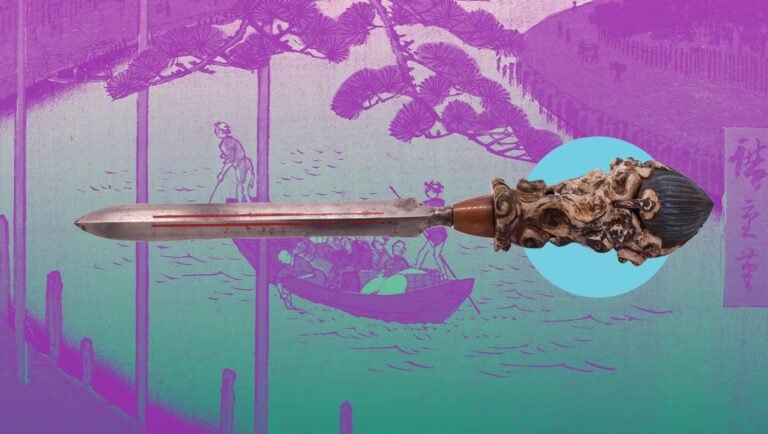
Yari: The True Spear of the Samurai
The yari was the dominant weapon of the Sengoku battlefields — not the katana. Types, tactics, legendary bearers. Exhibits at…
Read the article
Daishō: The Pair of Swords of the Samurai — Symbol and Meaning
The daishō – two swords, one status badge. History, symbolism & craftsmanship of the samurai pair of swords, with originals…
Read the article