A ninja was a spy in feudal Japan. He infiltrated enemy castles, gathered information and sabotaged the opponent’s supply lines. His weapons were patience, disguise and psychological manipulation – not flying stars and black hoods. 246,000 people search for “ninja” every month. What they find has almost nothing to do with this reality.
Instead: Naruto in an orange suit with chakra powers. Teenage Mutant Ninja Turtles in the New York sewers. Black-clad assassins who scurry across rooftops and throw smoke bombs.
Where does this image come from? Not from historical sources. Its origins lie in 18th-century Japanese kabuki theatre, in Hollywood films of the 1960s and in a global entertainment industry that finds myths more profitable than facts.
This article separates fiction from history. It shows what shinobi really did, how the modern ninja myth came into being and why this “invented tradition” – parallel to the bushidō myth – dominates the world’s imagination today.
The Historical Shinobi – What Ninja Really Were
In 1581 the warlord Oda Nobunaga sent his armies against Iga Province. The inhabitants defended their independence by every means.
They used guerrilla tactics, ambushes and their knowledge of their mountainous terrain. Nobunaga needed 46,000 soldiers to defeat them.
These men from Iga and the neighbouring province of Kōga were the historical models for what we call “ninja” today. The term itself is a modern reading. In the sources of the Edo period they were called shinobi, literally: “those who conceal themselves”.
Shinobi as a Function, Not a Class
The British historian Stephen Turnbull puts it in a nutshell: “A shinobi was not a soldier of a certain rank, nor was he a member of a secret society. Shinobi was simply a function.”
A shinobi was not a profession, but a task. Samurai took on this role when their lord needed espionage, infiltration or sabotage.
The idea of a separate “ninja class” – poor peasants who fought against the samurai elite – is a modern myth. The Shōninki, a ninja manual from 1681, makes the hierarchy clear: “A true samurai would not carry out ninjutsu; instead, he would hire a shinobi when needed.”
The shinobi themselves were usually lower-ranking samurai or their servants.
Women could also take on shinobi tasks. There have presumably been female ninja since the middle of the 16th century, but written evidence of their missions is lacking. The term “kunoichi”, popular today for female ninja, is an artificial word – popularised by the novel series of the author Futaro Yamada in the 1960s and derived from the components of the character for woman (女).
Hattori Hanzō – The Best-Known Shinobi
Probably the most famous historical ninja was Hattori Hanzō (1542–1596) from Iga Province. He served the future shōgun Tokugawa Ieyasu as leader of the Iga men and, after the death of Oda Nobunaga in 1582, saved his life by escorting him safely through Iga Province.
The Sources: Bansenshukai and Shōninki
Two texts form the foundation of what we know about historical shinobi. The Bansenshukai (1676) is an encyclopaedia from the Iga region: 22 volumes on espionage techniques, pyrotechnics, infiltration methods and psychological manipulation. The Shōninki (1681) from the Kishū domain supplements this with philosophical reflections on the mentality of the shinobi.
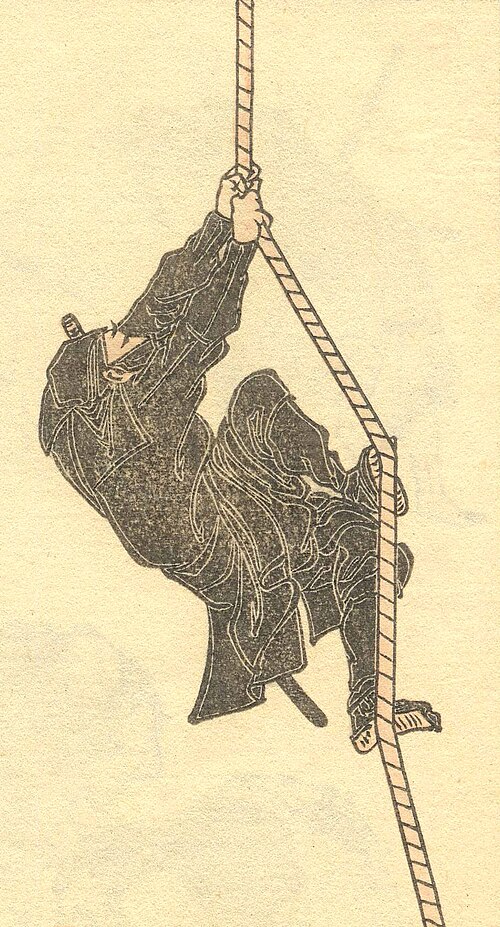
What stands out? No flying throws. No sword fights on rooftops. Instead: instructions for disguise (the “seven disguises” included monk, merchant, wanderer), methods of gathering information and recipes for smoke bombs and explosives.
Iga and Kōka – Jizamurai Provinces, Not Secret Villages
The regions of Iga and Kōka – today located in Mie Prefecture – were not mysterious ninja academies.
They were provinces without a strong feudal lord, in which jizamurai families lived together in loose alliances (ikki). Their autonomy made them experts in unconventional warfare.
Professor Yamada Yuji of the International Ninja Research Center at Mie University confirms: the earliest reliable evidence of shinobi activities dates from the 14th century, the period of the Northern and Southern Courts. Everything before that is legend.
From Spy to Official: The Oniwaban
With the peace of the Tokugawa period from 1603, the role of the shinobi changed fundamentally. The Iga and Kōka men were taken into the service of the shōgunate as oniwaban (“garden keepers”) – a euphemistic title for a bureaucratic domestic intelligence service. Their task: monitoring their own daimyō within the framework of the sankin-kōtai system, not assassinations or sabotage. War spies became administrative officials. And out of boredom and nostalgia they began to codify and exalt their “art” in manuals – the beginning of mythologisation.
The Birth of the Myth – From Kabuki Theatre to Hollywood
The iconic black ninja suit does not appear in any historical source before the 20th century. No Bansenshukai, no Shōninki, no war chronicle describes shinobi in black clothing. So where does the image that every child knows today come from? The answer does not lie on the battlefield. It lies on the stage.
The Black Suit: A Theatrical Invention
In Japanese kabuki theatre there is a convention called kuroko – literally “black figure”. Stagehands dressed entirely in black move props, change scenery and assist actors. The audience learned to regard them as “invisible”.
Black meant: ignore me, I am not part of the plot.
When kabuki playwrights brought shinobi characters onto the stage in the 18th and 19th centuries, they used exactly this convention. A kuroko who suddenly stabs and then disappears back into “invisibility” – that was theatrically brilliant. The audience understood immediately: this attacker came out of nowhere.
Stephen Turnbull documents this development: the black clothing was never historical reality. It was a stage metaphor that took on a life of its own. When Japanese films and later Hollywood discovered the ninja, they adopted the kabuki image without questioning its origins.
The Ninja Sword: Born in the 1960s
The straight “ninja sword” with the square guard – the ninjatō – is an even more recent invention. It first appears in Japanese films of the 1960s. Prop makers needed a weapon that was visually distinct from the curved katana. The solution: a short, straight sword that was meant to look more “practical” for climbing and hiding.
Historical shinobi carried, if anything, the same swords as other samurai. The Shōninki even explicitly recommends not carrying conspicuous weapons – camouflage was more important than fighting power.
From Shuriken to Magic
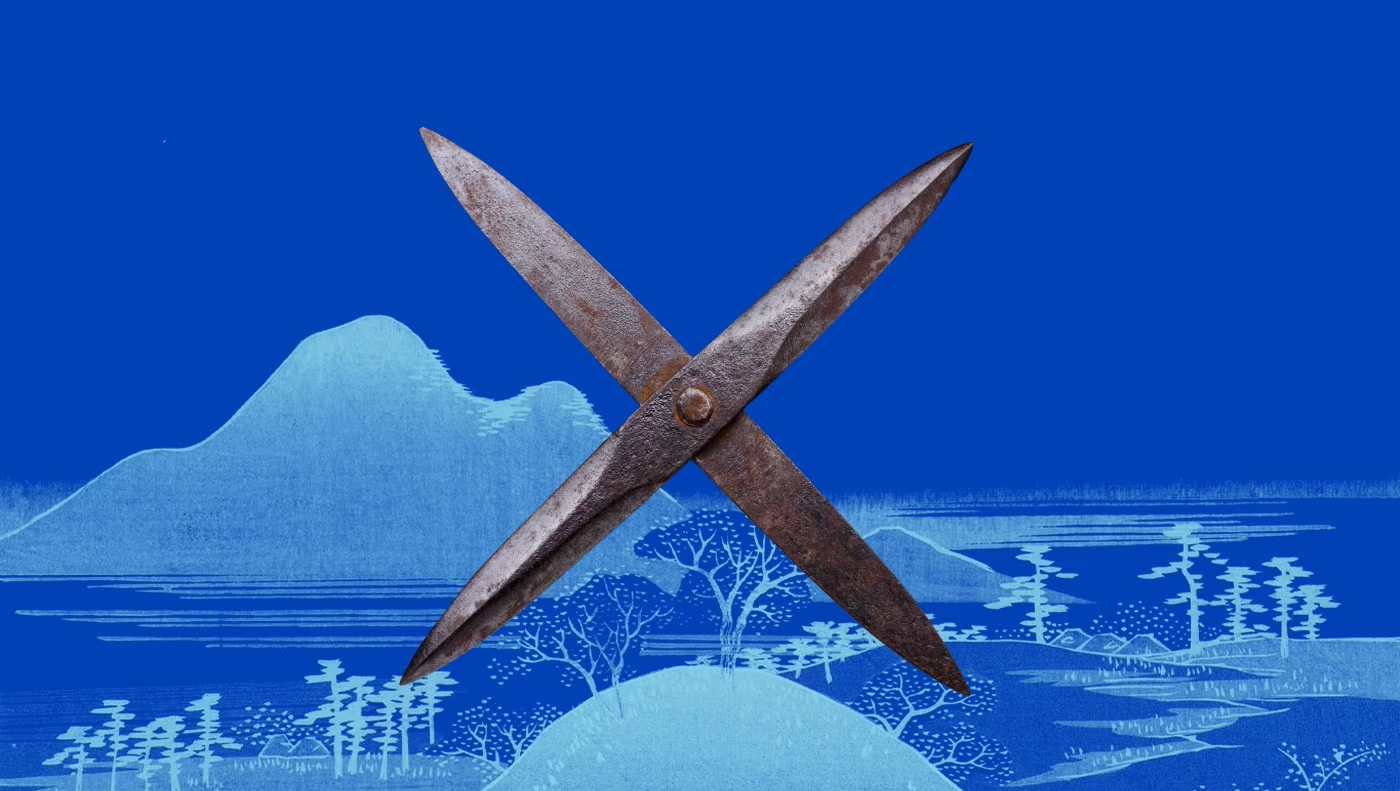
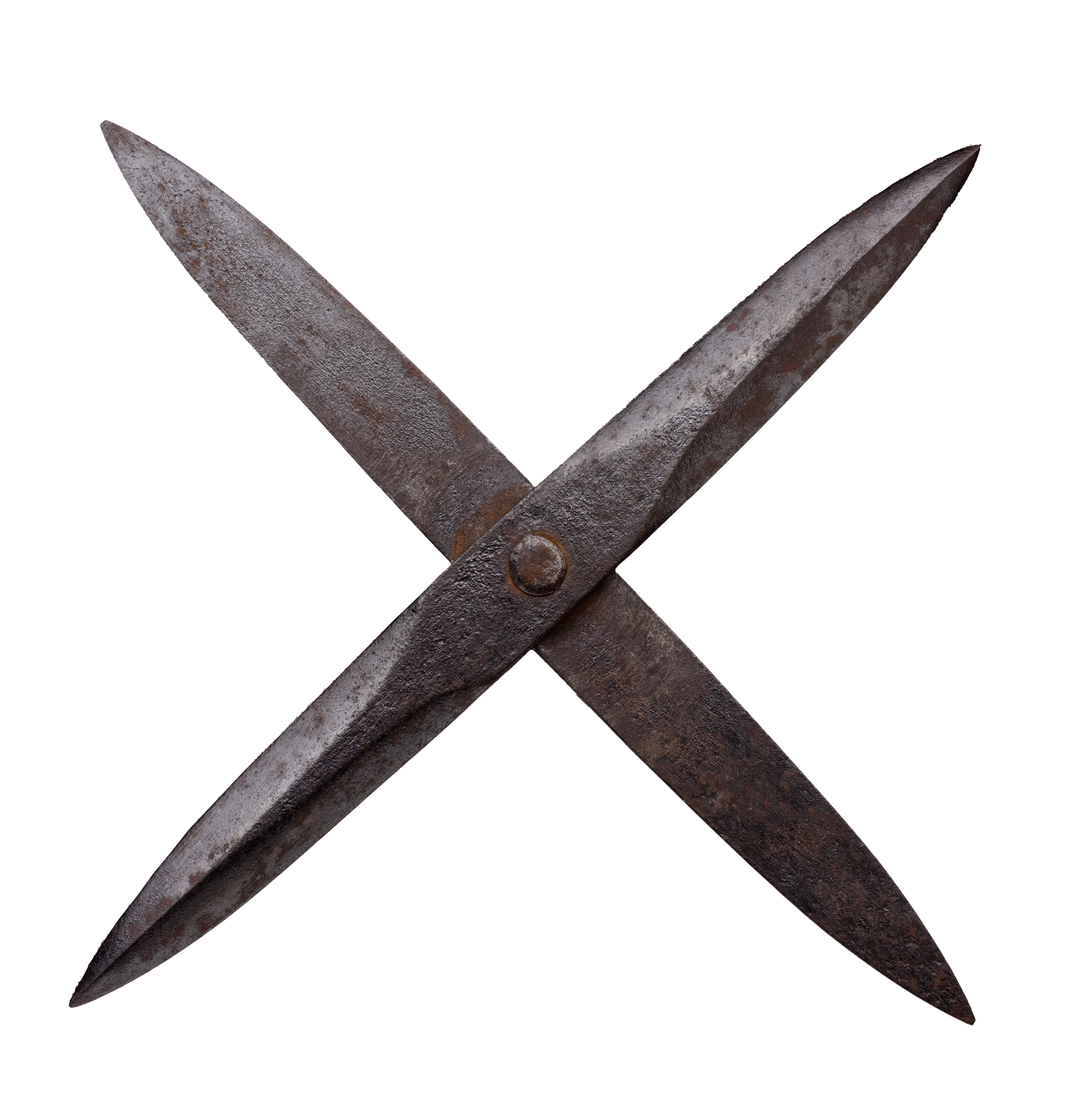
Shuriken – the famous “throwing stars” – really did exist.
But their role was different from the one they play in films. They served as a distraction, not as a deadly long-range weapon. At the Samurai Museum Berlin, a collection of historical shuriken from the Edo period shows exactly this reality: the throwing weapons could be hidden in clothing or concealed in a closed hand and, according to the catalogue text, served “mainly to confuse and distract in combat”. The art of throwing shuriken (shurikenjutsu) was part of various martial arts schools – so the shuriken was not an exclusively ninja weapon.
And the magical powers? The Bansenshukai devotes whole chapters to esoteric practices – but not as real magic.
The authors understood them as psychological techniques for self-strengthening: meditation, mantras and rituals intended to give the shinobi courage. “Invisibility” was not sorcery but masterly camouflage. The “smoke bombs” were real pyrotechnics – chemistry, not witchcraft.
What appears in pop culture as a supernatural power was, in historical reality, a toolbox of psychology, chemistry and social manipulation.
The Literary Bridge: Tachikawa Bunko and Shinobi no Mono
Before the ninja reached the West, he became, in Japan itself, a legend. Heroes with supernatural powers who ride on toads and dissolve into smoke. Stephen Turnbull sums up: “These fictional heroes shaped the image more strongly than any historical reality.”
The Japanese film series “Shinobi no Mono” (1962–66) took up this tradition and for the first time showed a dark, brutal ninja world on screen – Japan’s own ninja film tradition, years before Hollywood discovered the ninja.
The Ninja Conquers the West – From James Bond to American Ninja
In 1967, in “You Only Live Twice”, James Bond enters a secret ninja training facility in Japan. Tiger Tanaka, his ally, explains: “This is my ninja training school.” Bond trains with shuriken, learns swordsmanship and finally – in a black suit – infiltrates the villain’s volcano lair.
The film was a global box-office hit. It was also the moment when the ninja finally became a Western pop-culture phenomenon.
1967: You Only Live Twice – The Starting Signal
The Bond producers had underestimated their audience. What had been planned as an exotic Japanese adventure struck a nerve.
The ninja – mysterious, deadly, Eastern – fitted perfectly into the aesthetics of the 1960s. The counterculture was looking for alternatives to the Western mainstream. Japanese martial arts offered exactly that: a world beyond boxing and wrestling.
What the film did not show: that its image of the ninja was already a fiction, built on kabuki theatre, Tachikawa Bunko dime novels and Japanese post-war B-movies. For Western audiences it was the first contact – and therefore the “authentic” version.
1980s: The Ninja Boom
The real explosion came two decades later. “Enter the Ninja” (1981) by Cannon Films opened a wave of martial-arts films that was to dominate the entire decade. “Revenge of the Ninja” (1983), “Ninja III: The Domination” (1984), “American Ninja” (1985) – the titles became interchangeable, the formula remained the same: a lone fighter with superhuman abilities defeats armies of opponents.
At the same time the “Teenage Mutant Ninja Turtles” came into being – first in 1984 as an indie comic, then as a cartoon series (1987) and toy franchise. The Turtles were parody and homage at once: four turtles named after Renaissance artists who train in ninjutsu in the New York sewers.
Absurd – and irresistible for a whole generation of children.
The Ninja as the Counter-Image to the Samurai
Why the ninja of all figures? The samurai had long been established – through Kurosawa films, through “The Last Samurai” (2003), through countless historical dramas. But the samurai stood for hierarchy, honour, self-sacrifice. Values that were respected in the individualistic West, but not necessarily aspired to.
The ninja offered the counter-image. He was the underdog who defeated the powerful with cleverness and skill. He operated in the shadows, outside the rules. He was – in the Western reading – the rebel against the system.
That this interpretation is historically wrong (shinobi worked for the system, not against it) did not matter. The myth was more attractive than the facts.
Naruto, Ninjago and the Global Ninja Brand
In 1999 a new series appeared in the Japanese manga magazine *Shōnen Jump*: “Naruto” by Masashi Kishimoto. The story of an outsider ninja who wants to become the leader of his village struck a global nerve. By 2014 over 250 million volumes had been sold. The anime ran in 80 countries.
Naruto defined the image of the ninja for a new generation – and moved it even further away from historical reality.
Naruto: 250 Million Manga Sold
What makes Naruto’s ninja? Chakra powers that border on magic. Hand signs that create fireballs or clones.
Fights in which opponents fly through buildings.
But it was precisely this freedom that made “Naruto” successful.
The manga was not a historical reconstruction – it was fantasy with a Japanese aesthetic. The ninja elements (villages such as Konoha, ranks such as genin and jōnin, weapons such as kunai) created a coherent world that felt “authentic” without being so.
For millions of young readers worldwide, this world became the reference point. When they heard “ninja”, they thought of Naruto, Sasuke and Kakashi – not of the spies of the Sengoku period.
From Ninjago to Fortnite
Fragmentation continued. LEGO Ninjago (since 2011) brought the ninja into children’s bedrooms: colourful minifigures that fight in mechs and master “Spinjitzu”. Fortnite sells ninja skins. “Ninja” became the stage name of one of the most successful Twitch streamers in the world.
The term has completely detached itself from its historical content. Today it stands for: fast, skilful, cool. A lifestyle marker, not a historical category.
“Cool Japan” and the Colonisation of the Imagination
The cultural scholar E. Taylor Atkins describes this phenomenon in one succinct sentence: “Japan’s global influence… stems not from its reliability as a wealthy creditor and producer of high-tech appliances but from its ability to colonize our imaginations.”
Japan exports not only products – it exports imaginary worlds. Anime, manga, video games: they shape how the world sees Japan. The Japanese government has recognised this and, under the label “Cool Japan”, deliberately promotes the spread of pop culture as “soft power”.
The ninja is the perfect example. A historical phenomenon was transformed into a global brand – and today this brand generates more attention than any academic research.
Invented Tradition – The Ninja as a Bushidō Parallel
The term was practically unknown before 1890. What we understand today as “traditional samurai ethics” was only constructed around 1900 in order to give Japan a national identity vis-à-vis the West.
Benesch’s core thesis: “The ‘way of the warrior’ was not a continuous tradition handed down from ancient times, but rather a modern invention… constructed from a variety of sources, including European chivalry.”
The modern ninja myth follows the same pattern.
Parallel Constructions
Like bushidō, the image of the ninja was created for a specific audience. Bushidō was meant to present Japan as the moral equal of the West – Nitobe Inazō’s book “Bushido: The Soul of Japan” (1900) was written in English, for Western readers.
The ninja myth was likewise developed for export – through Japanese films of the 1960s that deliberately catered to Western expectations.
Both constructions claim a continuity that does not exist historically. Both use selective elements from the past to create a coherent, marketable image. And both are today so deeply anchored in the collective consciousness that historical reality seems pale by comparison.
Why Myths Survive
The “invented tradition” is not simply a lie.
It fulfils functions: creating identity, entertainment, economic value.
It offers Japan an export product that strengthens “Cool Japan”.
Facts can correct myths. But they cannot replace them.
The historical shinobi – a spy in everyday clothing who gathers information – will never arouse the same fascination as the ninja from Naruto or the Ninja Turtles.

Myth vs. Reality – The 6 Biggest Ninja Misconceptions
What do most people believe about ninja – and what do the historical sources say? Here are the six most persistent myths, scientifically refuted.
1. The Black Suit
Myth: Ninja always wore black clothing in order to be invisible at night.
Reality: The black suit comes from kabuki theatre. Stagehands (kuroko) wore black so as to be perceived by the audience as “invisible”. Historical shinobi used the “seven disguises” of the Shōninki – monk, merchant, wanderer – or wore dark-blue everyday clothing, which was less conspicuous at night than deep black.
2. Ninja Were a Class of Their Own
Myth: Ninja were poor peasants or outsiders who fought against the samurai elite.
Reality: “Shinobi” was a function, not a social class. Most shinobi were lower-ranking samurai (jizamurai) or their servants. They worked for feudal lords, not against them.
3. Shuriken as the Main Deadly Weapon
Myth: Ninja threw precise throwing stars that killed opponents at a distance.
Reality: Shuriken existed, but served as a distraction – to gain time or confuse pursuers. The historical shuriken at the Samurai Museum Berlin confirm this function: according to the catalogue, they were used “mainly to confuse and distract”, not as a deadly long-range weapon. The art of shurikenjutsu was, moreover, part of regular martial arts schools – not a ninja monopoly.
4. The Straight Ninja Sword (Ninjatō)
Myth: Ninja used a special short, straight sword with a square guard.
Reality: The “ninjatō” is an invention of the Japanese film industry of the 1960s. Historical shinobi carried – if anything – normal swords. The Shōninki even recommends avoiding conspicuous weapons.
5. Magical Powers and Invisibility
Myth: Ninja mastered supernatural abilities – they could disappear, transform themselves, control the elements.
Reality: The Bansenshukai contains esoteric practices – but as psychological techniques for self-strengthening, not as real magic. “Invisibility” meant masterly camouflage. “Smoke bombs” were pyrotechnics.
6. Secret Ninja Villages in Iga and Kōga
Myth: In the mountains of Iga there were hidden ninja academies in which secret knowledge was passed on.
Reality: Iga and Kōga were provinces without a strong feudal lord, in which jizamurai families lived in loose alliances (ikki). Their autonomy made them experts in unconventional warfare – but “secret schools” are a romantic exaggeration.
Conclusion: The Ninja between Myth and History
The ninja as the world knows him does not exist.
He is a cultural construct – born of kabuki theatre, dime novels of the Meiji period, Hollywood films and a global entertainment industry that puts fascination above facts.
That does not mean that the fascination is unjustified.
The historical shinobi – spies, informants, masters of camouflage – were just as revealing in their own way.
They operated in a world in which false information could decide between victory and defeat. Their tools were not throwing stars and magic, but patience, knowledge of human nature and the ability to become invisible without hiding.
Related Articles
→ Bushidō: The Code of Honour – The 7 Virtues of the Samurai
→ Kill Bill and Hattori Hanzo: Myth and Reality of the Famous Ninja Clan
Frequently Asked Questions about Ninja
1. Did ninja really exist?
Yes, but not in the way films show them. The term “shinobi” denoted a function: espionage, infiltration, gathering information. Shinobi were often lower-ranking samurai who took on these tasks for their lords – not a separate warrior class with supernatural abilities.
2. Why do ninja in films always wear black?
The image comes from Japanese kabuki theatre. Stagehands (kuroko) wore black clothing in order to be regarded as “invisible”. When playwrights brought ninja characters onto the stage, they used this convention. Hollywood adopted the image without knowing its theatrical origins.
3. What is the difference between ninja and samurai?
“Samurai” was a social estate – the warrior class of feudal Japan. “Shinobi” was a task that was often carried out by samurai. The pop-culture opposition (honourable samurai vs. treacherous ninja) is a modern invention with no historical basis.
4. Where does the modern image of the ninja come from?
From a mixture of kabuki theatre (18th/19th century), dime novels (Tachikawa Bunko, 1910s/20s), Japanese films (Shinobi no Mono, 1962–66), Hollywood (1960s–80s) and anime/manga (1990s to today). Each generation added new elements – from the black suit to throwing stars to chakra powers.
5. Is there a realistic ninja film?
Not a completely realistic one. But the Japanese film series “Shinobi no Mono” (1962–66) at least shows the brutality and moral ambiguity of the historical shinobi world – considerably closer to reality than Western productions, even if it too dramatises.
6. Were there female ninja (kunoichi)?
There were presumably female ninja from the middle of the 16th century, but written evidence is lacking. They probably carried out espionage activities or spread false information. The term “kunoichi” is an artificial word – popularised by the author Futaro Yamada in the 1960s and derived from the components of the character for woman (女: ku-no-ichi).
Visit the Samurai Museum Berlin
Open daily 10 a.m.–7 p.m., Auguststraße 68, Berlin-Mitte.
→ Tickets & Opening Hours
→ All Exhibitions at a Glance
Related Articles
Bibliography
- Turnbull, Stephen (2018): Ninja: Unmasking the Myth. Frontline Books. ISBN 978-1-4738-5077-4
- Benesch, Oleg (2014): Inventing the Way of the Samurai: Nationalism, Internationalism, and Bushido in Modern Japan. Oxford University Press. ISBN 978-0-19-870662-5
- Atkins, E. Taylor (2017): A History of Popular Culture in Japan: From the Seventeenth Century to the Present. Bloomsbury Academic. ISBN 978-1-4742-5853-1
- Sugimoto, Yoshio (ed.) (2009): The Cambridge Companion to Modern Japanese Culture. Cambridge University Press. ISBN 978-0-521-70660-0
- Cummins, Antony & Minami, Yoshie (2013): The Book of Ninja: The Bansenshukai – Japan‘s Premier Ninja Manual. Watkins Publishing. ISBN 978-1-78028-587-9
- Cummins, Antony (2011): True Path of the Ninja: The Definitive Translation of the Shoninki. Tuttle Publishing. ISBN 978-0-8048-4329-0
- Cummins, Antony & Minami, Yoshie (2015): The Book of Samurai: Fundamental Samurai Teachings. Watkins Publishing. ISBN 978-1-78028-830-6
© Samurai Museum Berlin – All Rights Reserved
You might also like

Kill Bill and Hattori Hanzō: Myth and Reality of the Famous Ninja Clan
Okinawa, a small sushi restaurant. Behind the counter an elderly man stands cutting fish. A blonde woman enters and orders…
Read the article
Vagabond Manga: Musashi between Fiction and History
Vagabond: Miyamoto Musashi as a Manga Icon — Art, Philosophy and Historical Truth A double-page spread without dialogue. Ink on…
Read the article
Sekiro: Shadows Die Twice
Sekiro: Shadows Die Twice – What is historical, what is fiction? The real Sengoku history behind the game, explained with…
Read the article