 Nominated for the EMYA2026 award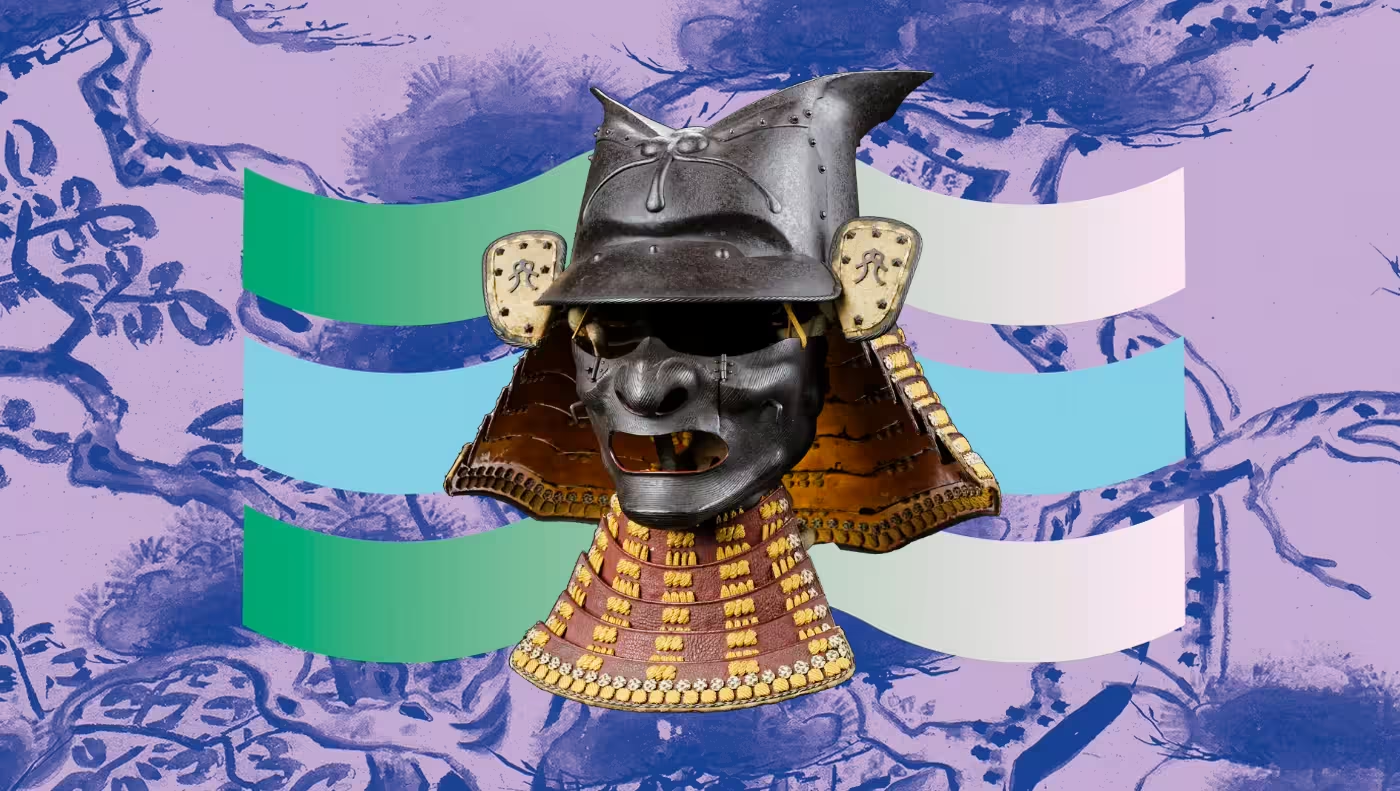
Introduction
Philadelphia, 1899. A Japanese scholar lies in bed, weakened by fever, writing in English. Not for Japanese readers – for Americans. His name is Nitobe Inazo. He is a Christian, has studied in the United States, and has married an American woman. And he is trying to answer a question posed by his Belgian host that has not let go of him for months:
How do you impart moral education if your schools do not teach religion?
Nitobe’s answer becomes a book. He calls it Bushido: The Soul of Japan. In it, he arranges the seven virtues of the samurai – righteousness, courage, benevolence, politeness, sincerity, honor, loyalty – into a coherent code of honor. A system he describes like the fragrance of the cherry blossom: even when the tree is felled, it still lingers in the air.¹
The book is published in 1900 and becomes a worldwide bestseller. US President Theodore Roosevelt buys dozens of copies and sends them to friends.² The Western image of Japan has been shaped ever since by Nitobe’s samurai.
There is just one problem: the medieval samurai Nitobe writes about would not have recognized the word Bushido. It does not appear in a single battlefield document of the Japanese Middle Ages.³
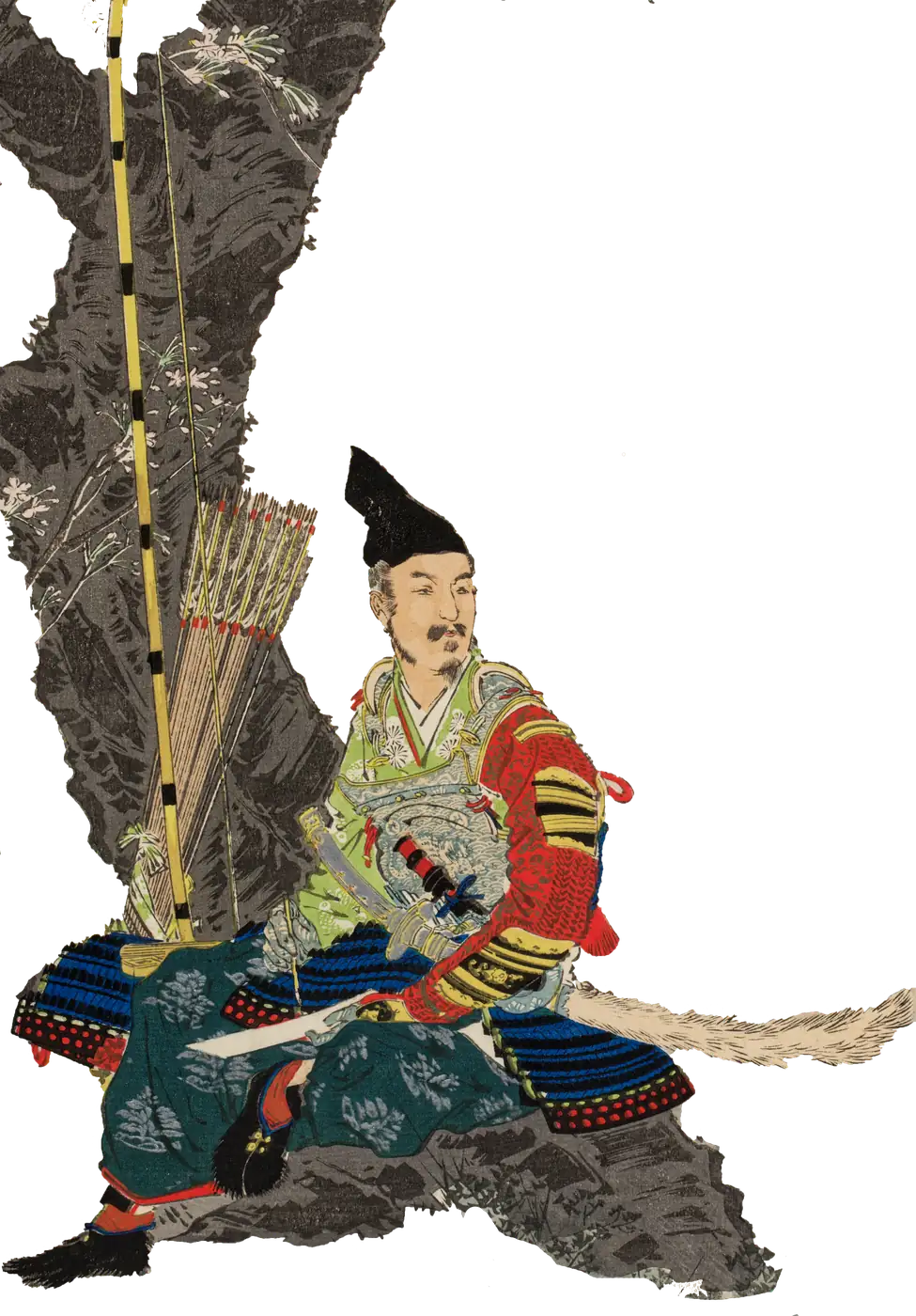
What Nitobe created was not a historical record. It was an invention – brilliant, powerful, and alive to this day.
- [1] Nitobe, Inazo (1900/2019): Bushido: The Samurai Code of Japan, ch. 17, p. 159
- [2] Benesch, Oleg (2014): Inventing the Way of the Samurai, p. 92
- [3] Benesch, Oleg (2014): Inventing the Way of the Samurai, p. 16
What is Bushido? The classical definition
The Japanese word Bushido (武士道) is composed of bushi (武士, “warrior”) and do (道, “way”). The way of the warrior. Unlike the European orders of chivalry, Japan never possessed a written code of law for its warrior class. Bushido was – according to Nitobe – “an unwritten law, engraved on the fleshly tablets of the heart, not on parchment.”¹
Nitobe’s system rests on three spiritual pillars:
Buddhism supplied the attitude toward death. A samurai was to understand dying as a natural transformation – not as an end, but as a transition. This composure was what made practices such as seppuku conceivable in the first place.²
Shinto contributed loyalty – to the lord, to the ancestors, to the bloodline of the clan. Preserving the honor of one’s forebears was held to be more important than one’s own life.
Confucianism, finally, gave the system its ethical structure: the five relationships between ruler and subject, father and son, husband and wife, elder and younger brother, friend and friend. Hierarchy as a moral principle.³
Out of this fusion arose, according to Nitobe, a code that is said to have shaped Japan’s warrior class from the 12th century until the abolition of the feudal system in 1868. An elegant thesis. And, as we shall see: one that scarcely withstands historical scrutiny.
- [1] Nitobe, Inazo (1900/2019): Bushido: The Samurai Code of Japan, p. 55
- [2] Nitobe, Inazo (1900/2019): Bushido, ch. 2 & 12, pp. 60–66, 116–127; Rankin, Andrew (2011): Seppuku, pp. 45–67
- [3] Nitobe, Inazo (1900/2019): Bushido, ch. 2, pp. 60–66; Yamamura (1990): Cambridge History of Japan Vol. 3, pp. 234–237
The surprising truth: Bushido as a modern invention
It sounds like sacrilege. The code of honor that is said to have defined the Japanese warrior class for a long time appears practically nowhere in medieval Japanese texts.¹ No samurai of the 12th century would have known what was meant by it.
Among others, the historian Oleg Benesch demonstrated this in 2014. In Inventing the Way of the Samurai he shows that Bushido, as we know it, was constructed between 1890 and 1920. After the Meiji Restoration of 1868, Japan was under enormous pressure. Modernize or be colonized – that was the choice. The samurai class had just been abolished. Its ideals had to be reinvented, for a new age and a new audience.²
Nitobe did not write for Japanese readers.
His book came about as an answer to a question from his Belgian host in Philadelphia: How do Japanese schools impart moral education without religion? Nitobe answered with Bushido – as the Japanese equivalent of the Christian catechism.³ The book appeared in English. The Japanese translation followed only years later. Nitobe explained Japan to the West – not the Japanese to themselves.
The irony goes deeper still. As early as 1905, the English Japanologist Basil Hall Chamberlain wrote: “Bushido was unknown outside literary circles until, about ten years ago, Nitobe and others began to write about it.”⁴ This criticism was ignored for a century. Only Benesch’s research made it prevail.
- [1] Benesch (2014): Inventing the Way of the Samurai, p. 16
- [2] Benesch (2014), pp. 5–12, 90–95
- [3] Nitobe (1900/2019): Bushido, preface to the first edition, pp. xi–xii
- [4] Chamberlain, cited in Benesch (2014), p. 106
Nitobe Inazō: The man who invented Bushido for the West
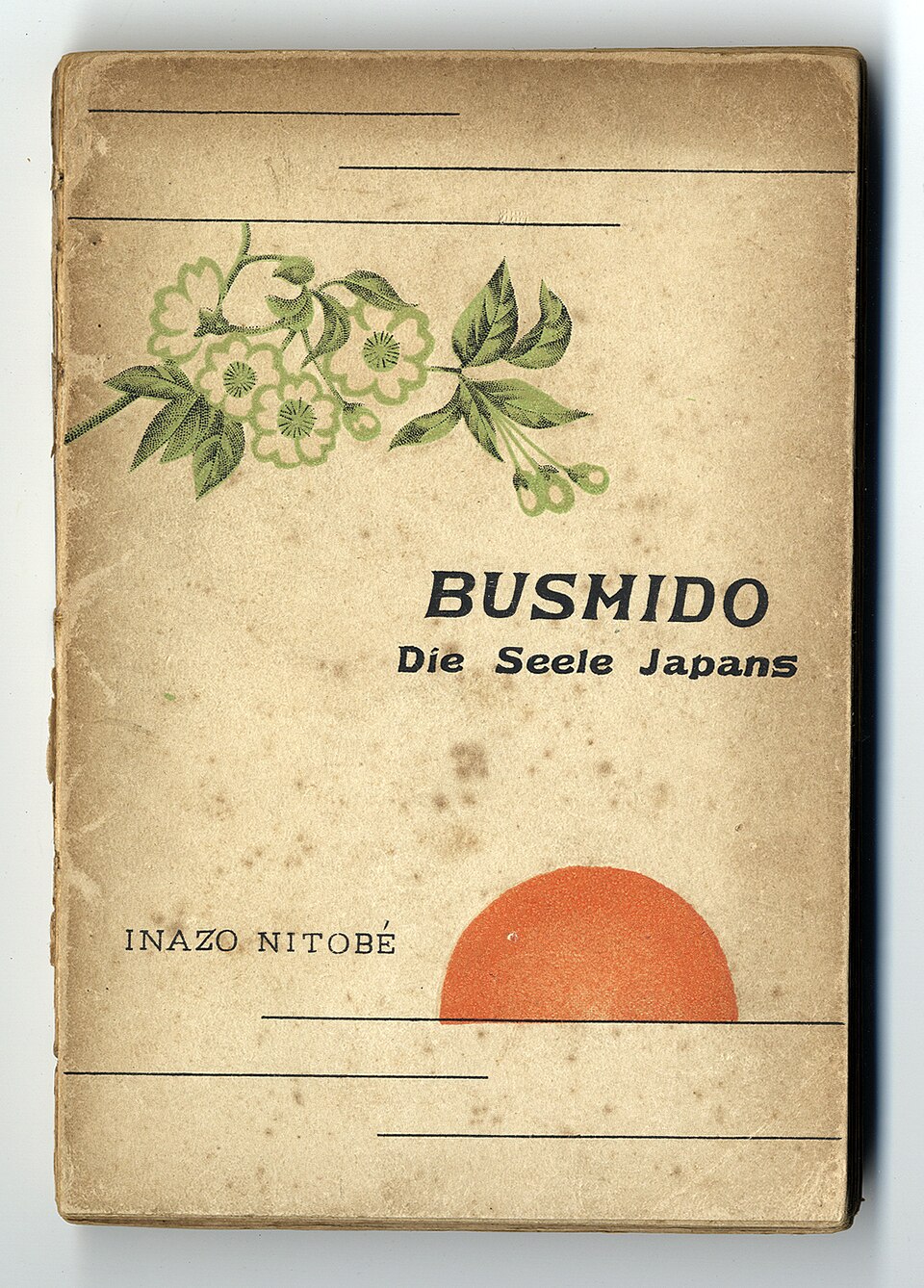
Nitobe Inazo (1862–1933) was born into a samurai family – just before the feudal system was abolished. He experienced the end of the warrior class as a child. He studied agricultural science in the United States, converted to Christianity, and married an American woman.¹
When he was working on Bushido: The Soul of Japan in California in 1900, he was 38 years old and had never served as a warrior himself. His sources were not medieval war chronicles. He compared samurai with European knights, quoted Shakespeare, and referred to Christian virtues.² This was no coincidence – it was strategy.
Nitobe’s project was profoundly political. Japan was to appear as a civilized nation that possessed its own ethical traditions. Not “barbaric savages” who had to be educated by the West. Bushido became an export product – soft power in the age of imperialism.
The seven virtues he listed were not a historical reconstruction. They were a strategic selection: righteousness, courage, benevolence, politeness, sincerity, honor, loyalty – values that Western readers could find familiar. Confucian concepts were translated into Christian terminology. The result was a hybrid: “Oriental” enough to seem exotic, “Western” enough to appear respectable.³
The success was resounding – and lasting. Translated into 30 languages, the book shaped the Western image of Japan for generations. What Nitobe had really created was only recognized much later.
He had not rediscovered Bushido.
He had invented it.
- [1] Benesch (2014), pp. 87–90
- [2] Nitobe (1900/2019): Bushido, ch. 1–3
- [3] Benesch (2014), pp. 95–98
How did samurai really think? The historical reality
Earlier period (1185–1600): Honor through violence
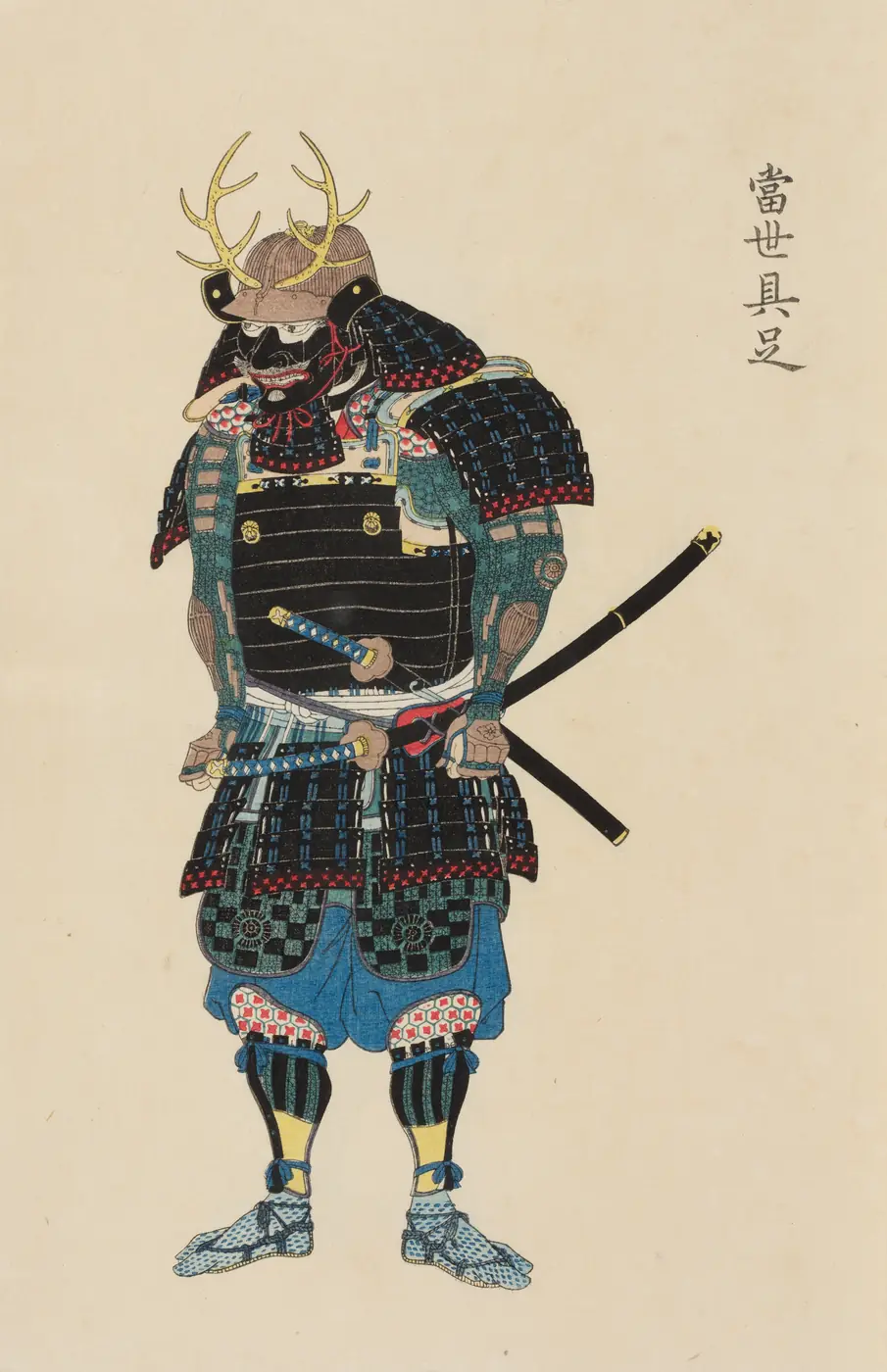
The samurai were, as the historian Eiko Ikegami put it, “violence specialists” – specialists in organized violence whose social status resulted exclusively from their military function.¹
“Loyalty” in the modern sense? Scarcely present. Samurai switched sides when a better offer came along. The phenomenon of gekokujo – the lower overthrowing the higher – was so widespread that there was a dedicated term for it.
Glory was proven by the severed heads of enemy warriors – presented as trophies, counted, evaluated. Karl Friday, an expert on medieval Japanese warfare, puts it succinctly: “Samurai fought for land, plunder, and status – not for abstract ideals.”³
In a society in which wars took place almost without interruption, the probability of dying young was simply very high. Anyone who did not accept this was of no use on the battlefield.
Edo period (1600–1868): The “taming” of the samurai
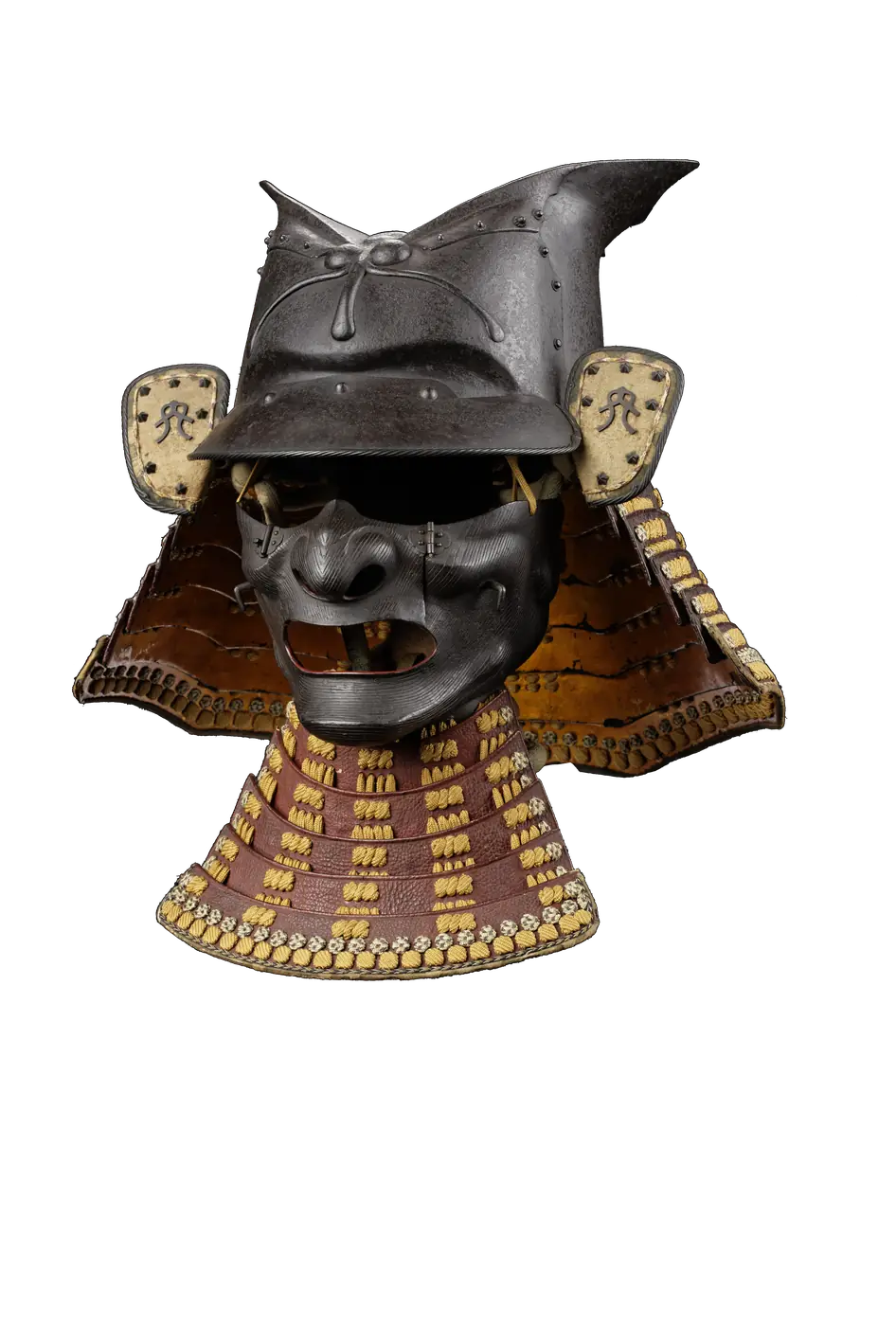
With the beginning of the Edo period, the civil wars came to an end. The Tokugawa shoguns created a stable feudal system – and with it a problem: tens of thousands of warriors without a war. Their identity had to be redefined.
Ikegami calls this process the “Taming of the Samurai” – the domestication of the warriors.⁴ In this void arose a nostalgia for the heroic times of the past. Armorers of the Edo period produced elaborate reproductions of the Ō-yoroi armors – not for combat, but as status symbols.⁵ At the Samurai Museum Berlin you can see such neo-archaic armors from the 18th century: perfect craftsmanship for an age without battles.
The famous Hagakure, often called the “Bible of Bushido,” arose in this context. Yamamoto Tsunetomo dictated it around 1716 – as a blind old man who had never fought in a real battle. “The way of the samurai is found in dying.”⁶ Written by someone to whom this opportunity was never offered.
Ikegami does not read the Hagakure as a description of actual practice: “It is a nostalgic dream of a warrior honor that was already lost.”⁷
- [1] Ikegami, Eiko (1995): The Taming of the Samurai, pp. 50–52
- [2] Friday, Karl F. (2004): Samurai, Warfare and the State in Early Medieval Japan, pp. 142–167; Conlan (2003): State of War, pp. 89–91
- [3] Friday (2004), p. 8
- [4] Ikegami (1995), pp. 278–330
- [5] Catalog text Ō-yoroi (C02V_8), Samurai Museum Berlin
- [6] Yamamoto Tsunetomo (1716/2021): Hagakure, Book 1, p. 43
- [7] Ikegami (1995), p. 330
The 7 Virtues — Between ideal and reality
Nitobe’s seven virtues are historically problematic and culturally powerful. Both at once. They have shaped the modern image of Japan, appear in management books, and inspire martial arts schools on five continents.
What follows is not a program of refutation. It is a juxtaposition: What did Nitobe write – and what do historical sources say about it? The tension between the two is the actual insight to be gained.
義 Gi — Righteousness
Nitobe placed Gi at the beginning: “the skeleton that gives the body structure.”¹ Righteousness means doing the right thing – not because it is advantageous, but because it is morally required. A samurai acts without hesitation.
The Hagakure radicalizes this: “Righteousness is decided in seven breaths.”² The meaning: reflection is weakness. Whoever deliberates has already lost.
Historical practice looked more sober. Medieval samurai decided according to a simpler question: What benefits my clan? The Confucian virtue of gi was known to scholars – on the battlefield it played no operative role.
In modern Japan, Gi is often translated as “integrity under pressure.” Whistleblowers sometimes invoke it. That would probably have pleased Nitobe – it is what he intended, even if the history behind it is more complicated.
勇 Yū — Courage
“Doing the right thing even when one is afraid” – that is how Nitobe defined courage.³ He quoted Confucius: “Courage without justice is not worth a virtue.”
The Hagakure sees it differently: “The way of the samurai is found in dying. To live when one should die brings shame.”⁴ Not calculated courage – an unconditional readiness for death. This philosophy was abused in the Second World War to justify kamikaze attacks. It was taken from a text that was nostalgia and transformed into state propaganda.
The story of the 47 Rōnin shows the tension within the concept of courage. The rōnin waited two years before taking their revenge. Calculated, strategic, patient. Critics in the spirit of the Hagakure argued: True courage would have meant an immediate attack. The 47 Rōnin chose planning over impulsiveness – and became heroes nonetheless. Courage, it seems, can be spelled in different ways.
仁 Jin — Benevolence
Nitobe described Jin as “love, magnanimity, compassion for the weak.”⁵ A samurai was not to be cruel – he was to practice noblesse oblige, to show strength through benevolence.
This is the chapter that resists historical sources most stubbornly. Medieval war chronicles report massacres of civilians, temples in flames, severed heads as trophies. Benevolence was not an operative principle in war.
Jin is one of the five cardinal virtues of Confucianism – originally a ruler’s virtue, conceived for the wise king toward his people.⁶ Nitobe transferred it to the warrior. That was not a reconstruction. That was a reinterpretation.
礼 Rei — Politeness
Politeness as a warrior’s virtue? The answer lies not in aesthetics, but in function. Ikegami analyzed this sharply: When samurai no longer waged wars in the Edo period, social rituals had to channel the aggression.⁷
Nitobe had sensed this, even if he did not formulate it that way. He described politeness as “the outward form of the inner attitude”⁸ – self-control, made visible. What he presented as a virtue was, in historical practice, a control mechanism. Both interpretations are correct. They do not exclude one another.
誠 Makoto — Sincerity
“The word of a samurai is law.” Nitobe’s definition of Makoto sounds absolute.¹ Bushi no ichi-gon – a warrior’s word – needs no contract.
Historically, the core is correct: oral pledges were indeed common in medieval warrior culture. Not for ethical reasons – in a largely illiterate society, the spoken word was often the only available instrument of contract.
But there was a reason why Buddhist temples developed special rituals for oaths of allegiance – under threat of divine punishment in case of breach.² If one could trust the word of the warrior without reservation, one would need no divine deterrent. The necessity of such rituals is the strongest argument against Nitobe’s idealized image.
名誉 Meiyo — Honor
“A samurai is conscious of his moral dignity.”³ For Nitobe, dishonor was worse than death.
Ikegami analyzes honor more soberly: as symbolic capital. In a society without a developed monetary economy, reputation was the currency with which one purchased social positions. Honor was not a moral category – it was a resource. Accumulable, tradeable, losable.⁴
The story of the 47 Rōnin shows the principle in its purest form. The rōnin committed seppuku after their revenge. Their graves at the Sengaku-ji temple in Tokyo are places of pilgrimage to this day.⁵ Ikegami would have added: because the story provides perfect symbolic capital.
忠義 Chūgi — Loyalty
Nitobe’s centerpiece. “Loyalty is the highest virtue.”⁶ Fidelity to the lord, absolute – to the death.
Ikegami counters: Loyalty in the Middle Ages was contractual, not absolute. Samurai served a lord in exchange for land or pay. If the lord broke his part of the contract – no reward after the battle, no protection of the clan – the samurai was free to leave. Or to turn against him.⁷ “Feudal loyalty was a business relationship, not a moral absolute.”
The Hagakure radicalized this into its opposite: “A retainer should follow his lord even into death, even if the lord is in the wrong.”⁸ This philosophy found its most brutal expression in the Second World War: unconditional obedience as the highest virtue.
Oda Nobunaga, Toyotomi Hideyoshi, Tokugawa Ieyasu – all three great unifiers of Japan profited from betrayal. Without gekokujo, the principle of the lowly defeating the high, Japan would never have been unified. Loyalty was the ideal. Opportunism was the practice.
- [1] Nitobe (1900/2019), p. 67; [2] Hagakure, Book 1, p. 78
- [3] Nitobe (1900/2019), pp. 68–73; [4] Hagakure, Book 1, p. 43
- [5] Nitobe (1900/2019), pp. 74–81; [6] Yamamura (1990): Cambridge History of Japan Vol. 3, pp. 234–237
- [7] Ikegami (1995), pp. 278–289; [8] Nitobe (1900/2019), pp. 82–87
- Makoto: [1] Nitobe (1900/2019), pp. 88–93; [2] Friday (2004), pp. 134–138
- Meiyo: [3] Nitobe (1900/2019), pp. 94–98; [4] Ikegami (1995), pp. 10–15; [5] Ikegami (1995), pp. 275–277
- Chūgi: [6] Nitobe (1900/2019), pp. 99–105; [7] Ikegami (1995), pp. 85–87; [8] Hagakure, Book 1, p. 102
What can we learn from Bushido today?
Bushido may be an invention of the 20th century. That does not make it worthless.
Eric Hobsbawm and Terence Ranger have shown how “invented traditions” become culturally powerful when they address real needs.¹ The Christmas tree is an invention of the 19th century. No one concludes from this that the Christmas festival is meaningless.
The corporate-samurai paradox: In the 1980s, Bushido experienced a remarkable revival – in conference rooms. Japanese companies were regarded as models of discipline, team spirit, and long-term thinking. Western managers made pilgrimages to Japan. The Book of Five Rings by Miyamoto Musashi became a business bestseller.² Benesch calls this the “Bushido Renaissance” – yet another reinvention, this time for the age of the Toyota production system.
The adaptation was selective: the positive aspects were adopted, the problematic ones ignored. Blind loyalty, suppression of criticism, self-sacrifice as a virtue – these were left out. What remained was a hybrid of Japanese aesthetics and Western efficiency ideology.
Bushido ideals are tools. Like every tool, their effect depends on who holds them and for what purpose.
Martial arts and living practice: Modern Japanese martial arts such as Kendō, Iaidō, and Aikidō teach Bushido not as a historical fact, but as a physical experience: concentration, respect, self-control. Here Bushido is not a code of honor from the year 1900. It is a practice learned in the dojo and applied in everyday life.³
That is perhaps the most honest way of dealing with Nitobe’s legacy. Not as myth, not as historicism – as a lived present.
- [1] Hobsbawm/Ranger (1983): The Invention of Tradition, Cambridge University Press
- [2] Benesch (2014), ch. 7: Bushido Renaissance, pp. 212–245
- [3] Kendo World Magazine, various issues 2010–2020
A necessary clarification
This article describes seven virtues that did not exist historically – at least not in the form that Nitobe gave them. This calls for openness.
The seven virtues were not historical facts of the Japanese Middle Ages. They are a construction of the Meiji period, formulated by a Christian scholar for a Western audience. Medieval samurai would not have recognized the system.¹
Why write about it, then? Three reasons.
First: Invented traditions can become culturally real. The Bushido narrative has shaped the modern image of Japan, influenced Japanese identity politics, and permeated global pop culture – from Hollywood to video games. What is historically constructed can nevertheless be real in its effects.
Second: Nitobe’s seven virtues are a window into a specific historical situation. Japan around 1900: between tradition and modernity, between self-assertion and adaptation. How a culture presents itself when under pressure – that is historically fascinating, even if it reveals no “original truth.”
Third: The academic perspective changes the picture for the better. Ikegami, Friday, Benesch, and Conlan show how real samurai thought and acted. Medieval warriors were more pragmatic, more contradictory, and more human than Nitobe’s idealized image. This tension – between myth and reality – is the actual insight to be gained.
Our approach: We present both perspectives. What Nitobe described. What historical research shows. The reader draws their own conclusions.
- [1] Benesch (2014), p. 16
Conclusion: What remains of Bushido
Philadelphia, 1899. Nitobe Inazo lies ill in bed and invents a code of honor that never existed.
The historical truth is more complicated, and therefore more interesting. Medieval samurai fought for land and status. They switched sides when it was worthwhile. Honor was symbolic capital, not a moral absolute. The Hagakure is not a manual of actual practice – it is a document of longing. Written when the age of the samurai was already over.
What Nitobe created was nevertheless not a lie. It was an answer to a real question: How does a country explain itself when the old order has crumbled and the new one has not yet taken shape? Bushido was Japan’s answer to the West – and to itself.
The tension between this ideal and historical reality does not dissolve. It persists. Perhaps that is the most honest thing to say about Bushido: It was always both. Invention and mirror. Myth and method.
Experience Bushido at the Samurai Museum Berlin
The katana of Gassan Sadakazu (H04V_59) – crafted for a coronation, never for a battle. The Gunbai Uchiwa (C05H_11), with which Takeda Shingen warded off sword blows. Edo-period katanas whose blades were polished for the eye, not for the cutting edge. Each object tells of the distance between the ideal and what really was.
Frequently asked questions about Bushido
Bushido (武士道) means “The way of the warrior” – from bushi (warrior) and do (way). The kanji 道 denotes not only a physical path, but a philosophy of life or a spiritual practice.
No. The 7 virtues were formulated in 1900 by Nitobe Inazo. Historical samurai of the Middle Ages did not know this system. The term Bushido appears practically nowhere in medieval Japanese texts.
No. Nitobe described Bushido as an “unwritten law.” Only in the 20th century did various authors attempt to capture the code systematically – with partly contradictory results.
Yes. “Imperial Bushido” was instrumentalized to glorify self-sacrifice for the emperor. The Hagakure philosophy was abused to justify kamikaze attacks and blind obedience.
Modern martial arts such as Kendō, Iaidō, and Aikidō convey values such as respect, discipline, and self-control. These arts teach Bushido not as a historical fact, but as a lived practice for the 21st century.
In the 1980s, Bushido was popularized as an explanation for the success of Japanese companies. Values such as discipline, teamwork, and long-term orientation were marketed as “samurai ethics.” This adaptation is yet another reinvention.
List of sources
- Nitobe, Inazo (1900/2019): Bushido: The Soul of Japan. Tuttle Publishing. → Classical definition of the 7 virtues, three spiritual roots
- Yamamoto Tsunetomo (1716/2021): Hagakure. Trans. William Scott Wilson. Shambhala. → Radicalization of the virtues, Edo-period nostalgia
- Benesch, Oleg (2014): Inventing the Way of the Samurai. Oxford University Press. → Standard work on the deconstruction of the Bushido myth
- Conlan, Thomas (2003): State of War. University of Michigan Press. → Violence and loyalty in medieval Japan
- Friday, Karl F. (2004): Samurai, Warfare and the State in Early Medieval Japan. Routledge. → Historical reality of medieval samurai practice
- Hobsbawm, Eric / Ranger, Terence (eds.) (1983): The Invention of Tradition. Cambridge University Press. → Theoretical framework for invented traditions
- Ikegami, Eiko (1995): The Taming of the Samurai. Harvard University Press. → Sociological analysis of the samurai transformation; honor as symbolic capital
- Rankin, Andrew (2011): Seppuku: A History of Samurai Suicide. Reaktion Books. → On the practice of seppuku
- Yamamura, Kozo (ed.) (1990): The Cambridge History of Japan, Vol. 3: Medieval Japan. Cambridge University Press. → Confucian ethics and their historical role
- Samurai Museum Berlin: Catalog text on Ō-yoroi (C02V_8). → Edo-period reproductions of medieval armors
You might also like
Seppuku: History, Ritual and Meaning of the Stomach-Cutting
Seppuku – history, ritual and meaning of the stomach-cutting. From battle tactic to Edo ceremony: what really drove the samurai…
Read the article
Shogun: The Military Rulers of Japan — History & Significance
Shogun – the military rulers of Japan: who they were, how they ruled & why they never abolished the emperor.…
Read the article
Kendō: History, Philosophy & Practice of the Art of the Sword
Kendō – the way of the sword: from Kenjutsu to a modern martial art. History, equipment, philosophy & historical exhibits…
Read the article