 Nominated for the EMYA2026 award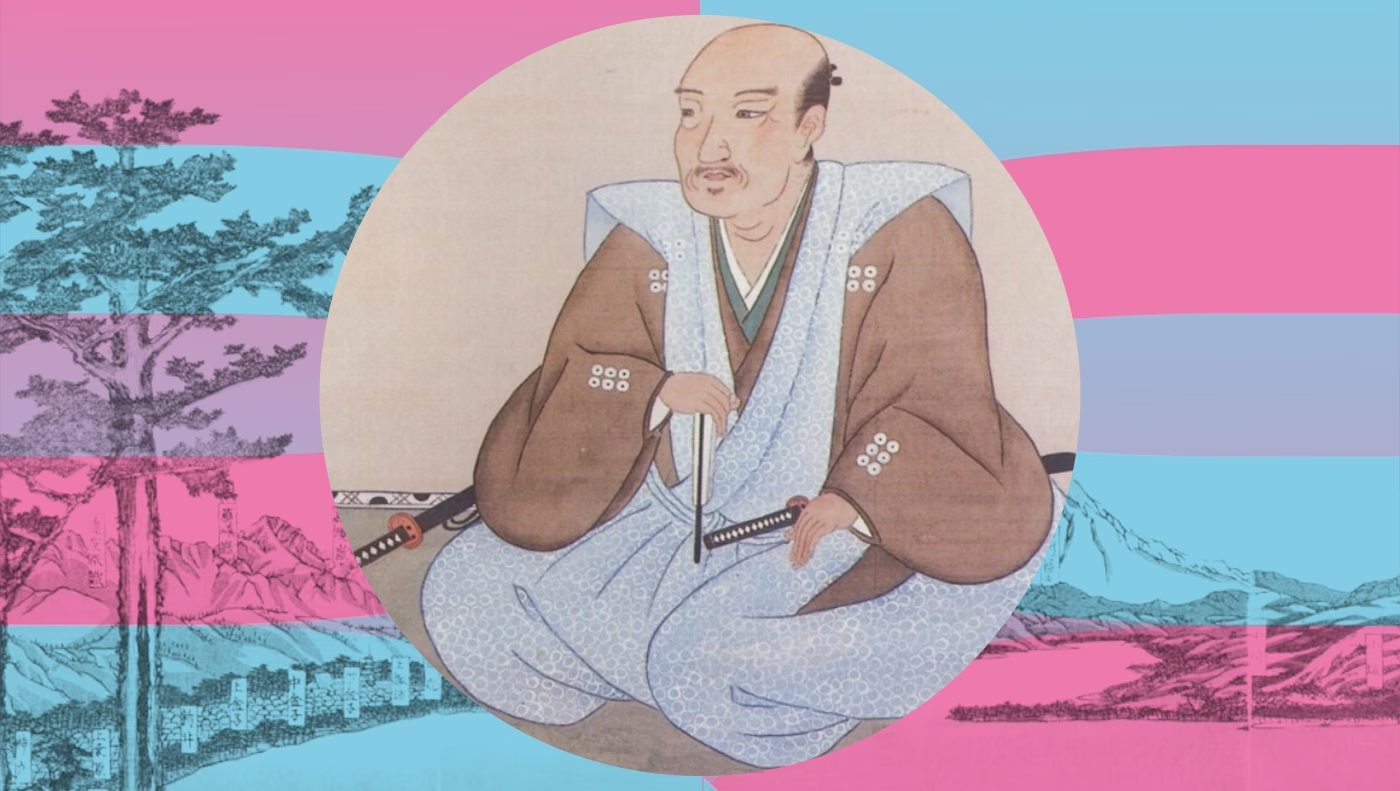
In the early morning hours of 3 June 1615, Sanada Yukimura broke through the Tokugawa battle lines with his guard. He was 47 years old. The castle had now fallen, the fire was burning, and Yukimura fought his way forward — not to escape, but to reach Ieyasu’s headquarters.
According to tradition, he came close enough to strike Ieyasu’s palanquin with his lance. The bodyguards stopped him. Exhausted, he paused, sat down, and was killed by an enemy. In Japan he is still called the country’s bravest warrior to this day.
The Sanada: A Clan Caught Between All Sides
The Sanada clan came from Shinano Province — today Nagano Prefecture. Yukimura’s father, Sanada Masayuki, was a brilliant tactician who held Ueda Castle against Tokugawa Ieyasu twice — in 1585 and 1600.
At Sekigahara (1600), the Sanada split the risk: Yukimura’s elder brother Nobuyuki fought on the Tokugawa side, while Masayuki and Yukimura stood with the Toyotomi. Conlan shows how this strategy of spreading the risk was a common pattern: when the outcome is uncertain, send one son to each side. Ieyasu won. Masayuki and Yukimura were banished to Kudoyama. The father died there in 1611. Yukimura lived on, in enforced passivity.
Ōsaka 1614: How Yukimura Returned from Exile
In 1614, Toyotomi Hideyori — Hideyoshi’s son and the last heir of Toyotomi rule — called for the defence of Ōsaka Castle. Ieyasu had started a war on fabricated pretexts, whose true aim was the final destruction of the Toyotomi legacy.
Yukimura came. Turnbull sees in his return a combination of genuine Toyotomi loyalism, the desire to escape the humiliating exile, and the recognition that this was the last chance to earn a place in history.
Once in Ōsaka, Yukimura analysed the defences and identified a critical weak point: the southern gate was vulnerable. He asked to be allowed to build a forward fortification there. The Sanada-maru was built: a semicircular earthwork with palisades, firing trenches and deliberately positioned fields of fire, which dominated the southern approach to the castle.
The Winter Campaign: Sanada-maru Holds
In November 1614, Tokugawa Ieyasu’s assault on Ōsaka began — the so-called Winter Campaign. The first major attack on the Sanada-maru was a disaster for the Tokugawa. The attackers underestimated the fields of fire, ran into prepared firing lines and suffered considerable losses. It was the most impressive defensive success in the entire Siege of Ōsaka.
Ieyasu’s response was symptomatic of his political style: instead of pressing the attack, he sent diplomats. He offered peace, on condition that the moats around the castle be filled in. The Toyotomi leadership agreed. It was a trap. Ieyasu’s troops filled in not only the outer moat but also the inner one — and the Sanada-maru was demolished as part of the agreement. Yukimura lost his defensive position without a defeat in the field.
The Summer Campaign: The Last Stand
Six months later, in the summer of 1615, Ieyasu’s second campaign began. Ōsaka Castle was now without its outer moats. Yukimura fought nonetheless. Turnbull describes the final day: Yukimura’s unit broke through the Tokugawa lines and charged towards Ieyasu’s headquarters. The bodyguards held firm. Yukimura, exhausted from hours of fighting and wounds, sat down. A warrior named Nishio Nizaemon killed him. Ieyasu’s reaction, according to tradition: reverence.
Myth and Reality: How a Hero Is Constructed
Sanada Yukimura became a legendary figure immediately after his death. Kabuki plays about his last stand appeared as early as the 17th century. The popular literature of the Edo period invented the ensemble of the Sanada-Jūyūshi — the ten heroes, mostly ninja. Conlan analyses this pattern: losers who go down with dignity are regularly venerated more strongly in Japan than victors. The principle has a name: Hōganbiiki — sympathy for the underdog, love for the tragic loser.
Yukimura’s Tactics: What Made the Sanada-maru So Special
The Sanada-maru was more than an earthen mound. Turnbull describes the construction: a semicircular outwork with three small towers at the corners — from there, crossfire could be directed at all attackers. The fields of fire overlapped so that there was no blind spot. Anyone advancing on the Sanada-maru ran into fanned-out fire from several directions. The Tokugawa troops had no answer to it. Only Ieyasu’s political manipulation removed the structure without further fighting.
The Rokumonsen: The Six Coins for the Ferry
Three rows of two coins, six coins in total — Rokumonsen. Six coins are the ferry toll for the crossing between life and death in Buddhist tradition. Anyone who went into battle bearing the Rokumonsen emblem signalled: I have already paid for my death. I fight without fear, because I have accepted the consequence.
Frequently Asked Questions about Sanada Yukimura
Who was Sanada Yukimura?
Sanada Yukimura (1567–1615, actually Nobushige) was a Japanese warlord from Shinano Province. He is known for his defence of Ōsaka Castle against Tokugawa Ieyasu’s army (1614–1615) and his honourable death in the Summer Campaign. In Japan he is regarded as the “country’s bravest warrior”.
What was the Sanada-maru?
A forward fortification designed by Yukimura at the southern gate of Ōsaka Castle. A semicircular earthwork with palisades and deliberately positioned fields of fire. In the winter of 1614 it repelled a major Tokugawa assault — one of the most impressive defensive engagements in the history of siege warfare.
Why was Yukimura venerated even though he lost?
The Japanese concept of Hōganbiiki — sympathy and reverence for the defeated fighter — often makes losers who go down with dignity into greater heroes than the victors. Yukimura fought against overwhelming odds, not to win, but because his struggle was morally necessary.
What does the clan emblem Rokumonsen mean?
Six coins — the ferry toll for the crossing between life and death in Buddhist tradition. The Sanada crest communicates: these warriors have already accepted that they may die in the next battle.
Visit the Samurai Museum Berlin
Display case E01V at the Samurai Museum Berlin holds a mask from the Ōsaka battles of 1614–1615 — a direct object from the final chapter of the Sengoku period. Open daily from 10 a.m. to 7 p.m., Auguststraße 68, Berlin-Mitte.
Related Articles
- Tokugawa Ieyasu
- Toyotomi Hideyoshi
- Sengoku Jidai: The Age of Warring Provinces
- Date Masamune: The One-Eyed Dragon
References
- Conlan, Thomas D. (2022): Samurai Sourcebook. Hackett Publishing.
- Turnbull, Stephen (2022): War in Japan 1467–1615. Osprey Publishing.
- Varley, H. Paul (1994): Warriors of Japan as Portrayed in the War Tales. University of Hawaii Press.
- Hall, John Whitney (ed.) (1991): The Cambridge History of Japan, Vol. 4: Early Modern Japan. Cambridge University Press.
- Samurai Museum Berlin (2025): SMB Catalogue 2025.
© Samurai Museum Berlin – All rights reserved
You might also like
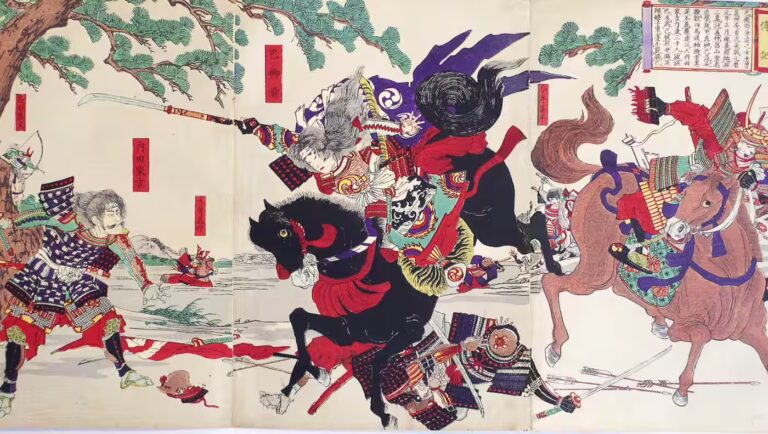
Tomoe Gozen: Japan’s Most Famous Female Warrior (ca. 1157–1247)
Tomoe Gozen – warrior, legend, question. What do we really know about Japan's most famous onna-musha? History & fact-check at…
Read the article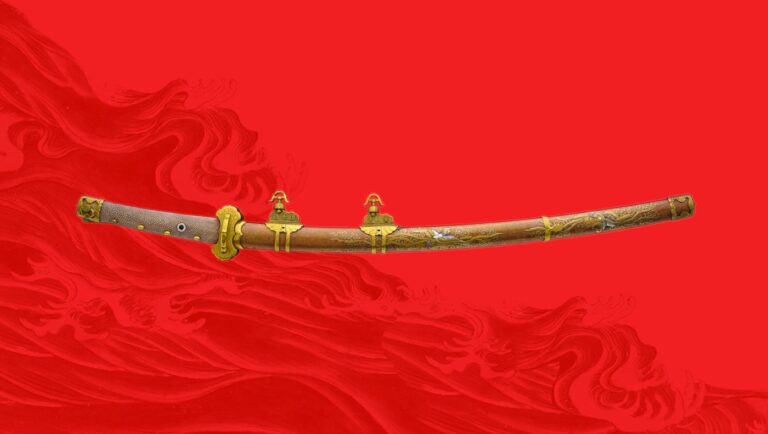
The Heian Period: The Rise of the Warrior Class (794–1185)
The Heian period created the samurai. How provincial administrators became a warrior caste – and why the sword played hardly…
Read the article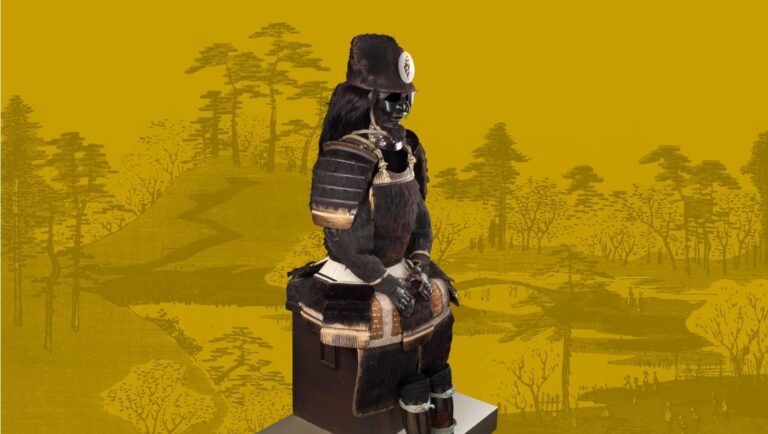
Sengoku Jidai: The Age of the Warring Provinces (1467–1615)
The Sengoku Jidai (1467–1615) was Japan's 150-year civil war. After the collapse of Ashikaga rule, rival daimyō fought for supremacy…
Read the article