 Nominated for the EMYA2026 award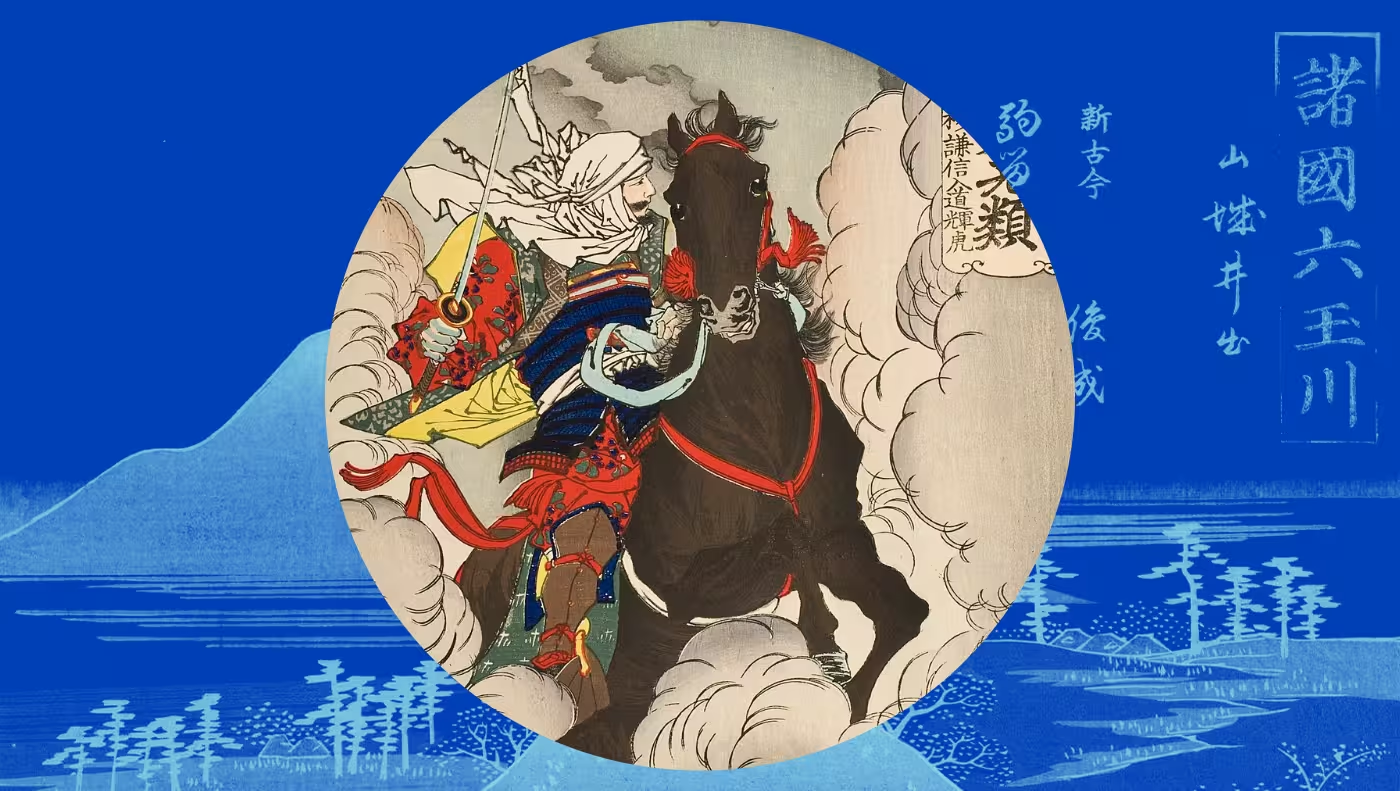
In the fourth month of the year 1561, Uesugi Kenshin rode directly toward Takeda Shingen. Not with an army. Alone. On a horse, with a blade in his hand, in the midst of one of the largest field battles of the Sengoku period. What then happened is as iconic in Japan as hardly any other story of the age of war. Kenshin is said to have brought his horse to a halt beside Shingen’s folding stool and to have struck at him with the sword. Shingen is said to have parried the blow with his iron war fan.
Whether it was so, we do not know. The oldest sources do not know this scene. It arose decades later in chronicles that stylised Kenshin into a legend.
What we do know: Uesugi Kenshin (1530–1578) was one of the most powerful daimyō of the Sengoku period, a military strategist of extraordinary talent — and a monk who had consecrated his life to the war god Bishamonten.
Echigo: The Base of the War God
Kenshin, born in 1530 as Nagao Kagetora, was the fourth child of Nagao Tamekage. His father died early; the young Kagetora grew up in a Buddhist temple and seemed destined for a religious life. Instead, at the age of twenty, he was appointed clan head. He adopted the name Uesugi and thereby acquired symbolic legitimacy.
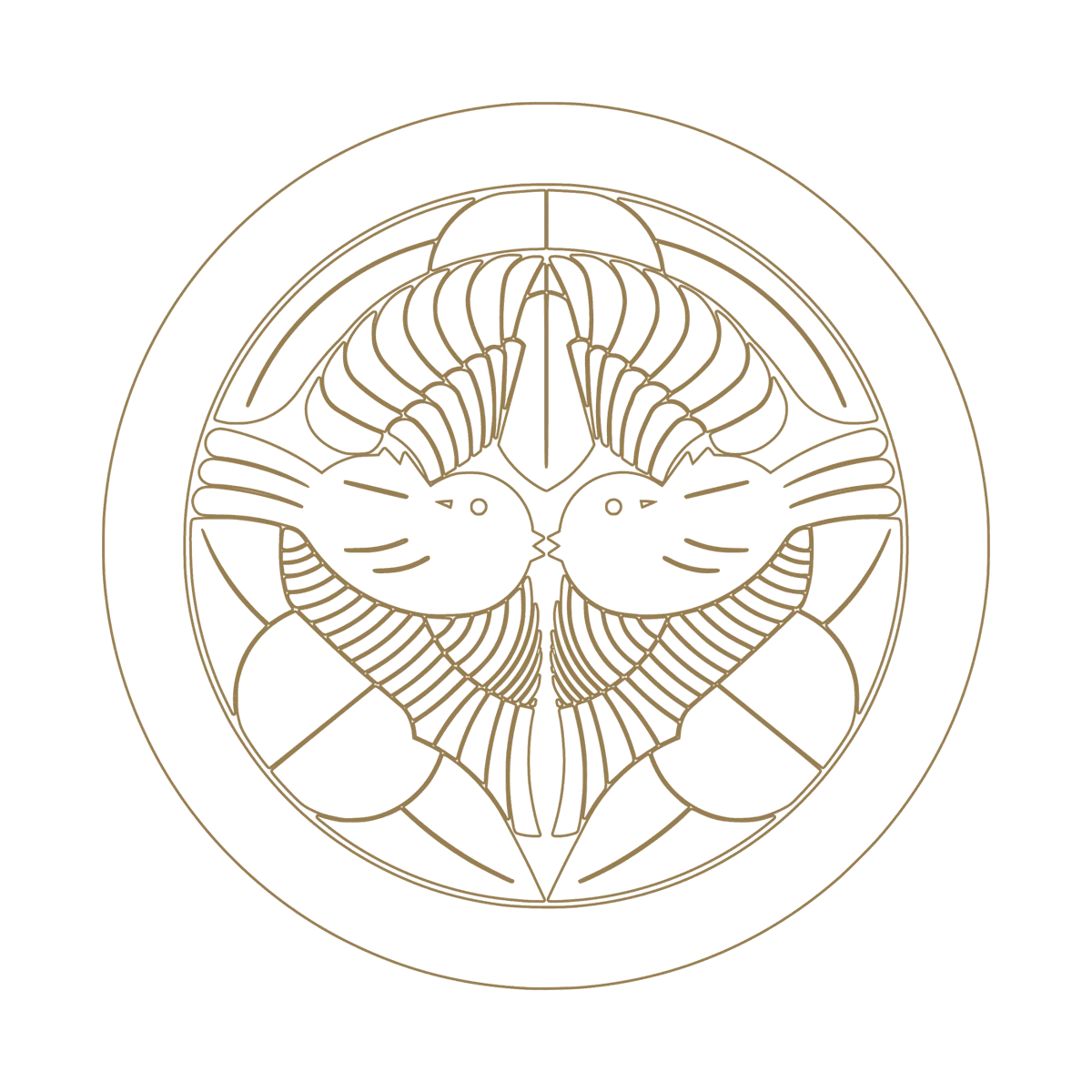
Kenshin’s Buddhism was no diplomatic ornament. He remained unmarried and childless throughout his life and made no secret of his conviction: he fought for Bishamonten, the Buddhist god of war and wealth, whose character 毘 (bi) emblazoned his battle banners. The character for mu (emptiness) — a central concept of Zen Buddhism — accompanied it.
In the Samurai Museum Berlin, the openwork tsuba of the Yagyū school (display case I03V) materially demonstrate this union of the warrior’s art and religious conviction. The Buddhist aesthetic of the Uesugi armour is visible in display case C011H: the Manji (swastika) — in Buddhism a symbol of universal harmony and eternity — as a helmet crest, the flames of the fire-guardian Fudō Myōō on helmet fittings.
The Rivalry with Takeda Shingen: Five Battles for Kawanakajima
Between 1553 and 1564 their armies met five times in the Kawanakajima plain. The result after five battles: no decisive victory for either side. Kenshin held Echigo; Shingen held Shinano. Turnbull shows that, militarily speaking, the battles were stalemates: both sides had armies of comparable strength, and neither side could create a decisive strategic opening for itself.
The fourth battle (1561) is the most dramatic and best documented. Kenshin’s troops surprised Shingen’s advance corps in thick morning fog — a tactical coup that threw the Takeda ranks into disorder. Conlan warns against the uncritical adoption of the duel narrative: it derives from Gunki Monogatari (war tales), which arose decades after the events and were made for literary dramatisation, not for historical precision.
The Hōjō Problem and the Limits of the Realm
Kenshin did not only fight against Shingen. He simultaneously waged war against the Hōjō clan in the south and tried to secure his western flank against the Oda clan. As nominal Kantō Kanrei (Deputy of the Kantō), he saw himself as entitled to assert the old Uesugi claims against the Hōjō. Cambridge Vol. 4 shows the systemic framework: in the Sengoku period, all the great daimyō competed simultaneously on several fronts — whoever sent his army south risked an attack from the west.
The War God and the Merchant: Kenshin’s Economic Policy
There is an image of Uesugi Kenshin that is often forgotten: that of the economic strategist. Kenshin recognised that Echigo’s geographic position — on the Sea of Japan, with direct access to the trade routes to China and Korea — was a trump card. He promoted the silk trade and controlled the salt supply for inland provinces.
The most famous story in this connection: when Hōjō and Imagawa blocked the salt deliveries to Shingen, Kenshin, according to tradition, sent his own salt into Shingen’s territory — with the message that he fought with weapons, not with the withholding of food. Whether this story is true is not proven.
Death and Succession: The Legacy of the War God
In April 1578, Uesugi Kenshin died — according to consistent sources, of a stroke. He was 48 years old. He had made no clear arrangement for the succession. Kagekatsu and Kagetora, his two adopted nephews, immediately began a war over the inheritance — the Otate no Ran, which lasted two years and permanently weakened the Uesugi clan. Kagekatsu won, and later fought on the losing side at Sekigahara in 1600. The Uesugi were banished to Yonezawa, their sphere of power drastically reduced.
Uesugi Kenshin and Oda Nobunaga: The Duel That Did Not Take Place
In 1577, Kenshin defeated a Nobunaga army at the Battle of Tedorigawa — one of the few unambiguous tactical victories of his career. He began to plan a major campaign against Nobunaga. In March 1578 he died. Turnbull emphasises that Kenshin was the only daimyō of the north with the military capacity to threaten Nobunaga seriously. His death opened Nobunaga’s northern flank and accelerated unification.
The Buddhist Aesthetic of War: Kenshin’s Armour and Banners
No other Sengoku daimyō combined religious symbolism and military equipment as consistently as Uesugi Kenshin. The armour of his warriors bore the Manji as a helmet crest, the flames of Fudō Myōō on helmet fittings, the character 毘 (bi from Bishamonten) and 無 (mu, emptiness) on battle banners. This symbolism was not decorative — it was a theological programme. Display case C011H of the Samurai Museum Berlin makes this aesthetic visible: the union of the craft of war and religious conviction in metal and lacquer.
Frequently Asked Questions about Uesugi Kenshin
Who was Uesugi Kenshin?
Uesugi Kenshin (1530–1578), born as Nagao Kagetora, was daimyō of the province of Echigo. He is regarded as one of the most powerful commanders of the Sengoku period, known for his rivalry with Takeda Shingen and his deep Buddhist faith. He understood himself as the secular arm of the war god Bishamonten.
What is Kawanakajima?
A plain in today’s Nagano Prefecture, where Uesugi Kenshin and Takeda Shingen met five times between 1553 and 1564. Neither side achieved a decisive victory.
Did the famous duel between Kenshin and Shingen really take place?
Probably not in the form that has been handed down. Conlan shows that such duels are typical elements of later war tales (Gunki Monogatari) and are not based on contemporary documents.
Why did Kenshin remain unmarried?
For religious reasons. Kenshin had taken Buddhist monastic vows and held to them. He adopted two nephews as heirs — which after his death led to the Otate no Ran (1578–1579), an internal war of succession that permanently weakened the Uesugi clan.
How did Uesugi Kenshin die?
Of a stroke in April 1578, at the age of 48. Later legends tell of a poisoning by a ninja — historically unproven.
Visit the Samurai Museum Berlin
Display case C011H of the Samurai Museum Berlin shows armour elements of the Uesugi clan. The Buddhist symbols — Manji, Fudō Myōō flames — speak directly of the religious worldview of the War God of Echigo. Open daily from 10 a.m. to 7 p.m., Auguststraße 68, Berlin-Mitte.
Related Articles
Sources
- Conlan, Thomas D. (2022): Samurai Sourcebook. Hackett Publishing.
- Turnbull, Stephen (2022): War in Japan 1467–1615. Osprey Publishing.
- Hall, John Whitney (ed.) (1991): The Cambridge History of Japan, Vol. 4. Cambridge University Press.
- Samurai Museum Berlin (2025): SMB Catalogue 2025.
© Samurai Museum Berlin – All rights reserved
You might also like
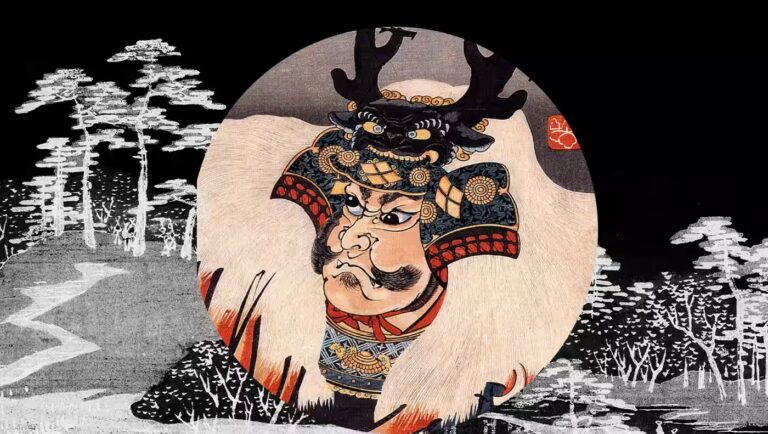
Takeda Shingen: The Tiger of Kai – Life & Strategy
Takeda Shingen (1521–1573): the Tiger of Kai, his cavalry tactics and the legendary rivalry with Uesugi Kenshin. Samurai Museum Berlin.
Read the article
Hattori Hanzō: The Shadow of Iga and Tokugawa’s Lifesaver
On the morning of 21 June 1582, Tokugawa Ieyasu was sitting in a tea house in Sakai when a messenger…
Read the article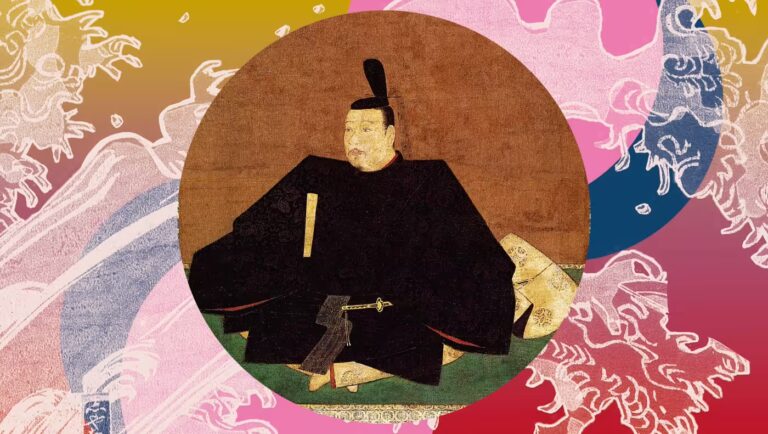
Ashikaga Takauji: Founder of the Second Shogunate (1305–1358)
Ashikaga Takauji overthrew Emperor Go-Daigo and founded the Muromachi shogunate – yet is still regarded as a traitor in Japan.…
Read the article