 Nominated for the EMYA2026 award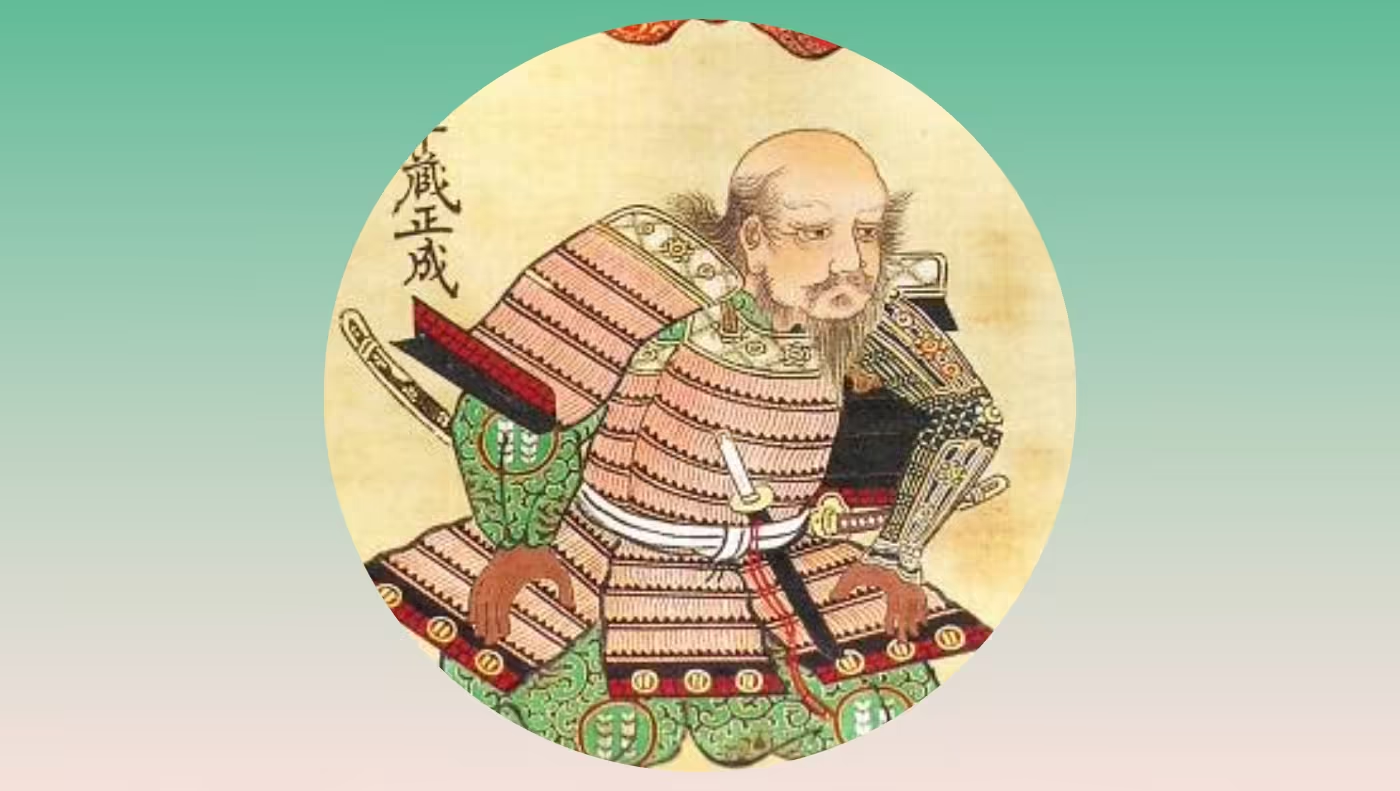
On the morning of 21 June 1582, Tokugawa Ieyasu was sitting in a tea house in Sakai when a messenger arrived with news that was to reduce his life over the following days to a game of hours. During the previous night, the Takeda-Oda ally Akechi Mitsuhide had launched a surprise attack on Oda Nobunaga at the Honnō-ji temple in Kyōto. Nobunaga — the most powerful man in Japan, in the midst of unifying the divided realm under his rule — had died by suicide. So had his son Nobutada in the Nijō Palace. The political order of central Japan had collapsed within a few hours. And Tokugawa Ieyasu, who as Nobunaga’s closest ally suddenly found himself the main target of potential Akechi hunters, was far from his home territory of Mikawa — with barely thirty personal retainers, in a hostile province, surrounded by pursuers who could hand him over for ransom or a bounty. The only chance: flight back to Mikawa across the most dangerous terrain in Japan — the Iga mountains, home of the notorious Iga shinobi.[1]
What followed over the next three days — the so-called Iga-goe, the “Iga crossing” — is one of the most famous episodes in Japanese history. Ieyasu and his thirty men crossed one of the most difficult areas of Japanese topography on impassable mountain paths, hidden from rōnin, Akechi scouts and local gangs of robbers. They made it alive. And at the centre of this operation stood — according to Tokugawa tradition — a single man: Hattori Hanzō Masanari (1542–1596), an officer in Tokugawa’s service who came from an Iga-Hanzo line. Hanzō is said to have organised the route, bribed the villages, recruited the shinobi sub-leaders and coordinated the crossing, without which Ieyasu would probably have died. A few weeks later, when Ieyasu was sitting safely in Mikawa and regrouping to fight the power struggle over Nobunaga’s succession, Hattori Hanzō was the man to whom he owed his life.
This article reconstructs Hattori Hanzō between historical reality and later legend. It shows the important difference between the historical figure of a samurai officer with Iga connections and the pop-cultural ninja idol of modern reception. It covers the Iga-goe as the central historical episode, Hanzō’s role in Tokugawa espionage, the Iga-mono unit as a regular retinue of the Tokugawa shōgunate, and the later legacy of this figure in Japanese culture to this day. In doing so, the text follows the more recent academic research of Stephen Turnbull (2018) and Antony Cummins, who systematically demystify the image of the ninja — without losing sight of the historical significance of the Iga tradition.
Historical Confusion: Who Was “the” Hattori Hanzō?
Before we can reconstruct Hattori Hanzō historically, we must make an important clarification. The name “Hattori Hanzō” is not the name of a single man, but a title of office and family that was borne by several generations. In the historical literature, and even more so in popular reception, these different people are often confused with one another or merged into a single mystical figure.[2]
The “first” Hattori Hanzō was Hattori Yasunaga (known as Hanzō), who was active as an Iga warrior in the late Muromachi period and whose descendants entered the service of the Matsudaira — and thus of the later Tokugawa. The historically most influential Hattori Hanzō was his son Hattori Masanari (1542–1596), who is the focus of this article. His son, Hattori Masanari II — sometimes also referred to as “Hanzō the Younger” — inherited the name and the position and continued to serve the Tokugawa into the early 17th century.
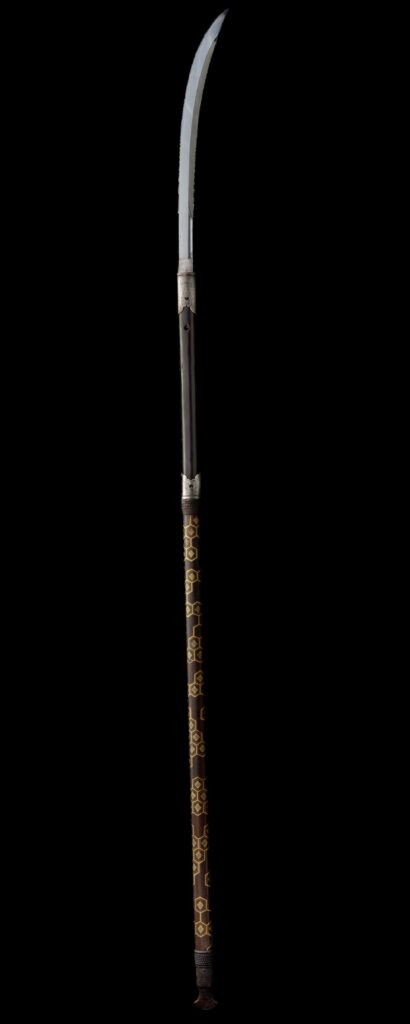
What is important here: Hattori Masanari — the historical “Hanzō” who helped Ieyasu during the Iga-goe in 1582 — was not himself a ninja in the narrower sense. He was a samurai officer. His family came from Iga and thus had connections to the shinobi tradition, but he himself was born in Mikawa, grew up in Mikawa and served Ieyasu in the classic role of a hatamoto samurai. His nickname Oni-Hanzō — “Hanzō the Devil” — referred to his courage as a spearman (his primary field of weaponry was the yari, not ninja tools), not to mystical shinobi abilities. The portrayal of Hanzō as a shadow warrior with a dark mask who leaps from tree to tree and attacks enemies out of nowhere is an invention of Edo-period literature and modern popular culture. The historical person was considerably more conventional — a capable commander with specific access to Iga networks.
Iga: The Province of the Shinobi
To understand Hanzō’s historical role, one has to understand the province of Iga. Iga lies in what is now Mie Prefecture, in a mountainous inland region about 50 km east of Kyōto and just as far west of Ise Bay. The geography is remarkable: Iga is an enclosed high valley, surrounded by mountains, difficult to access and topographically protected. This isolation allowed the region to exist relatively independently of Japan’s great feudal powers for centuries.[3]
In his groundbreaking work Ninja: Unmasking the Myth (2018), Stephen Turnbull precisely reconstructed the nature of the Iga system. Iga was not a “secret valley” of mystical ninja families, as popular culture often portrays it. It was a community of Jizamurai — landowning samurai of low rank — who joined together in so-called Ikki (leagues) to defend themselves against external threats. The shinobi expertise for which Iga became famous arose from this specific situation: smaller warrior communities that could only survive against overwhelmingly powerful opponents through skilful espionage, ambushes and asymmetric warfare.
This expertise became an export commodity. From the 15th century onwards, Iga shinobi were hired by various daimyō — and later also by allied villages — for specific tasks: espionage against rival clans, night attacks on enemy castles, arson in enemy camps, occasionally also assassination attempts (which, however, were rarely successful — Turnbull points out that ninja assassinations, though feared, mostly failed historically). The Iga shinobi were thus professional specialists in a specific military technique, not a mysterious sect. Their “secrets” were primarily practical craft — knowledge of topography, weather, camouflage, infiltration techniques and gunpowder chemistry.
The book Bansenshūkai (“Ten thousand rivers merged into the sea”), compiled in 1676 by Fujibayashi Yasutake, is the classic encyclopaedia of this tradition. It documents the methods of ninjutsu in seventeen volumes — espionage techniques, infiltration methods, recipes for explosives, astronomy for tactical purposes. Antony Cummins and Yoshie Minami translated the work into English in 2013. They emphasise that the shinobi “were not magicians, but highly specialised commando soldiers whose methods were based on profound knowledge of psychology, technology, chemistry and tactics.”[4]
The Iga-goe of 1582: The Key Achievement
The most significant historical event with which Hattori Hanzō is permanently associated was the Iga-goe — the crossing of the Iga mountains after the death of Oda Nobunaga on 21 June 1582. This is not legend but documented history. The sources — in particular the Mikawa Gofudoki and various Tokugawa chronicles — describe the events in remarkable detail.[5]
At the time of Nobunaga’s death, Ieyasu was in Sakai, the old port city south of Ōsaka, on a kind of diplomatic and cultural visit to Nobunaga’s confidants. When the news of Akechi Mitsuhide’s coup arrived, he faced an acute crisis: the roads back to Mikawa were blocked by Akechi troops; his small retinue of about thirty men was far too weak for a direct confrontation; capture by Akechi would have meant certain death. The only option was to cross the Iga mountains to the north — an area that had been devastated two years earlier (1581) by Nobunaga’s Iga campaign, and in which, accordingly, many surviving shinobi had motives for revenge against anyone allied with Nobunaga.
Hattori Hanzō’s role in this operation is historically established, even if the details are debated. He was present with the group in Sakai and is said to have used his Iga origins to negotiate with the local shinobi sub-leaders. The logic was pragmatic: Ieyasu promised the Iga shinobi that, once he had arrived safely in Mikawa, he would give them stable positions in his service and protect them from further attacks. The Iga shinobi — who owed Nobunaga hatred and saw a potential patron in Ieyasu — agreed. Around 200 to 300 Iga warriors escorted Ieyasu through the mountains, avoided Akechi patrols, bribed local gangs of robbers and led the group along safe paths. After three days Ieyasu reached Mikawa — exhausted, but alive. Sengoku history had a new main protagonist for the phase after Nobunaga.
The significance of this episode can hardly be overestimated. Without the successful Iga-goe, Ieyasu would in all likelihood have died in the aftermath of the Honnō-ji coup. Without Ieyasu, no consolidation after Hideyoshi. Without this consolidation, no Battle of Sekigahara, no Tokugawa shōgunate, no 250-year Edo period of peace. The Iga-goe is thus one of those key historical moments at which the further development of an entire nation hung on individual actors and individual decisions.
The Iga-mono: Espionage in Tokugawa Service
After the successful Iga-goe, Ieyasu kept his promise. He permanently recruited a group of about 200 Iga warriors into his service, who were known as Iga-mono (“Iga people”) or later as Iga-gumi (“Iga unit”). Hattori Hanzō was appointed their commander. From the outset, this unit was a regular, salaried body of retainers — not a secret shadow society. It received its own district in Edo (in today’s Shinjuku district of Tōkyō), called Yotsuya, where its members lived and operated.[6]
The actual tasks of the Iga-mono were varied, but by no means mystical. They served as:
- Inner guards: The Iga-mono formed an important part of the palace guards of Edo Castle, particularly for the inner chambers, where confidentiality was important. The famous Hanzō-mon, the “Gate of Hanzō” at the western entrance of Edo Castle, was the official access to the area where the Iga-mono were stationed. It still exists today as a gate of the Imperial Palace in Tōkyō.
- Espionage and counter-espionage: The Iga-mono maintained networks of informants in various daimyō territories, gathered information about political currents and detected signs of planned intrigues.
- Special administrative tasks: The unit was used for special missions, for example to inspect remote territories, observe suspicious persons or transport sensitive documents.
The existence of the Iga-mono as a regular Tokugawa unit is an important corrective to the popular notion of the ninja as a “secret organisation”. They were a paid, official body of retainers who lived in a known district, had regular reporting duties, and whose members were recorded by name and rank in the Tokugawa records. Stephen Turnbull has summed up this transformation pointedly: “Shinobi was simply a function… executed by anyone from a samurai general to a peasant mercenary.” The Iga-mono were thus integrated into the regular samurai apparatus — an aspect that modern pop culture consistently ignores.[7]
Hanzō the Spearman: The Historical Role
An important point of correction to the popular portrayal: historically, Hattori Hanzō Masanari was primarily a spear specialist, not a shinobi virtuoso. His nickname Oni-Hanzō (鬼半蔵, “Hanzō the Devil”) dates from his early campaigns of the 1570s, when he performed remarkable personal feats of arms in several battles. In the Tokugawa chronicles of these years, he is described as one of Ieyasu’s most capable spearmen — a role closer to Honda Tadakatsu’s profile than to the modern ninja cliché.[8]
Specifically: in several battles — including the Battle of Anegawa in 1570 and the Mikatagahara campaign of 1572/73 — Hanzō led units of 200 to 300 spear warriors. He commanded these units in frontal engagements, not in covert operations. His Iga origins only became a central professional asset after Nobunaga’s death in 1582 — before that, he was an entirely ordinary, if very capable, samurai officer in the Tokugawa retinue.
After 1582 his field of activity expanded. He became commander of the Iga-mono unit, with the associated command rank and responsibility for espionage and guard duties. But even in this phase, his main activity remained that of an officer — administrative and coordinating rather than operational. The idea of a “super-ninja Hattori Hanzō” creeping through castles at night in black clothing is a literary back-projection from later centuries. The historical Hanzō worked in daylight, in an official building, with written reports and a fixed salary.
Hanzō died in 1596 at the age of 54. The circumstances of his death are not clear in the sources — some accounts name an illness, others a fall from a horse. His funeral took place at the Sainen-ji temple in Yotsuya, which still exists today. His grave and a lance he donated are kept there. His son Hattori Masanari II took over the office and the name and continued to lead the Iga-mono unit until — because of internal conflicts and a mutiny of the Iga warriors against the younger Hanzō in the early 1600s — it was eventually reorganised and divided into smaller units.
The Hanzō-mon and the Cultural Legacy
Perhaps the most visible monument to the historical Hattori Hanzō in today’s world is the Hanzō-mon, the “Gate of Hanzō” at the western entrance of the former Edo Castle, today the Imperial Palace in Tōkyō. The gate has borne Hanzō’s name since the early Edo period and marks the area in which the Iga-mono unit had its headquarters. The subway line that runs through this part of the city is still called the Hanzōmon Line today. The Hanzō-mon is thus a rare example of how a single samurai officer has remained permanently present in the urban topography of a world metropolis.[9]
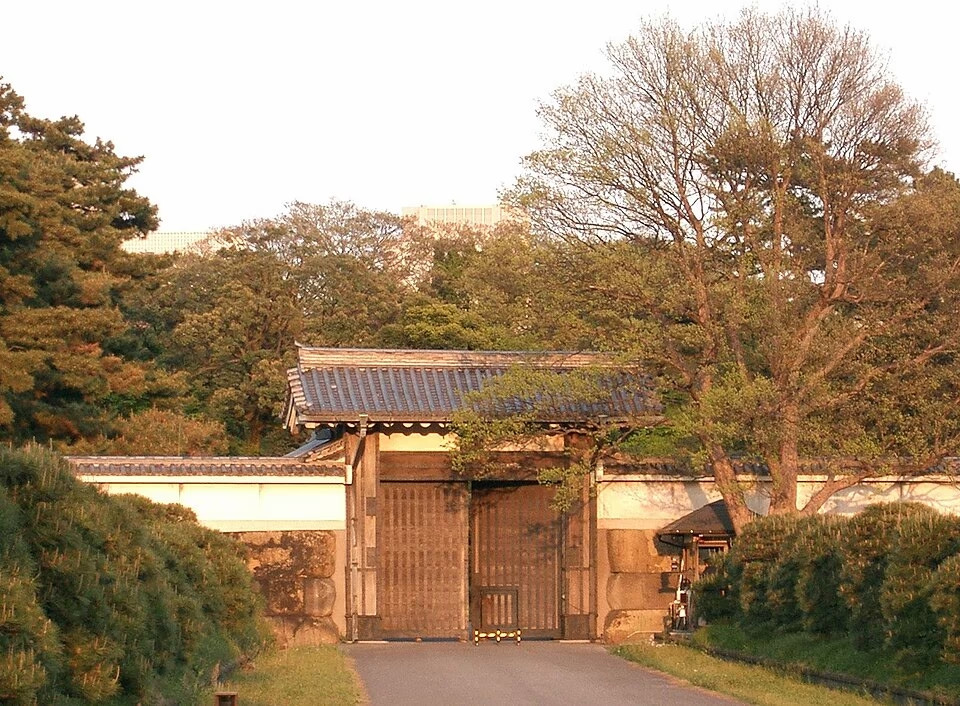
Hanzō’s literary and pop-cultural legacy is even broader — and at the same time considerably more distorted historically. In the Edo period, Hanzō was increasingly stylised as a mystical ninja figure. In folk tales, kabuki plays and later in Meiji-era novels, he was endowed with supernatural abilities: the ability to make himself invisible, to understand the language of animals, to leap many metres. This stylisation reached its peak in the Bunmeidō novels of the early 20th century, which made Hanzō one of the heroes of the Sanada Jūyūshi group — even though the historical chronology makes this impossible (Hanzō died in 1596, while the Sanada Jūyūshi constellation of popular literature is set in 1614/15).
In the global pop culture of the late 20th and early 21st centuries, Hanzō experienced perhaps his broadest reception. Quentin Tarantino’s Kill Bill (2003) has the protagonist have a katana forged by a sword master named “Hattori Hanzō” — a free invention, but one that anchored the Hanzō image worldwide. In video games, Hanzō appears as a hero figure in games such as Samurai Warriors, Sengoku Basara and Overwatch (where an archer character named Hanzo draws on his tradition). These pop-cultural versions have little to do with the historical Hattori Masanari, but they secure the figure a global presence that the 16th-century samurai could never have expected.
The Question of Authenticity: Historical Hanzō vs. Modern Ninja
Perhaps the most important point of context on the subject of Hattori Hanzō is the question of authenticity. In Ninja: Unmasking the Myth (2018), Stephen Turnbull systematically examined which aspects of the popular image of the ninja are historically grounded and which are literary and cinematic constructions. The results are sobering: the black ninja suit is an invention of kabuki theatre from the late 18th century. The idea of the ninja as a “lone fighter” is a projection of modern individualism onto a culture that was collectively organised. Most of the supposedly “traditional” ninja techniques date from the 1950s to the 1980s and served primarily to market the Japanese martial arts tradition commercially in the West.[10]
What remains historically certain? First: the provinces of Iga and Kōga really were centres of a specific tradition of espionage and infiltration. The Bansenshūkai and other Edo-period shinobi manuals document real techniques — cryptography, camouflage, explosives chemistry, knowledge of topography. The Iga-mono unit in Tokugawa service was a real administrative structure. And Hattori Hanzō Masanari was a real historical person whose role in the Iga-goe of 1582 and in organising the Iga-mono unit is well documented.
What is not historically certain: the specific supernatural or semi-supernatural abilities attributed to the modern ninja figure. The idea that there was a continuous secret ninja tradition from the 13th to the 19th century. The notion that Hattori Hanzō himself was a master ninja. These aspects are either literary inventions or later constructions.
The best way to understand Hattori Hanzō is therefore a nuanced one: as a historically significant figure of the late Sengoku and early Edo periods, whose actual achievement — above all the Iga-goe operation and the building of the Iga-mono unit — was substantial, but whose legendary figure was embellished in popular reception far beyond what can be historically proven. Both levels are culturally interesting, but they should not be confused.
Three Myths about Hattori Hanzō
Myth 1: “Hattori Hanzō was a master ninja.” Historically inaccurate. Hanzō was a samurai officer with Iga family connections, not an operational ninja. His main activity was command, not infiltration. His nickname Oni-Hanzō referred to his courage as a spearman, not to shinobi abilities.
Myth 2: “Hanzō was the leader of all the ninja in Japan.” No. He was the commander of a specific Tokugawa unit (the Iga-mono) of about 200 men. There was no central ninja organisation — shinobi were a professional profile, not a brotherhood. Other daimyō had their own ninja units that had no connection with Hanzō.
Myth 3: “Hanzō personally saved Tokugawa Ieyasu’s life several times.” Once for certain (the Iga-goe of 1582). Other “life-saving” stories in popular literature are either freely invented or based on uncritical interpretations of legendary sources. The Iga-goe itself was a collective operation with 200–300 Iga warriors, not a solo effort by Hanzō.
Conclusion: Between History and Legend
Hattori Hanzō Masanari is one of the most interesting figures of the late Sengoku period, precisely because he marks the gap between historical reality and pop-cultural legend so clearly. The historical person — a capable samurai officer of Iga origin, specialised in spear fighting and later in commanding espionage — is already extraordinary enough to have entered Japanese cultural memory. His role in the Iga-goe of 1582 really did save Tokugawa Ieyasu’s life and thus, indirectly, shaped the entire subsequent course of Japanese history. His building of the Iga-mono unit was administratively substantial and laid the foundation for an espionage system that served the Tokugawa shōgunate for over two centuries.
At the same time, the pop-cultural Hanzō figure — the black-clad ninja master with mystical abilities — is a cultural phenomenon in its own right, with significance independent of historical reality. It is a vehicle through which questions of power, loyalty, secrecy and individual ability are negotiated in Japanese and later global popular culture. The historically correct observation that Hanzō was not a ninja in the Hollywood sense should not lead to the conclusion that the pop-cultural Hanzō is “wrong” or “unimportant” — he has a reality of his own as a cultural figure.
Frequently Asked Questions
Who was Hattori Hanzō?
Hattori Hanzō Masanari (1542–1596) was a samurai officer in Tokugawa Ieyasu’s service. He came from a family of Iga origin and commanded the Iga-mono unit of the Tokugawa shōgunate. His nickname was Oni-Hanzō (“Hanzō the Demon”). He is known above all for his role in the Iga-goe operation of 1582.
What was the Iga-goe?
The Iga-goe (“Iga crossing”) was an escape operation in June 1582 in which Tokugawa Ieyasu, after the death of Oda Nobunaga, had to return to his home province of Mikawa through the dangerous Iga mountains. Hattori Hanzō organised the escort by local Iga shinobi and thus made Ieyasu’s survival possible.
Was Hattori Hanzō a ninja?
In the historical sense, no. He was a regular samurai officer who specialised in spear fighting. His family had Iga connections, but he himself did not operate as a shinobi in the field. The pop-cultural portrayal of him as a master ninja is a literary construction of the late Edo period and of modern entertainment.
Who were the Iga-mono?
The Iga-mono were a regular espionage and guard unit in Tokugawa service, consisting of about 200 warriors of Iga origin. They served as palace guards, spies and administrative specialists. Their commander was Hattori Hanzō. The unit was based in the Yotsuya district of Edo.
What is the Hanzō-mon?
The Hanzō-mon (半蔵門) is the western gate of the former Edo Castle, today the Imperial Palace in Tōkyō. It bears Hattori Hanzō’s name because the Iga-mono unit under his command had its headquarters in this area. Tōkyō’s Hanzōmon subway line is named after it.
Did Hattori Hanzō really die in 1596?
Yes, this is historically documented. Hanzō died in 1596 at the age of 54. The exact circumstances are not clear in the sources. His grave is in the Sainen-ji temple in Yotsuya, Tōkyō, and is today a small tourist place of pilgrimage.
Visit the Samurai Museum Berlin
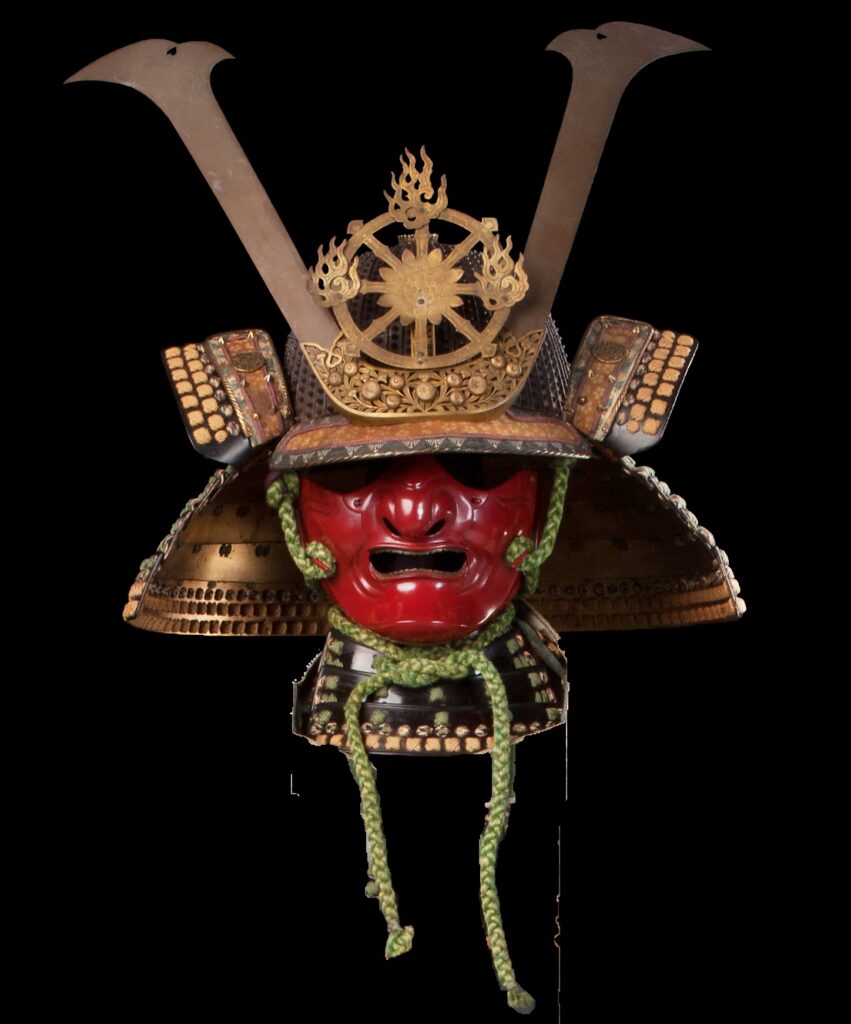
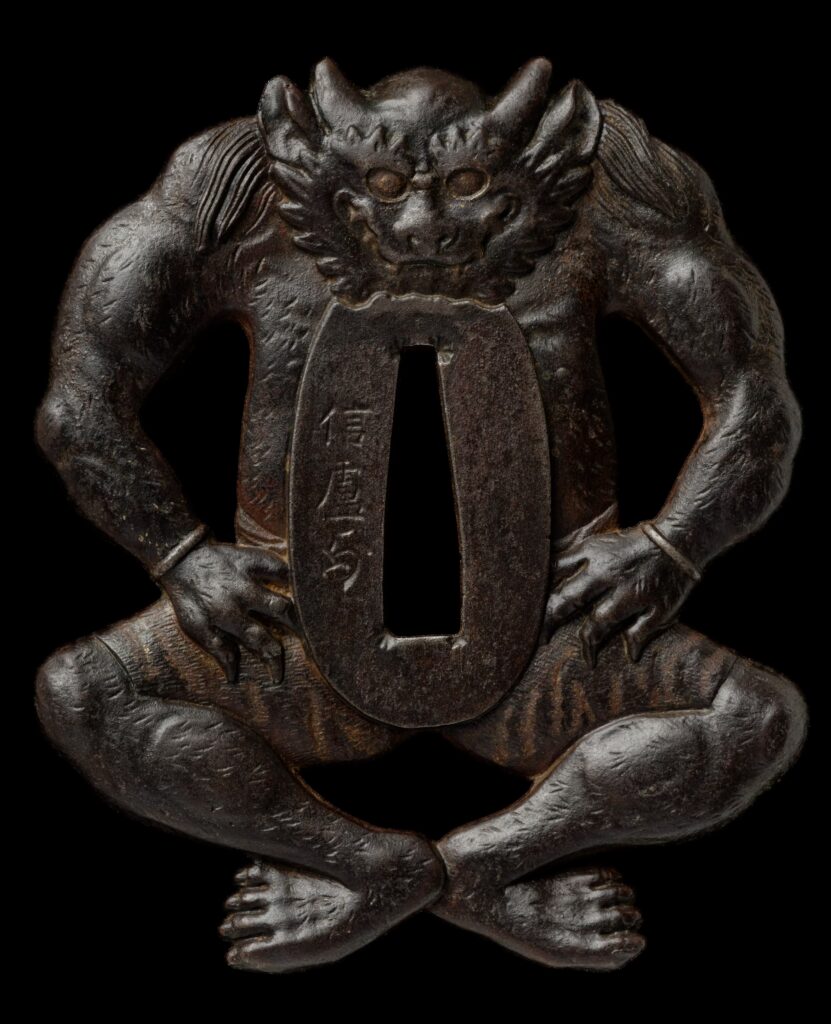
The Samurai Museum Berlin displays a number of objects associated with ninja, as well as an armour of the Hattori clan.
Sources and Further Reading
This article is based on academic research, primary sources and the expert catalogues of the Samurai Museum Berlin. All cited works are documented in the complete bibliography of the knowledge hub.
Primary Sources
- [1] Samurai Museum Berlin (2025). SMB Catalogue 2025 — Sengoku Objects and Shinobi Culture. [Used: E01V_41 mask from the circle of the Sanada Jūyūshi]
Secondary Literature
- [2] Turnbull, Stephen (2018). Ninja: Unmasking the Myth. Frontline Books. [Used: deconstruction of ninja mythology, historical Iga-Iga organisation, kabuki theatre origins of the ninja aesthetic]
- [3] Turnbull, Stephen (2003). Ninja AD 1460–1650. Osprey Publishing. [Used: geography of Iga Province, Sengoku context, shinobi tactics]
- [4] Cummins, Antony / Minami, Yoshie (trans.) (2013). The Book of Ninja: The Bansenshūkai. Watkins Publishing. [Used: ninjutsu techniques, shinobi ethics, Fujibayashi Yasutake]
- [5] Sadler, A. L. (1937). The Maker of Modern Japan: The Life of Shogun Tokugawa Ieyasu. Allen & Unwin. [Used: details of the Iga-goe, biography of Ieyasu, Sakai context 1582]
- [6] Turnbull, Stephen (2010). Hatamoto: Samurai Horse and Foot Guards of the Shogun. Osprey Publishing. [Used: Iga-mono unit, Tokugawa palace guards, Edo administration]
- [7] Turnbull, Stephen (2005). Warriors of Medieval Japan. Osprey Publishing. [Used: functions of the ninja, historical outcomes of shinobi missions]
- [8] Friday, Karl F. (2004). Samurai, Warfare and the State in Early Medieval Japan. Routledge. [Used: classification of samurai, officer role vs. shinobi role]
- [9] Hall, John Whitney (ed.) (1991). The Cambridge History of Japan, Vol. 4: Early Modern Japan. Cambridge University Press. [Used: Tokugawa administration, organisation of Edo districts]
- [10] Ikegami, Eiko (1995). The Taming of the Samurai. Harvard University Press. [Used: transformation of the warrior role in the Edo period, bureaucratisation of the samurai]
Museum Catalogues and Expert Reports
- [11] Samurai Museum Berlin (2025). Exhibit Documentation — Ninja Tradition and Iga Culture. [Used: shinobi objects in the collection, cultural background]
© Samurai Museum Berlin – All rights reserved
You might also like
Sengoku Jidai: The Age of the Warring Provinces (1467–1615)
The Sengoku Jidai (1467–1615) was Japan's 150-year civil war. After the collapse of Ashikaga rule, rival daimyō fought for supremacy…
Read the article
Tokugawa Ieyasu: The Last Unifier of Japan
Tokugawa Ieyasu (1543–1616), Japan's last unifier. Sekigahara, Osaka, Pax Tokugawa. 250 years of peace – with original exhibits at the…
Read the article
Yasuke: The First African Samurai – History & Facts
Yasuke served Oda Nobunaga 1581–1582. What is historically documented? Facts vs. myths about Japan's first Black samurai. Samurai Museum Berlin.
Read the article