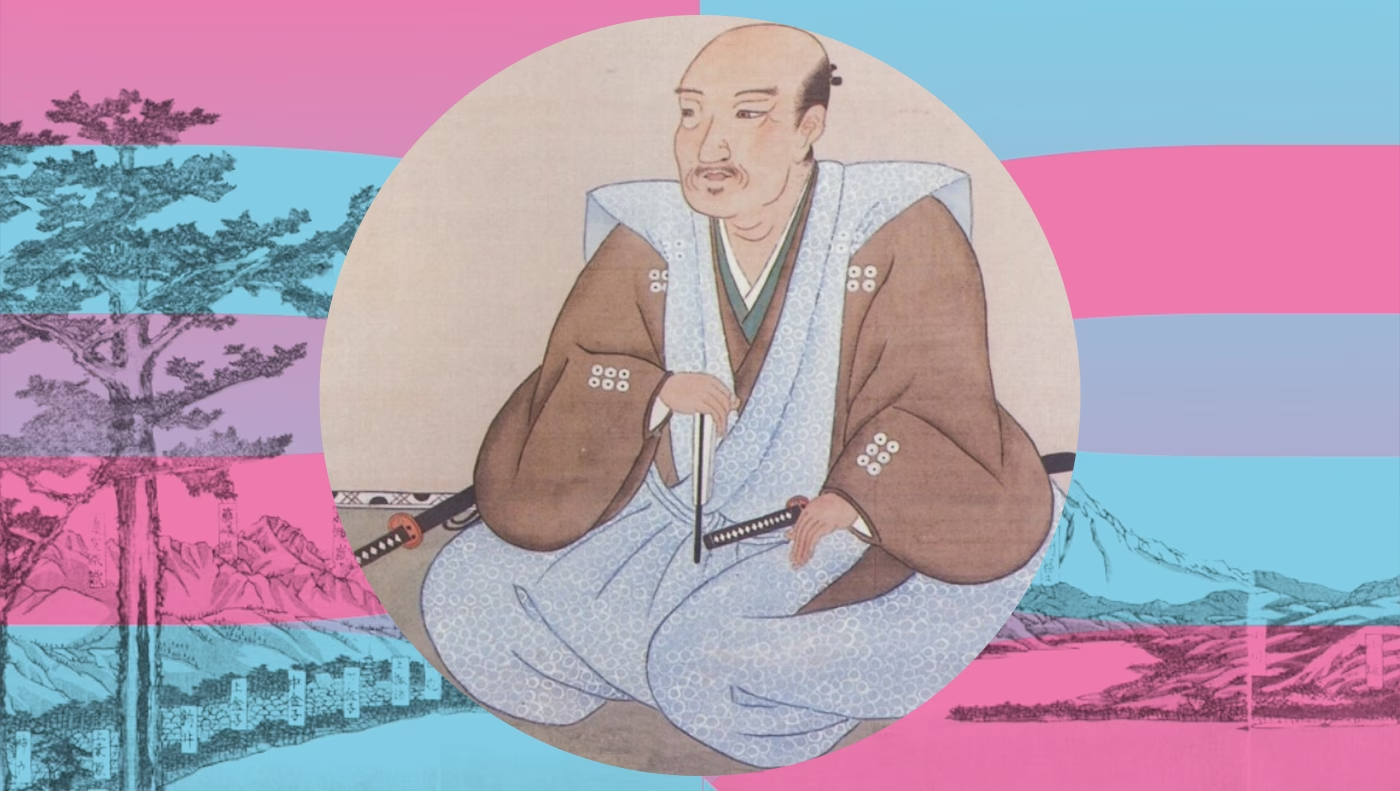
In the early hours of 3 June 1615, Sanada Yukimura and his guard broke through the Tokugawa battle lines.
He was 47 years old. He had held the Sanada-maru defensive position for a night — an outlying fortification at the southern gate of Osaka Castle that he himself had had built. Now the castle had fallen, the fire was burning, and Yukimura fought his way forward — not to escape, but to reach Ieyasu’s quarters.
According to tradition, he came close enough to strike Ieyasu’s palanquin with his lance. The bodyguards stopped him. Exhausted, he paused, sat down and was killed by an enemy.
Whether he really came that close to Ieyasu, whether this moment happened like that — we do not know. What we do know: Sanada Yukimura became a legend immediately after his death. In Japan he is still called the bravest warrior in the land.
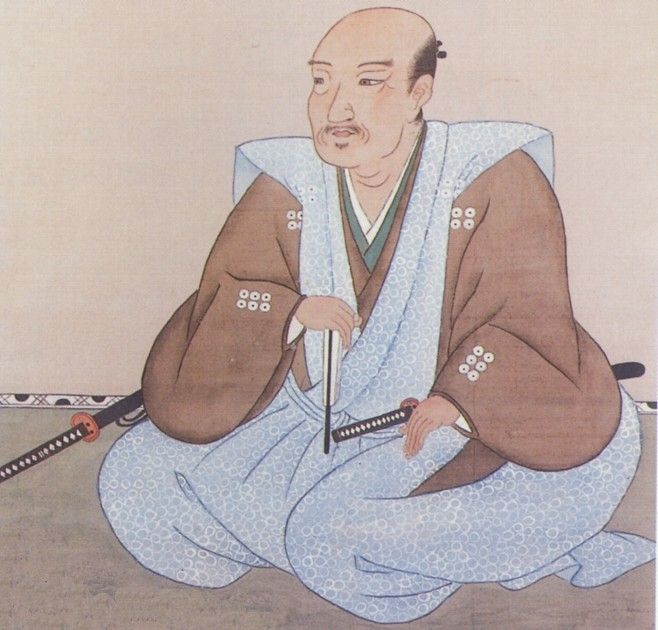
The Sanada: A Clan Caught Between All Sides
The Sanada clan came from Shinano Province — today Nagano Prefecture. They were vassals of various larger clans, fought in the Sengoku period for Takeda Shingen and survived the fall of the Takeda clan (1582) by getting onto the right side quickly enough.
Yukimura’s father, Sanada Masayuki, was a brilliant tactician and survivor. He held Ueda Castle against Tokugawa Ieyasu twice — in 1585 and in 1600, at Sekigahara — and thereby became a symbol of the small daimyō who could hold out against superior forces.
The Sanada clan had the problem that all middle-ranking daimyō had: they were too weak to claim independent power, and too strong to be able to afford to choose wrongly. At Sekigahara (1600), the Sanada spread the risk — Yukimura’s elder brother Nobuyuki fought on the Tokugawa side, while Masayuki and Yukimura stood on the Toyotomi side.
In his Sourcebook, Conlan shows how this strategy of spreading risk was a common pattern: if the outcome is unclear, send one son to each side. Whoever wins, the family has a member on the winning side.[1]
Ieyasu won. Nobuyuki was now a Tokugawa vassal, and Masayuki and Yukimura were banished — to Kudoyama in the mountains of Wakayama, a comfortable but definitive exile. The father died there in 1611. Yukimura lived on, apparently in enforced inactivity.
Osaka 1614: How Yukimura Returned from Exile
In 1614 Toyotomi Hideyori — Hideyoshi’s son and the last heir of Toyotomi rule — called for the defence of Osaka Castle. Ieyasu had begun a war on contrived pretexts whose real aim was the final destruction of the Toyotomi legacy.
Yukimura came.
Why? The SMB catalogue describes him as a warrior feared by his enemies, who had gathered ten heroic retainers around him (including legendary ninja such as Sarutobi Sasuke and Kirigakure Saizō, at least according to tradition), and who sought his last battle at Osaka.[5]
The real motivation was more complex. Turnbull sees Yukimura’s return as a combination of genuine Toyotomi loyalism, the wish to escape humiliating exile and the realisation that this was the last opportunity to earn a place in history.[2]
Once in Osaka, Yukimura immediately proved his tactical value. He analysed the castle’s defences and identified a critical weak point: the southern gate was vulnerable. He asked to be allowed to build an outlying fortification there.
The Toyotomi leadership hesitated — such outworks contradicted classical Japanese castle tactics, which relied on inner protection. Yukimura convinced them.
The Sanada-maru was built: a semicircular earthwork with palisades, firing trenches and carefully placed fields of fire that dominated the southern approach to the castle.
The Winter Campaign: The Sanada-maru Holds
In November 1614 Tokugawa Ieyasu’s attack on Osaka began — the so-called Winter Campaign.
Ieyasu’s army was enormous: over 160,000 men according to the chronicles (Conlan warns that these figures are traditionally exaggerated by a factor of 5–10).[1] Osaka Castle was well supplied, well defended and had in Yukimura one of the ablest tacticians of his generation.
The first major attack on the Sanada-maru was a disaster for the Tokugawa. The attackers underestimated the fields of fire, ran into prepared lines of fire and suffered considerable losses. The retreat was chaotic. It was the most impressive defensive success of the entire Siege of Osaka.
Ieyasu’s reaction was typical of his political style: instead of attacking further, he sent diplomats. He offered peace on condition that the moats around Osaka Castle were filled in — only for the sake of outer security, it was said. The Toyotomi leadership agreed.
It was a trap. Ieyasu’s troops filled in not only the outer moat, but the inner one too — and the Sanada-maru was demolished under the treaty as well. Yukimura lost his defensive position without a defeat in the field.
The Summer Campaign: The Last Battle
Six months later, in the summer of 1615, Ieyasu’s second campaign began. This time without any room for negotiation.
Osaka Castle was now without its outer moats — an entirely different defensive task. Yukimura fought on regardless. He led sorties, disrupted supply lines and held up attackers for as long as he could.
Turnbull describes the final day of the Summer Campaign: Yukimura’s unit broke through the Tokugawa lines and shot towards Ieyasu’s headquarters. The bodyguards held firm. Yukimura, exhausted from hours of fighting and from his wounds, sat down. A warrior named Nishio Nizaemon killed him — and only realised afterwards whom he had killed.[2]
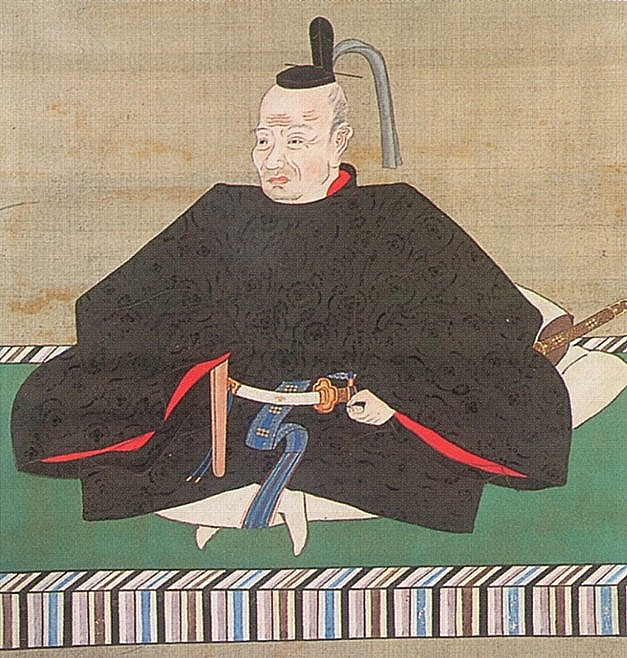
Ieyasu’s reaction, according to tradition: respect. He did not have Yukimura treated as an enemy. He had his head presented according to the honourable standard for a warrior.
Myth and Reality: How a Hero Is Constructed
Sanada Yukimura became a legendary figure immediately after his death.
Kabuki plays about his last stand appeared as early as the 17th century. Edo-period popular literature invented the ensemble of the Sanada Jūyūshi — the ten heroes, mostly ninja, who served Yukimura. Sarutobi Sasuke, Kirigakure Saizō, Miyoshi Seikai — some of these figures have historical models, but are completely fictionalised in 20th-century fantasy novels.
Conlan analyses this pattern: losers who go down with dignity are regularly revered more in Japan than victors.[1] Yoshitsune over Yoritomo. Kusunoki Masashige over Ashikaga Takauji. Yukimura over Ieyasu. Moral superiority in defeat makes the hero — not political success.
The principle has a name: hōganbiiki — sympathy for the underdog, love for the tragic loser. Varley shows how this aesthetic and moral concept was established by the war literature of the Kamakura period and has shaped Japanese hero worship ever since.[3]
Sanada Yukimura Today: Popular Culture and the Museum
In Japan’s popular culture, Sanada Yukimura is everywhere.
The game Sengoku BASARA makes him a red warrior with two spears. NHK taiga dramas show him as a noble hero. Manga and anime put his mythical retainers into fantastic adventures. There is a statue in Osaka. There is a statue in Ueda. His mon (family emblem) — six coins (rokumonsen) — is one of the best-known clan symbols in Japan.
Yukimura’s Tactics: What Made the Sanada-maru So Special
The Sanada-maru was more than a heap of earth. It was a tactical masterpiece.
Turnbull describes the construction: a semicircular outwork with three small towers at the corners — from which crossfire could be directed at any attackers trying to storm the base. The fields of fire overlapped in such a way that there was no blind spot. Anyone approaching the Sanada-maru ran into fanned-out fire from several directions.[2]
That was Vauban-style fortification tactics — avant la lettre. François Vauban, the French engineer who systematised the modern principles of fortification in the 17th century, had not yet been born. Yukimura independently developed similar principles from the experience of Japanese siege warfare.
The Tokugawa troops who attacked the Sanada-maru had no answer to it. Direct attacks were repulsed with heavy losses. Only Ieyasu’s political manipulation — the sham peace treaty — removed the fortification without further fighting.
The Rokumonsen: The Six Coins for the Ferry
Three rows of two coins, six coins in all — rokumonsen.
In Buddhist tradition, six coins are the ferry fare for the crossing between life and death. Whoever went into battle bearing the rokumonsen sign was signalling: I have already paid for my death. I fight without fear, because I have accepted the consequence.
Conlan shows in his Sourcebook how Sengoku daimyō deliberately used their house laws and symbols as instruments of motivation.[1]
Yukimura’s Brother: The Other Side of the Story
A story often left out of portrayals of Yukimura: his brother Nobuyuki fought on the Tokugawa side at Sekigahara — and won with Ieyasu.
The Sanada fief in Ueda, which the clan was allowed to keep thanks to Nobuyuki’s loyalty, existed until the Meiji Restoration. Nobuyuki’s descendants became recognised daimyō of the Edo period.
This makes the history of the Sanada more complex than the popular image of Yukimura as a tragic hero allows. The clan survived because it spread the risk.
Conlan shows how this kind of family risk management was common in the Sengoku period.[1]
The Balance of Forces at Osaka: Figures and Reality
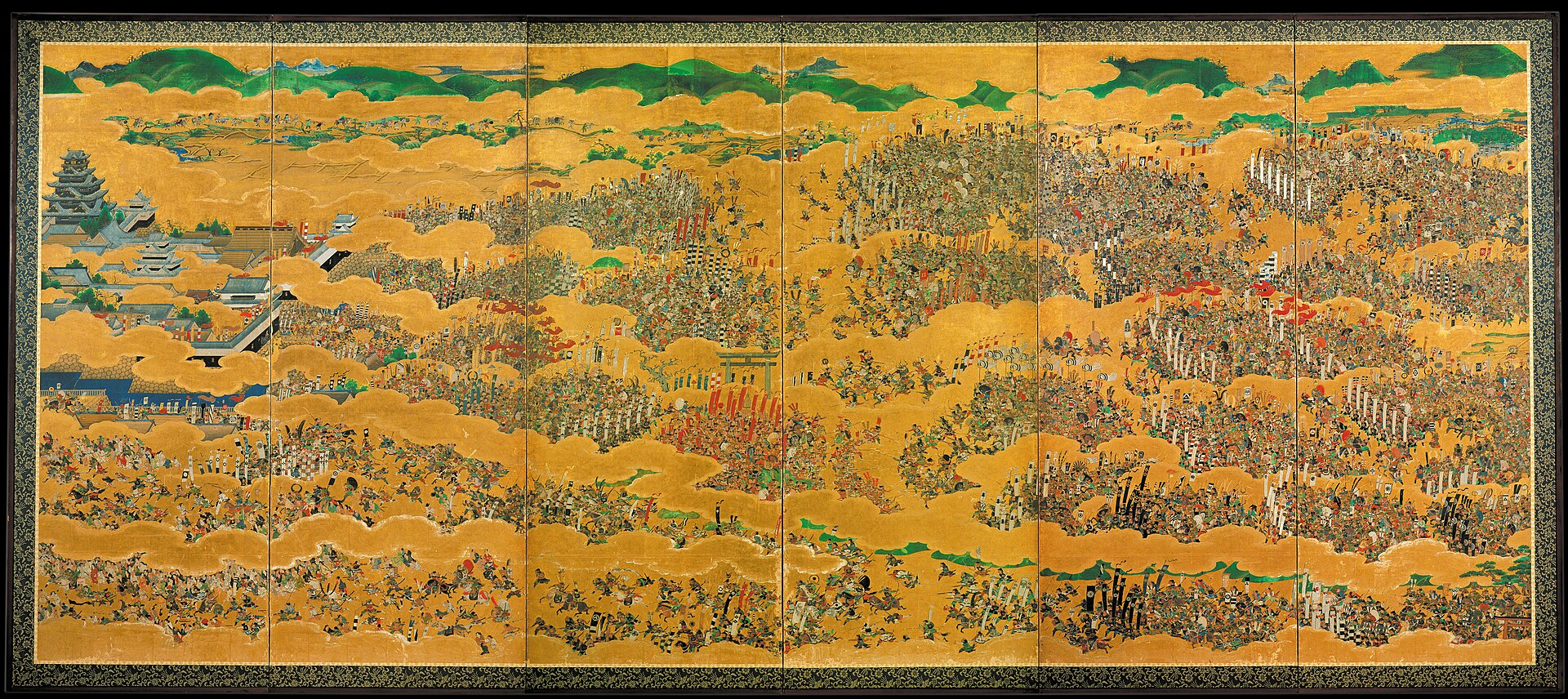
The traditional accounts of the Siege of Osaka give astronomical figures — 160,000 to 200,000 men on the Tokugawa side, against 90,000 to 100,000 in the castle.
Conlan warns: these figures are traditionally exaggerated — often by a factor of five to ten. Supply documents, marching lists and logistical considerations suggest that the actual armies were considerably smaller.[1]
That does not change Yukimura’s achievement. He did not defend with twenty thousand against two hundred thousand. He defended with an army against a larger army, in a castle that had lost its outer moats after Ieyasu’s peace trick.
In Cambridge Vol. 4, Hall describes the strategic context: Ieyasu’s aim at Osaka was not primarily military victory, but the destruction of Toyotomi legitimacy as an alternative claim to rule.[4] Military force was the means; political elimination was the end. Yukimura could not counter that militarily — because what he was fighting for had already been lost politically.
After Yukimura: The Survival of the Sanada Clan
Yukimura’s death was not the end of the Sanada.
His brother Nobuyuki had fought on the Tokugawa side and survived. The Sanada fief in Ueda, which the family was allowed to keep thanks to Nobuyuki’s loyalty, continued to exist. Yukimura’s son Yukimasa escaped to Korea and only returned in the 17th century.
The Sanada are still present today — as a family name, as historical awareness, as a basis for tourism in Ueda and Osaka. The museum in Ueda, the annual Sengoku festivals, the countless productions in film, television and games — all of this keeps the name alive.
Frequently Asked Questions about Sanada Yukimura
Who was Sanada Yukimura?
Sanada Yukimura (1567–1615, real name Nobushige) was a Japanese warlord from Shinano Province. He is known for his defence of Osaka Castle against Tokugawa Ieyasu’s army (1614–1615) and for his honourable death in the Summer Campaign. In Japan he is regarded as “the bravest warrior in the land”.
What was the Sanada-maru?
An outlying fortification at the southern gate of Osaka Castle, designed and built by Yukimura. It was a semicircular earthwork with palisades and carefully placed fields of fire. In the winter of 1614 it repelled a major Tokugawa attack — one of the most impressive defensive actions in the history of siege warfare.
Why was Yukimura revered even though he lost?
The Japanese concept of hōganbiiki — sympathy and respect for the defeated fighter — often makes losers who go down with dignity greater heroes than the victors. Yukimura fought against overwhelming odds, not in order to win, but because his fight was morally necessary.
What are the Sanada Jūyūshi?
The “ten heroes of the Sanada” — an ensemble of partly historical, partly legendary retainers of Yukimura, including ninja such as Sarutobi Sasuke. They are largely fictions of Edo-period popular culture, but have historical cores in real people from Yukimura’s circle.
What does the crest of the rokumonsen mean?
Six coins — the ferry fare for the crossing between life and death in Buddhist tradition.
Visit the Samurai Museum Berlin
Open daily from 10 a.m. to 7 p.m., Auguststraße 68, Berlin-Mitte.
Related Articles
- Tokugawa Ieyasu
- Toyotomi Hideyoshi
- Sengoku Jidai: The Age of Warring Provinces
- 47 Rōnin: History and Legend
- Date Masamune: The One-Eyed Dragon
Sources and Further Reading
- [1] Conlan, Thomas D. (2022). Samurai Sourcebook. Hackett Publishing. Used: spreading of risk at Sekigahara; the hōganbiiki concept; exaggeration of troop numbers.
- [2] Turnbull, Stephen (2022). War in Japan 1467–1615. Osprey Publishing. Used: Siege of Osaka; Sanada-maru; Summer Campaign; Yukimura’s death.
- [3] Varley, H. Paul (1994). Warriors of Japan as Portrayed in the War Tales. University of Hawaii Press. Used: hōganbiiki as a literary and cultural concept; creation of legends.
- [4] Hall, John Whitney (ed.) (1991). The Cambridge History of Japan, Vol. 4: Early Modern Japan. Cambridge University Press. Used: Siege of Osaka in its political context; Ieyasu’s strategy for destroying the Toyotomi.
- [5] Samurai Museum Berlin (2025). SMB Catalogue 2025.
© Samurai Museum Berlin – All rights reserved
You might also like
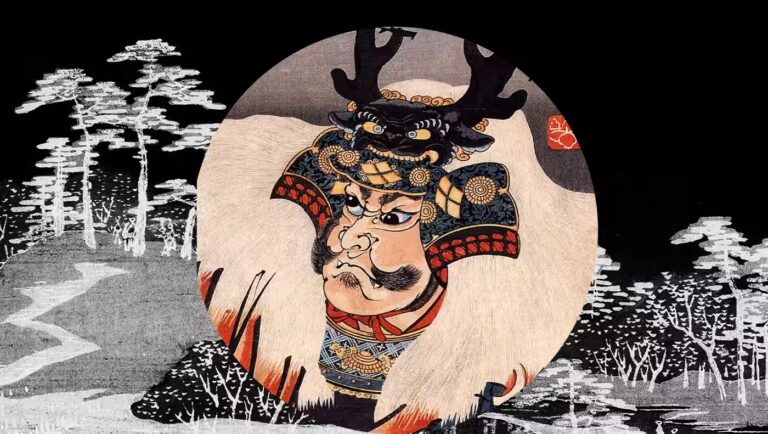
Takeda Shingen: The Tiger of Kai
Takeda Shingen (1521–1573): the Tiger of Kai, his cavalry tactics and the legendary rivalry with Uesugi Kenshin. Samurai Museum Berlin.
Read the article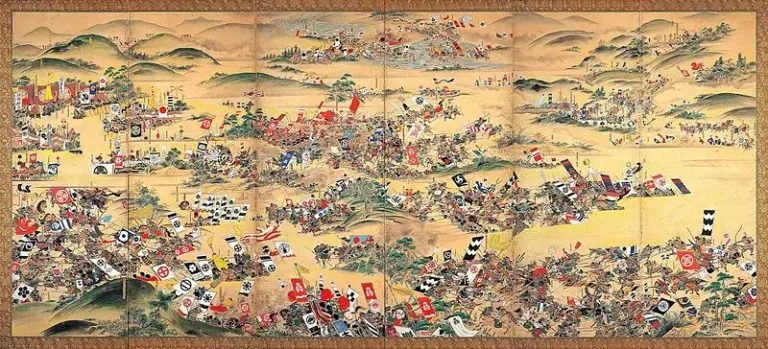
Battle of Sekigahara 1600: Japan’s Decision — Won through Betrayal
Sekigahara 1600 — Japan's largest samurai battle, decided by betrayal. Course, strategy, consequences. Exhibits at the Samurai Museum Berlin.
Read the article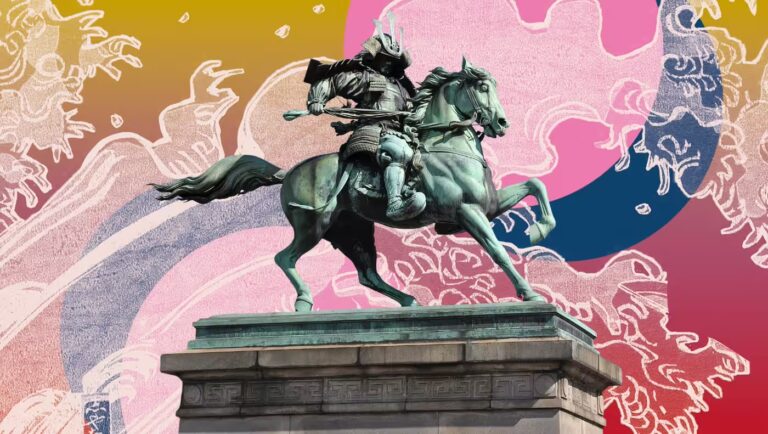
Kusunoki Masashige: Japan’s Most Loyal Warrior
Kusunoki Masashige – guerrilla tactician, imperial loyalist, myth. Who was the most loyal samurai really? History, facts & exhibits at…
Read the article