 Nominated for the EMYA2026 award
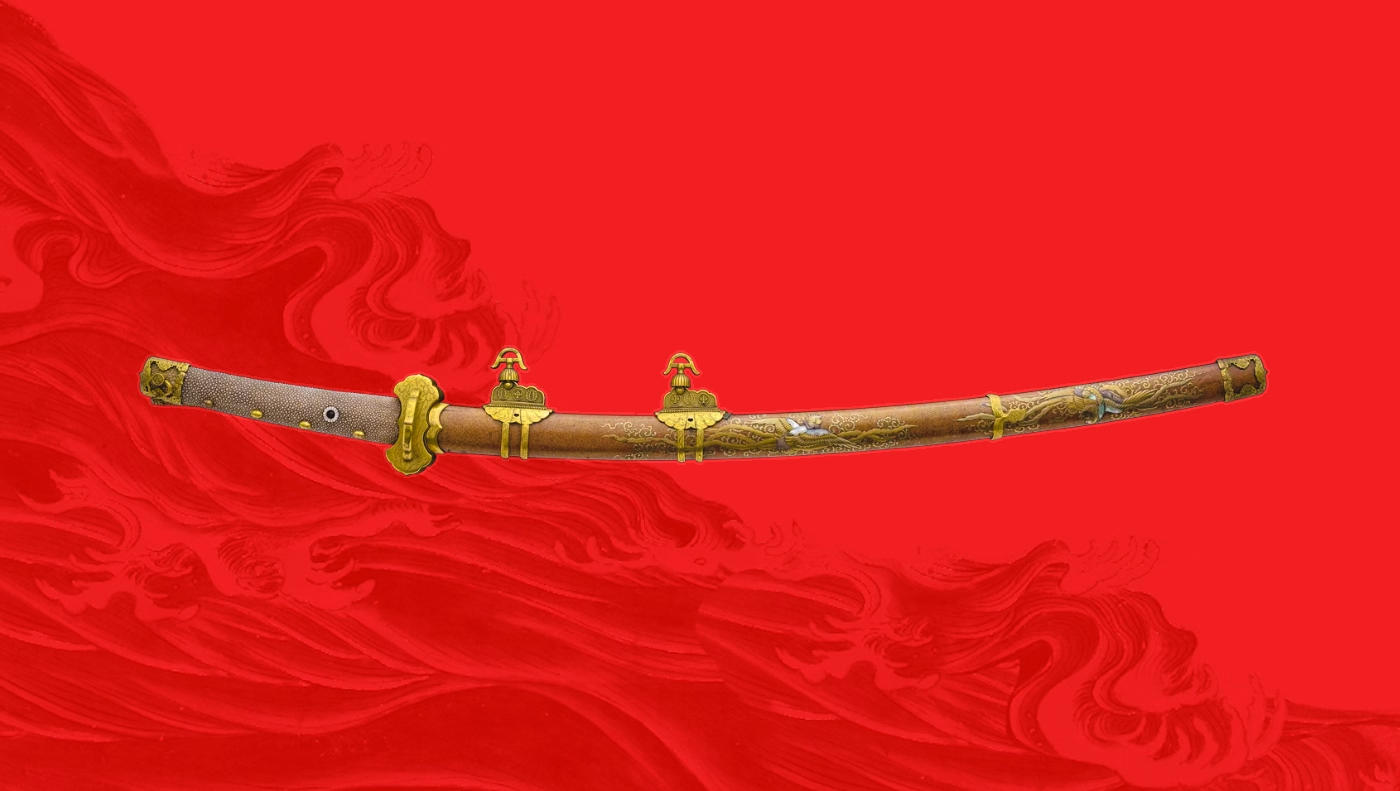
In the year 940, a rebel rode through Musashi Province and called himself emperor.
His name was Taira no Masakado; he was the grandson of an emperor and had fought land feuds for years like an ordinary provincial. Now he had conquered six provinces and taken the imperial residence of the eastern territories. The court in Kyoto did not send an army. It sent another warrior: Fujiwara no Hidesato, of whom the chronicles say that he killed a centipede as long as a mountain ridge with a single arrow. Whether that is true is open to question. What is certain is that Hidesato defeated Masakado in battle, cut off his head and sent it to the capital — where it remained impaled for three months before it supposedly flew back east of its own accord.
What remains: the court paid warriors to defeat warriors. That was new.
Three centuries earlier, the imperial court still had its own army. The Ritsuryō system, built on the Chinese model, provided for conscript regiments in every province. But conscription became expensive, the peasants fled, the regiments decayed. In 792, Emperor Kanmu officially abolished conscription and replaced it with a system that Karl Friday, in his groundbreaking study, describes as the “privatisation of violence”: the state stopped training warriors — and began to buy them.[1]
The samurai class arose from this purchase agreement.
From Tsuwamono to Bushi: How a Warrior Class Emerges
Samurai — from saburau, “to serve someone” — originally simply denoted a bodyguard at court. The older term for the armed man was tsuwamono (literally: “the hard one”), then musha (warrior), then bushi (warrior-servant). As Takeuchi Rizō explains, none of these terms initially described a social rank — they described an activity.[2]
This difference is crucial. The samurai were not born as a caste. They were needed as a caste.
The Emishi wars in north-eastern Japan — protracted campaigns against the non-Japanese population of today’s Tōhoku region — had triggered a military revolution. The old conscript army on foot was inferior to the mounted archers of the Emishi. Mounted archers could not be created by decree: they needed years of training, suitable horses, the right bows. They had to be raised from childhood. Thus, in the eastern provinces, dynasties of specialists emerged whose sons in turn became specialists, whose grandsons in turn became specialists — with the horse, the bow and the sword as the inherited tools of a craft that no one else mastered.[3]
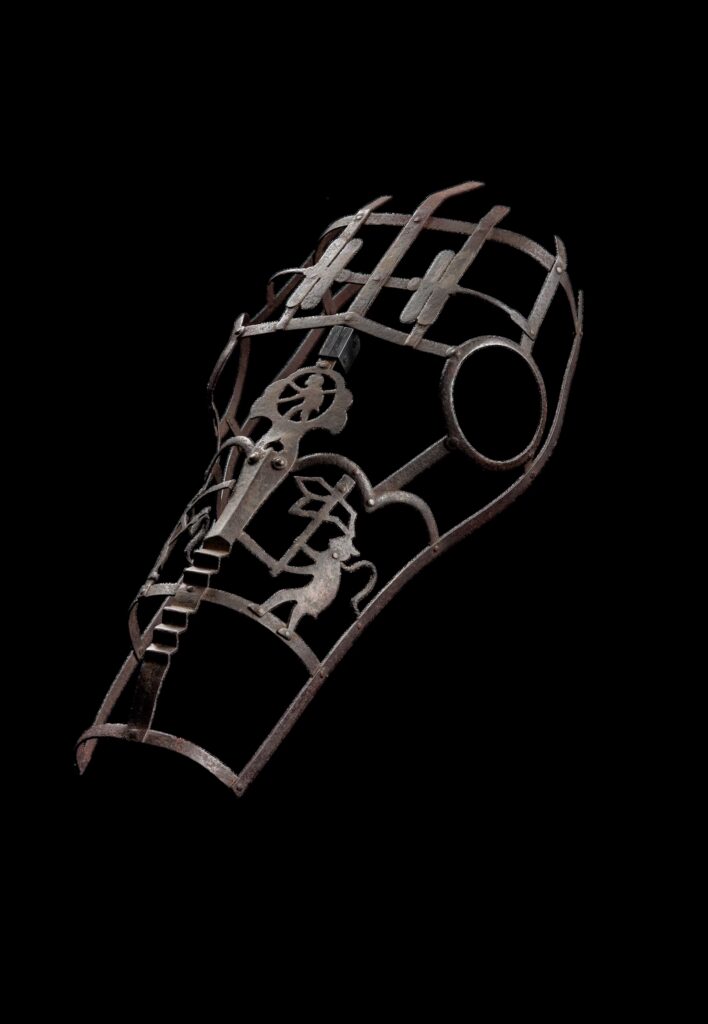
At the same time, the central administrative system collapsed. The shōen system — private estates withdrawn from the capital’s reach for taxation — spread through the 9th and 10th centuries like a crack in the ice. Whoever owned an estate needed someone to defend it. Whoever managed an estate had to enforce levies against rival claims. Both were the work of the bushi. Warriors were not needed despite the decline of the state — they were needed because of the decline of the state.
The imperial central administration responded in its own way: it militarised the police. The Kebiishi-chō, the police office of the capital, absorbed the functions of the palace guards in the 10th century and became the most important armed body in Kyoto. As McCullough shows in his analysis of the capital’s structures, the Kebiishi created an institutional niche for warriors in the middle of the court system — and thus a link between the world of the provincial fighters and the court that paid them.[4]
What emerged in this century was not a feudal system in the European sense. There were no formal charters of enfeoffment, no legally defined relationships of vassalage. There were patron-client relationships: a powerful warrior took weaker ones under his protection, and they performed services for him in return. And there were two families that grew larger within these networks than all the others.
The Taira and the Minamoto.
Taira no Masakado: The First Warrior Who Wanted to Be Emperor
The man with whom this story begins is no hero — at least not in the sense of later samurai mythology.
Taira no Masakado grew up in the eastern provinces, fought for years over claims to inheritance, killed several relatives, received an amnesty, fought again. In the winter of 939, he attacked the imperial administration of Musashi Province, looted the government building and opened the prisons. An act of banditry — were it not for what came next. A woman, Musashi no Takiyasha, presented him with the stolen imperial seals and proclaimed him the New Emperor. At first he refused. Then he accepted.
Six provinces fell to him almost without resistance. Not because the peasants rose up for him — but because no one had an army to oppose him. The court in Kyoto wrote letters. It sent incantations. It issued prayers. It took months before it sent out two warriors — Fujiwara no Hidesato and Taira no Sadamori — who killed Masakado in a field battle in March 940.
The episode reveals the central structural problem of the Heian state: in theory it held the monopoly on violence, but in practice it had no means of enforcing it. Warriors were only needed once violence had broken out — not as a preventive force for order, but as a fire brigade. The model worked as long as the rebels were reliably defeated. It no longer worked when the fire brigade itself began to start fires.
What Rizō shows in his analysis of the early warrior dynasties is the structural analogy: Masakado was not a monster, he was a warrior who thought the logic of his own system through to the end. If violence was the only argument that counted — and it was the only argument the court understood — why should the one with the most violence not rule? “Masakado and many of his supporters and opponents were professional fighting men […] descended in their skills perhaps from the prehistoric hunters found in the archaeological record of the eastern provinces.” (Cambridge Vol. 2, p. 644)[2]
His defeat was not the end of the problem. It was the proof of its existence.
Over the next two centuries, the revolt of 939/940 became the founding narrative scene of samurai mythology — but with a curious shift. Masakado, the rebel, was not condemned. He became the object of a cult. At the Masakado shrine in Tokyo (Kanda Myōjin) he is still worshipped as a deity today. A deity who had fought against the emperor. That says something about the Japanese attitude to power — and to defeat.
Horse and Bow: What a Samurai Really Was
Here begins one of the most persistent misconceptions about the samurai — and it concerns the weapon, not the man.
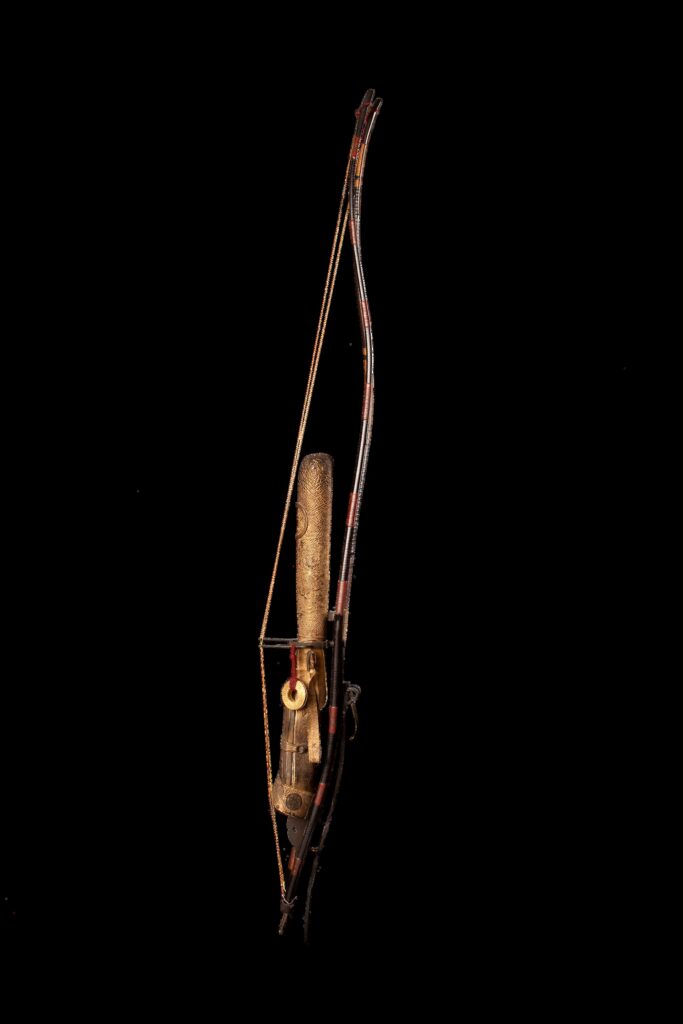
The sword is not the weapon of the early samurai. It was the emergency weapon, drawn when the arrows had been used up. The real weapon — the weapon after which the warrior class named itself — was the bow. Kyūba no michi: the way of horse and bow. That is what the Heian warriors called their art. Not kendō, not bushidō — but horse and bow.
Heian warriors skirmished — they circled enemy formations on their horses, loosed volleys of arrows, evaded, shot again. European battle tactics, in which heavily armoured horsemen charged head-on into the enemy, were simply impossible: Japanese horses were not warhorses. They were sturdy ponies, barely over 130 centimetres at the shoulder, unsuited to shock attacks. “The animals mounted by medieval warriors were not the thundering chargers of popular imagination… They were ponies, indigenous to the mountains of East Asia, standing only about 12 to 14 hands high.” (Friday, p. 100)[5]
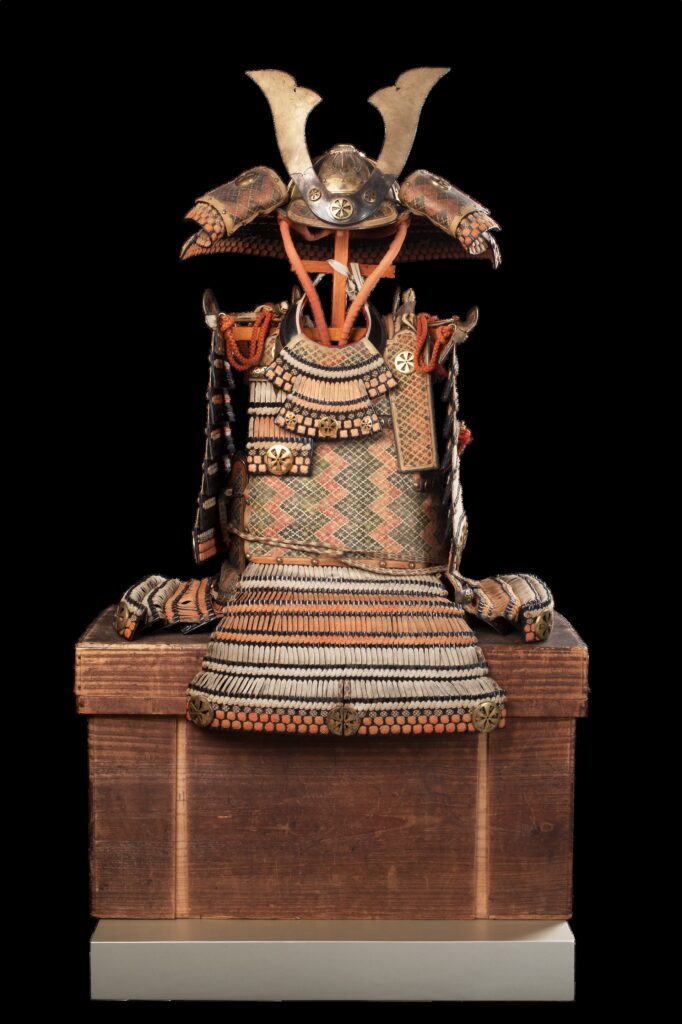
The Ō-yoroi armour, the iconic hallmark of the Heian warrior, was designed for precisely this style of fighting. Its massive shoulder plates (ō-sode) — as broad as shields — served not to intimidate but to protect: against arrows from the side while the warrior shot from horseback. On foot, the Ō-yoroi was a burden. As armour for a mounted archer, it was a well-thought-out piece of engineering.[6]
The Ō-yoroi is a style of armour worn from the Heian period into the early Muromachi period by high-ranking warriors of the military nobility — designed specifically for warfare with bow and arrow on horseback. The black-lacquered iron lamellae, joined by dyed silk lacing, show the craftsmanship that was required when one sat on a leaping horse as a living target.
But this armour reveals something else too: it was expensive. Extraordinarily expensive. Only a man with considerable land, considerable income or a considerable patron could wear it. That was no coincidence — it was a system.
The shōen system created economic dependencies that turned warriors into entrepreneurs. Whoever had land could equip warriors. Whoever had warriors could control more land. Whoever controlled more land could maintain larger bands of warriors. The Taira and the Minamoto understood this game earlier and better than their competitors. By the 12th century, both clans had built up networks that extended across the whole of Japan.
What was missing was the occasion to turn these networks against each other.
Court Politics and Civil War: How the Warriors Took Power
The occasion came — as almost always in the Heian period — from a dispute over the succession to the throne.
The insei system, which retired emperors had introduced in order to break the power of the Fujiwara regents, had produced an unintended result: two imperial lines, both with a claim to power, both in need of protective troops. When Emperor Sutoku and ex-Emperor Go-Shirakawa came into conflict in 1156, both sides called on warriors for help. The Hōgen Rebellion lasted a single day. In its significance, it marked the break between two eras.
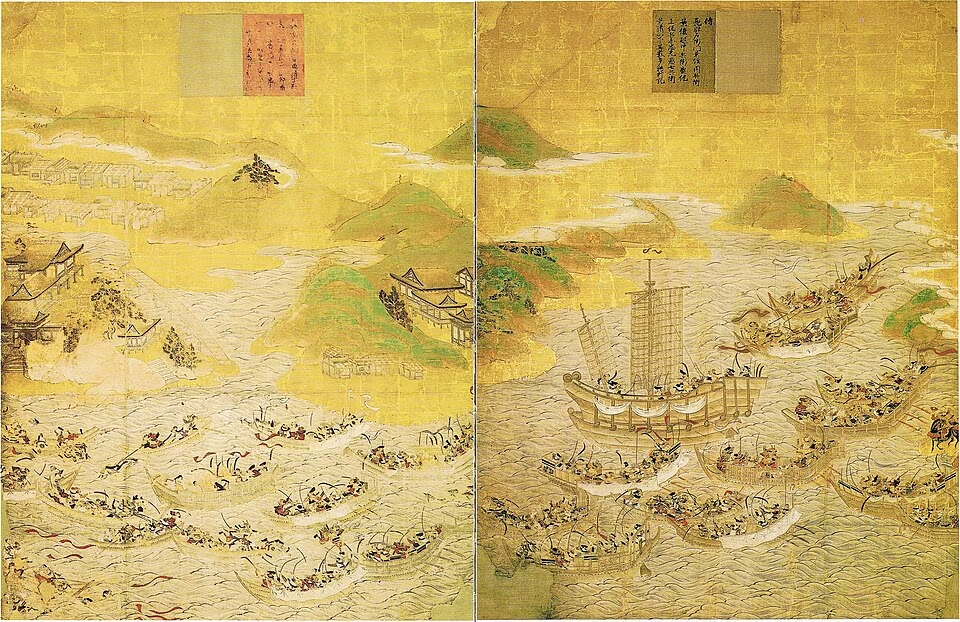
The Taira capitulation at Dannoura in April 1185 ends the Heian era. Three generations after Masakado, it was no longer a question of whether warriors were decisive — it was only a question of which warriors would rule.
As Hurst shows in his analysis of the insei system, the tragedy of the court was not any lack of cleverness among its actors, but the logic of instrumentalisation: “The insei was not an attempt to destroy the ritsuryō system but to make it work for the imperial house.” (Cambridge Vol. 2, p. 637)[4] It worked — until the muscles the court had deployed were stronger than the body they served.
The paradox of the insei system also explains why the end of the Heian period was not a simple seizure of power. The Taira under Kiyomori had initially done exactly what the court had always wanted: bought and sold loyalty, forged marriage alliances, taken over court offices. Kiyomori became chancellor, his daughter the consort of an emperor. The difference from the Fujiwara was hard to name — except that he was a warrior, not a court noble, and that the other great warrior family did not forget it.
The economic base of the Taira illustrates how thoroughly the warriors had long been integrated into the Heian system: “One of the sources of Taira power in late Heian times was wealth obtained through control of the China trade.” (Cambridge Vol. 2, p. 701)[2] Not large landholdings in the old tradition — but trade networks, customs rights, maritime control. The Taira were not a relapse into barbarism, but the avant-garde of a new economic order.
The Minamoto beat them nonetheless.
The Genpei War (1180–1185) was the first war to encompass all of Japan. Five years in which the main lines of the two great families committed everything their provincial networks had been able to generate. The war ended in the spring of 1185 in the strait of Dan no ura, where the Taira fleet was destroyed by the Minamoto. The Emperor Antoku, Kiyomori’s grandson, drowned with the imperial sword Kusanagi in the arms of his grandmother. The Minamoto controlled Japan.
What followed was the beginning of a new era — that of the Kamakura shogunate. But it was also the end of something. The end of a court that had regarded warriors as tools. The end of an illusion that elegance and military power were separate spheres.
The Heian period had not created warriors. It had created a society in which warriors became indispensable — and then unstoppable.
Capital and Province: Two Worlds, One History
What Kyoto was in these centuries and what the eastern provinces were — that is hard to capture in a single sentence.
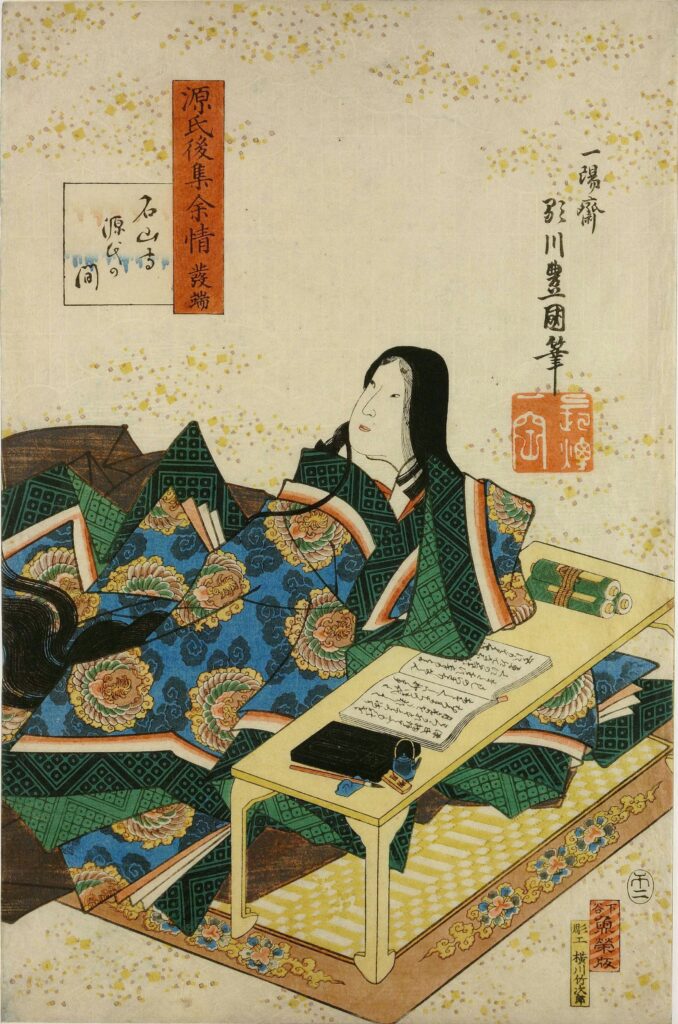
In the capital, court ladies wrote novels. Murasaki Shikibu wrote the Genji Monogatari around the year 1010 — the oldest work of world literature that is commonly classified as a novel. Court officials composed waka poems. The aesthetic canon of miyabi — courtly refinement, sensitivity to the transient, elegance in all areas of life — shaped the elite’s image of itself.
Two hundred kilometres to the east, warriors sharpened blades.
As McCullough shows in his analysis of aristocratic culture, the Kyoto court developed in almost complete isolation from the realities of the provinces: “The aristocratic culture of the Heian period developed in complete isolation from the brutal realities of the provinces.” (Cambridge Vol. 2, p. 431)[2]
The Genpei War was not merely a power struggle between two warrior dynasties. It was the collision of two realities of Japanese life. The Heike Monogatari — written in the decades after the war — is the document of this collision. It mourns the Taira not as enemies, but as the bearers of a culture that perished. The flute music of the young Taira no Atsumori, who fell in battle shortly afterwards, shows a particular tragedy.
That was not the reality of war. That was its literary transformation into something more bearable. But it shows how deeply Heian aesthetics had penetrated even the language of war — or how much the warriors, in the end, wanted to become Kyoto themselves.
The Heian period ended in the blood of the strait of Dan no ura. But it did not end in the minds of the samurai. Its aesthetics, its concepts of beauty and transience, its idea of loyalty as a personal bond — all of this survived the shogunate, survived the Sengoku turmoil, survived the Tokugawa order.
There is something of the Heian in every samurai.
Armour, Ritual and the Construction of the Warrior
The Heian warriors had a pragmatic conception of themselves. They served whoever paid. They fought for whoever secured land for them. Loyalty was not a virtue but a contract — and contracts were renegotiated. Taira no Masakado, who proclaimed himself emperor in 940, had fought loyally for the court for years. His rebellion began as a dispute with relatives over inheritance claims. The family dispute turned into regional rule, and regional rule gave rise to something more ambitious. The chronicles describe him ambivalently: powerful, dangerous, but not morally condemned.[7]
“The term for the Japanese warrior, bushi (‘martial servitor’), which became common from the late Heian period on, was preceded in earlier centuries by the words tsuwamono and musha.” (Cambridge Vol. 2, p. 644)[2]
This shows: even the terminology was in flux. The warriors of the Heian period did not yet have a stable self-image as an estate. They were specialists, sought-after specialists, and their social rise was the result of state demand, not of cultural self-invention.
This self-invention began with war literature. The Heike Monogatari, which put the Genpei War into words, was not a history book. It was — as Paul Varley shows in his analysis of the war tales — a narrative construction: the defeated (the Taira) were aestheticised, death was glorified, transience (mujō) became the Buddhist keynote. “The war tales can perhaps best be described as literary histories, mixtures of truth and fancy… They are the most important sources of information we have about the customs and ethos of the warriors.” (p. xi)[7]
What the warriors of the Heian period really thought largely escapes our knowledge. What they left behind can be touched.
The warriors of the Heian period had no name for what they were becoming. They called themselves servants, specialists, vassals. Only their descendants, in war epics and historical constructions, called them samurai — and put into their mouths a philosophy they had never taught.
That is the business of every mythology: projecting the result back onto the origin and thereby making it unrecognisable.
Conclusion: What the Heian Period Really Created
In 794 the imperial court moved to Heian-kyō — the city we now call Kyoto. In 1185 it never left it again, but its power had long since been elsewhere. The bakufu in Kamakura, Minamoto no Yoritomo’s military government, ruled Japan de facto.
What happened in the 391 years in between cannot be reduced to a formula. No triumphant story of ascent, no unambiguous narrative of the strength of the warriors against the weakness of the courtiers. The Heian period was more complex: a state apparatus that outsourced its violence because it believed this would make it more efficient — and thereby created a class it could no longer control. A nobility that used warriors as muscle until the muscles were stronger than the body. A system of privatisation that undermined itself.
What remained was a warrior caste — with bows and horses, with armour of iron and silk lacing, with loyalties that were contracts, and notions of honour that were still taking shape. No bushidō, no eternal code, no philosophy of readiness to die. Only men who perfected a craft because the state demanded it of them — and who in the process became something no one had planned.
Frequently Asked Questions about the Heian Period
When did the Heian period begin and what brought it to an end?
The Heian period began in 794 with the relocation of the capital to Heian-kyō (Kyoto) and ended in 1185 with the victory of the Minamoto in the Genpei War. The subsequent establishment of the Kamakura shogunate marks the transition to the Kamakura period.
Why did the samurai emerge in the Heian period?
In 792 the court abolished the conscript army and outsourced military tasks to professional warrior clans. This “privatisation of violence” (Friday 2004) created a demand for specialists who, over generations, developed into an independent warrior caste. The basis for this was the Emishi wars in the north-east, which had shown mounted archers to be decisive.
What was the most important weapon of the Heian samurai?
The bow (yumi), not the sword. The Heian warriors called their martial art Kyūba no michi — the way of horse and bow. The sword was the weapon of last resort, drawn when the arrows had been used up. Karl Friday demonstrates that battles of this era were primarily archery fights from the saddle (Friday 2004, p. 69).
What was the Ō-yoroi and why was it constructed in such a special way?
The Ō-yoroi (great armour) was the armour of high-ranking Heian warriors, designed specifically for the mounted archer. The broad shoulder plates (ō-sode) shielded against arrows while shooting. For fighting on foot it was unwieldy.
What is the difference between the Taira and the Minamoto?
Both clans descended from the imperial court nobility and were the dominant warrior networks of the late Heian period. The Taira based their power on maritime trade with China and on court offices; the Minamoto on provincial vassals in eastern Japan. Their conflict in the Genpei War (1180–1185) ended with the victory of the Minamoto and the founding of the first shogunate.
Why did the imperial court lose power to the samurai?
The insei system — retired emperors who ruled from monasteries — created rival imperial lines that both depended on warriors as protective troops. When the Hōgen Rebellion broke out in 1156, the military balance of power decided the outcome of a dispute over the throne. This established the principle: warriors could decide imperial conflicts — and thus also answer imperial questions.
Visit the Samurai Museum Berlin
Display case C02V holds a replica of an Ō-yoroi armour that shows the warrior type of the late Heian and early Kamakura periods in its original form. Display case C03V shows a Hoshi Kabuto (star helmet) from the Kamakura period — the riveted helmet construction that emerged from the mounted archer. Open daily from 10 a.m. to 7 p.m., Auguststraße 68, Berlin-Mitte.
Related Articles
- Kamakura & Muromachi: The First Shogunate and the Mongol Invasions
- Kabuto: The Helmet of the Samurai
- Samurai: History, Culture and Legacy
- Sengoku Jidai: The Age of Warring Provinces
- Dō: The Breastplate of the Samurai
Sources and Further Reading
This article is based on academic research and the expert catalogues of the Samurai Museum Berlin. All cited works are documented in the complete bibliography of the knowledge hub.
Primary Sources
- [1] Friday, Karl F. (2004). Samurai, Warfare and the State in Early Medieval Japan. Routledge. Used: introduction, ch. 1–4 (privatisation of violence; primacy of the bow; reality of horses; tactics).
- [2] Shively, Donald H. & McCullough, William H. (eds.) (1999). The Cambridge History of Japan, Vol. 2: Heian Japan. Cambridge University Press. Used: ch. 2 (Kebiishi), ch. 9 (Insei), ch. 10 (emergence of the warriors, Taira, Masakado).
Secondary Literature
- [3] Brown, Delmer M. (ed.) (1993). The Cambridge History of Japan, Vol. 1: Ancient Japan. Cambridge University Press. Used: ch. 3/8 (Ritsuryō military; precursors of the samurai).
- [4] Hurst, G. Cameron III (1999). Chapter “Insei” in: Shively/McCullough (eds.), Cambridge History of Japan, Vol. 2. pp. 576–643.
- [5] Friday, Karl F. (2004). Samurai, Warfare and the State. pp. 69–100. (bow as primary weapon; reality of horses)
- [6] Absolon, Trevor (2017). Samurai Armour, Volume I: The Japanese Cuirass. Osprey Publishing. Used: ch. 2 (Ō-yoroi construction and function).
- [7] Varley, H. Paul (1994). Warriors of Japan as Portrayed in the War Tales. University of Hawaii Press. Used: ch. 1 (Masakado), ch. 3 (Heike Monogatari, Mujo, war literature).
Museum Catalogues and Expert Reports
- [8] Samurai Museum Berlin (2021). Armours of the Samurai. Display case C02V (Ō-yoroi, Heian–Kamakura); display case C03V (Hoshi Kabuto, Kamakura period).
© Samurai Museum Berlin – All rights reserved
You might also like
Tomoe Gozen: Japan’s Most Famous Female Warrior (ca. 1157–1247)
Tomoe Gozen – warrior, legend, question. What do we really know about Japan's most famous onna-musha? History & fact-check at…
Read the article
Takeda Shingen: The Tiger of Kai – Life & Strategy
Takeda Shingen (1521–1573): the Tiger of Kai, his cavalry tactics and the legendary rivalry with Uesugi Kenshin. Samurai Museum Berlin.
Read the article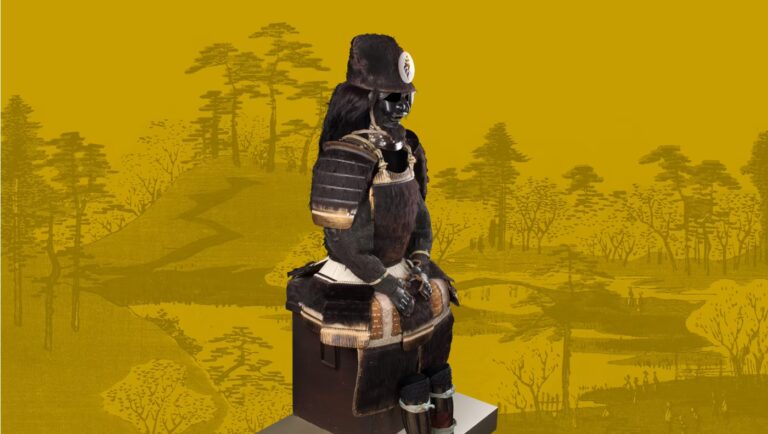
Sengoku Jidai: The Age of the Warring Provinces (1467–1615)
The Sengoku Jidai (1467–1615) was Japan's 150-year civil war. After the collapse of Ashikaga rule, rival daimyō fought for supremacy…
Read the article