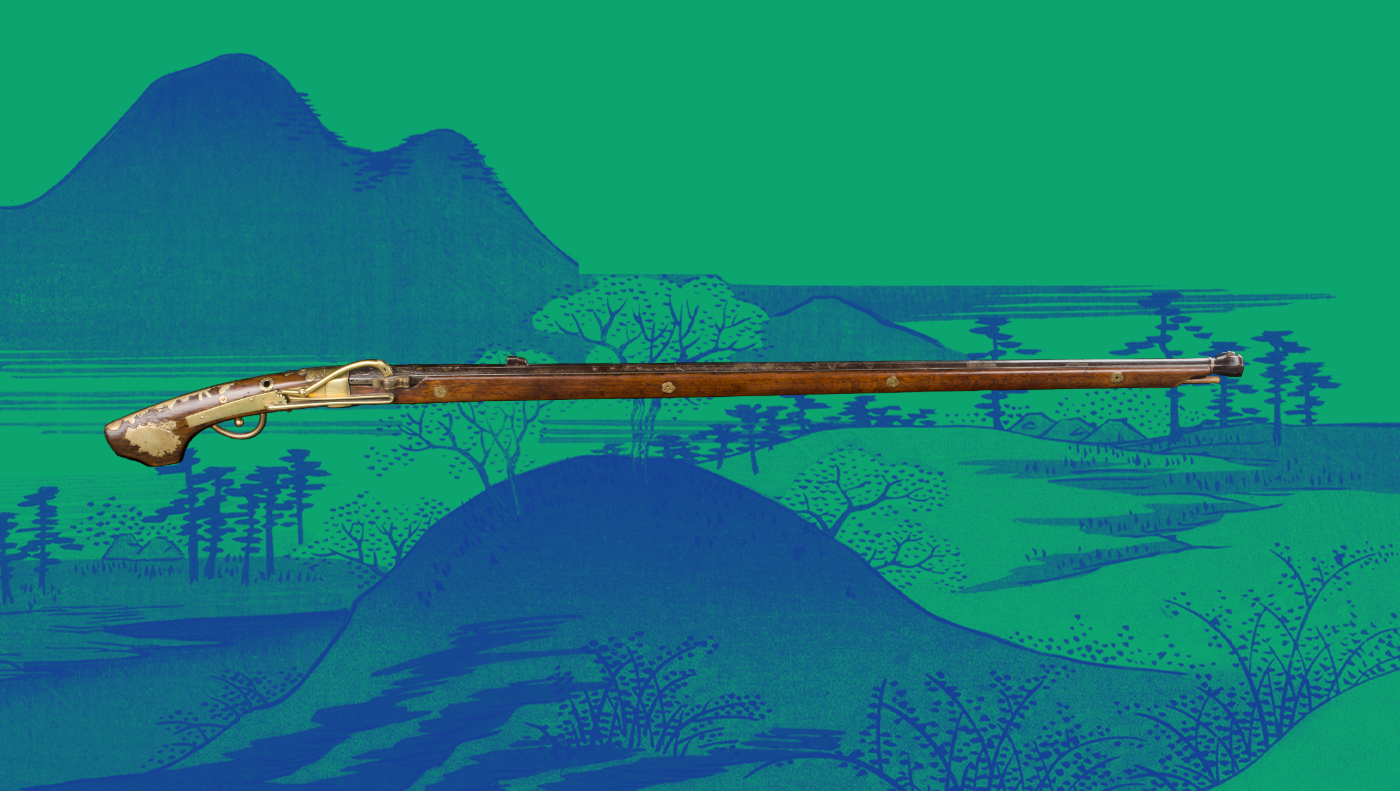
In 1543 a ship landed off the coast of the island of Tanegashima. The Portuguese traders António da Mota and Francisco Zeimoto, who had arrived on a Chinese junk under captain Wang Zhi, sold two arquebuses to the daimyō Tanegashima Tokitaka. What followed was one of the fastest military adaptations in world history.
Japanese Innovation: More than Copying
Japanese gunsmiths developed decisive improvements: a water-repellent touch-hole cover made of urushi lacquer for use in the rain, and standardised calibres for mass armies. Japan soon possessed more and better firearms than any European nation of the same era.[1]
Nagashino: The Tactical Turning Point
At the Battle of Nagashino (1575), Oda Nobunaga deployed musketeers in staggered ranks using volley tactics and destroyed the Takeda cavalry. Popular literature follows Perrin’s figure of 3,000 gunners — modern research (Turnbull, Owada) more realistically estimates 1,000–1,500 active gunners. The chronicle Shinchō Kōki is considered ideologically exaggerated.[2]
→ Arsenal section: Samurai Museum Berlin
Disarmament: Katanagari and Nagahama
Hideyoshi’s katanagari (1588) disarmed peasants and monks. After that, the Tokugawa shogunate eliminated firearms not through a total ban, but through monopolisation: all gunsmiths were forced into the town of Nagahama; orders were systematically throttled until production became unprofitable.[1]
Why Japan Gave Up the Gun
The deepest sociological reason: the musket democratised violence. After just a few weeks of training, a peasant could already do great damage with this weapon. This dynamic threatened the special status of the warrior nobility. Sakoku isolation additionally removed the external pressure of an arms race.[1]
Frequently Asked Questions
What does teppō mean?
Teppō (鉄砲) means “iron cannon” and, in the Japanese context, refers to early firearms, in particular the arquebus (matchlock gun), introduced in 1543.
Who brought firearms to Japan?
The Portuguese traders António da Mota and Francisco Zeimoto, who had arrived on a Chinese ship under captain Wang Zhi, landed on Tanegashima in 1543. Source: the Japanese chronicle Teppōki (1606).
What was the significance of the Battle of Nagashino?
In 1575 Oda Nobunaga destroyed the Takeda cavalry with staggered ranks of gunners. It is regarded as a turning point in Sengoku warfare. The exact number of troops is disputed: modern research estimates 1,000–1,500 active gunners.
Was there a complete ban on firearms?
No. The shogunate used monopolisation (Nagahama), licensing systems and reduced orders. Production died out through economic irrelevance, not through an abrupt ban.
Why did Japan restrict firearms?
Primarily for political reasons: by democratising violence, the musket threatened the special status of the samurai class. Secondarily: sakoku isolation removed the pressure of an arms race.
Visit the Samurai Museum Berlin
The Samurai Museum Berlin displays teppō from the Edo period. Daily 10 a.m.–7 p.m., Auguststraße 68.
Bibliography
- [1] Perrin, Noel (1979): Giving Up the Gun. David R. Godine. Ch. 1–7.
- [2] Turnbull, Stephen (2005): Warriors of Medieval Japan. Osprey. Source criticism on Nagashino; Owada Tetsuo.
- [3] Conlan, Thomas D. (2022): Samurai Sourcebook. Columbia UP.
© Samurai Museum Berlin – All Rights Reserved
You might also like
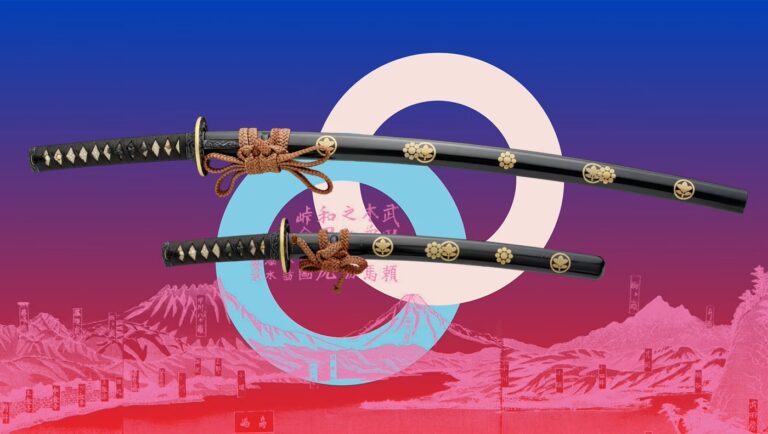
Wakizashi: The Second Sword of the Samurai — and Why It Was the Core of Their Identity
Wakizashi — the short sword of the samurai pair (daishō). History, length, use, role in seppuku. Exhibits at the Samurai…
Read the article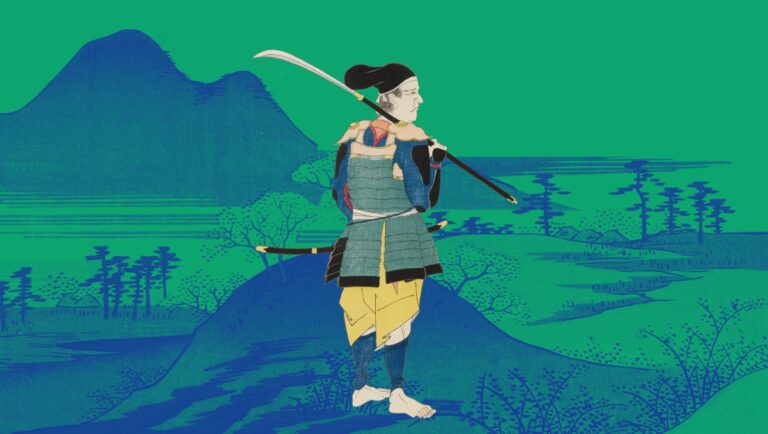
Naginata: The Polearm of the Samurai
The naginata: polearm of the samurai, anti-cavalry instrument and woman's weapon. History, types, and three originals at the Samurai Museum…
Read the article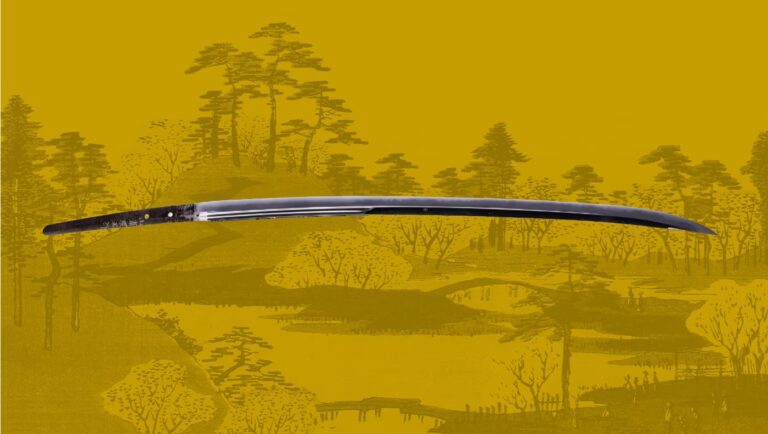
Japanese Swordsmithing: How a Katana Is Made
Japanese swordsmithing: how a katana is made from black iron sand. Tamahagane, hamon & master smiths explained – with original…
Read the article