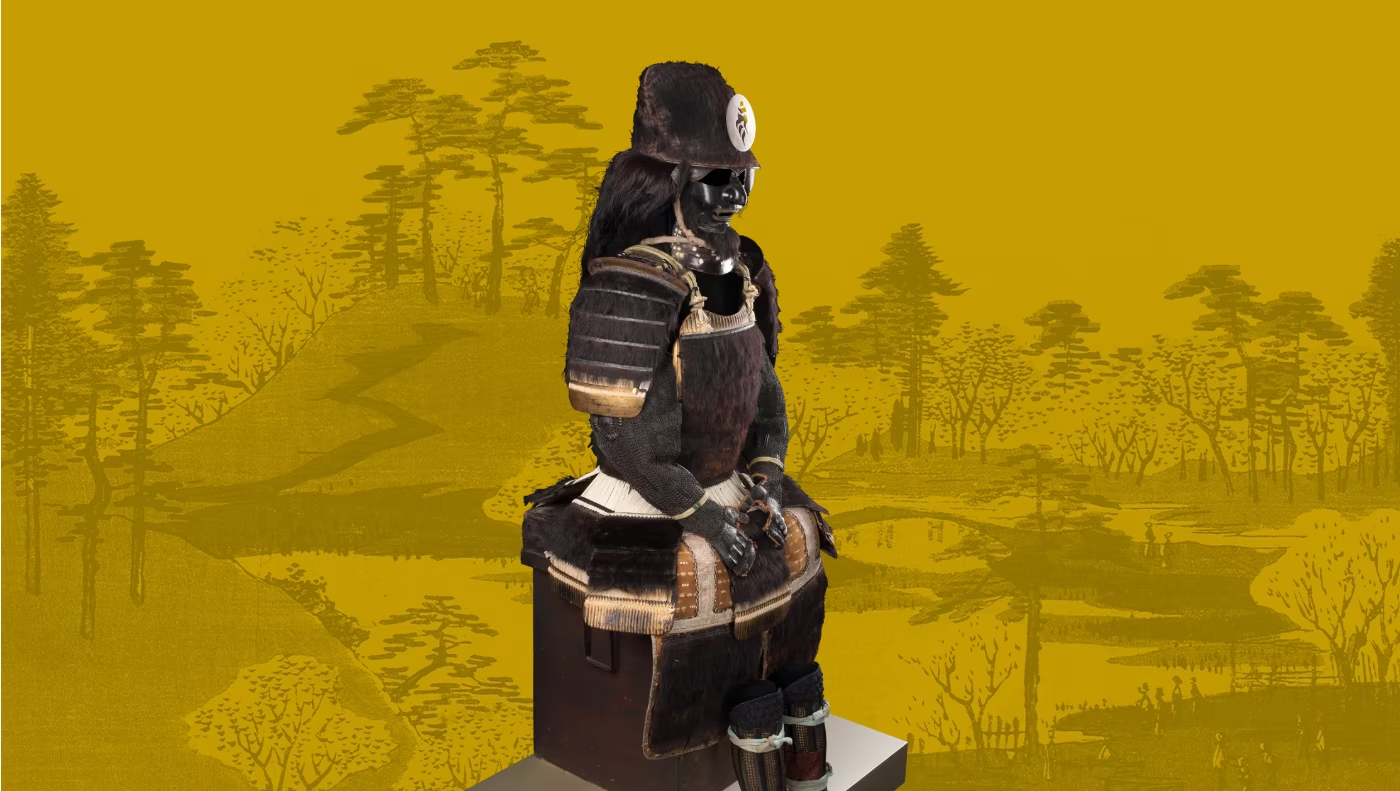
In the winter of 1467 Kyoto burned. Not by chance, not through a natural disaster – but because two samurai clans could not agree on who was entitled to determine the next shōgun. What began as a succession dispute became a conflagration. Tens of thousands of warriors turned the imperial city into a landscape of ruins. When the Ōnin War ended after eleven years, central power had been destroyed. The shōgun now ruled only over ashes.
Out of this vacuum grew an era that was to change Japan forever: the Sengoku Jidai, the “age of warring states”. For over 150 years, rival warlords tore at each other for supremacy. Traitors became heroes, peasants became generals, Buddhist monks became warlords. The sword decided who ruled – until the first arquebus shots blew the old balance apart.
The Collapse: From the Golden to the Silver Pavilion
The contrast could hardly have been sharper. Ashikaga Yoshimitsu, the third shōgun of the Muromachi bakufu, had the Golden Pavilion built in Kyoto in 1397 – a symbol of power, wealth and the ability to pacify the country. During his rule (1368-1408) the daimyō obeyed, taxes flowed and order prevailed. The Golden Pavilion shone not only with gold leaf, but also as a metaphor for the stability of the Ashikaga dynasty.
Sixty years later, Yoshimitsu’s grandson, Ashikaga Yoshimasa, completed a different building: the Silver Pavilion. But contrary to what the name suggests, the pavilion was never clad in silver. Yoshimasa ran out of money. Not because the country had become poor, but because the shōgun had lost control. Daimyō refused to pay levies, ignored orders and waged private wars. When disputes over Yoshimasa’s succession escalated in 1467, both sides called their allies to Kyoto – and no one could stop them any longer.
The Ōnin War (1467-1477) was not a battle, but years of positional slaughter in the streets of the capital. The Western faction (Yamana Sōzen) and the Eastern faction (Hosokawa Katsumoto) barricaded themselves in temples and aristocratic palaces. The war did not end in military victory, but in exhaustion. When both leaders died in 1477 – presumably of old age – the conflict simply petered out.
But the power vacuum remained. The shōgun still sat in Kyoto, but his authority barely extended beyond the city walls. In the provinces, regional warlords – the Sengoku daimyō – took command. The “law of the strongest” became the only law. What followed was called gekokujō by Japanese chroniclers: “the low overcome the high”.
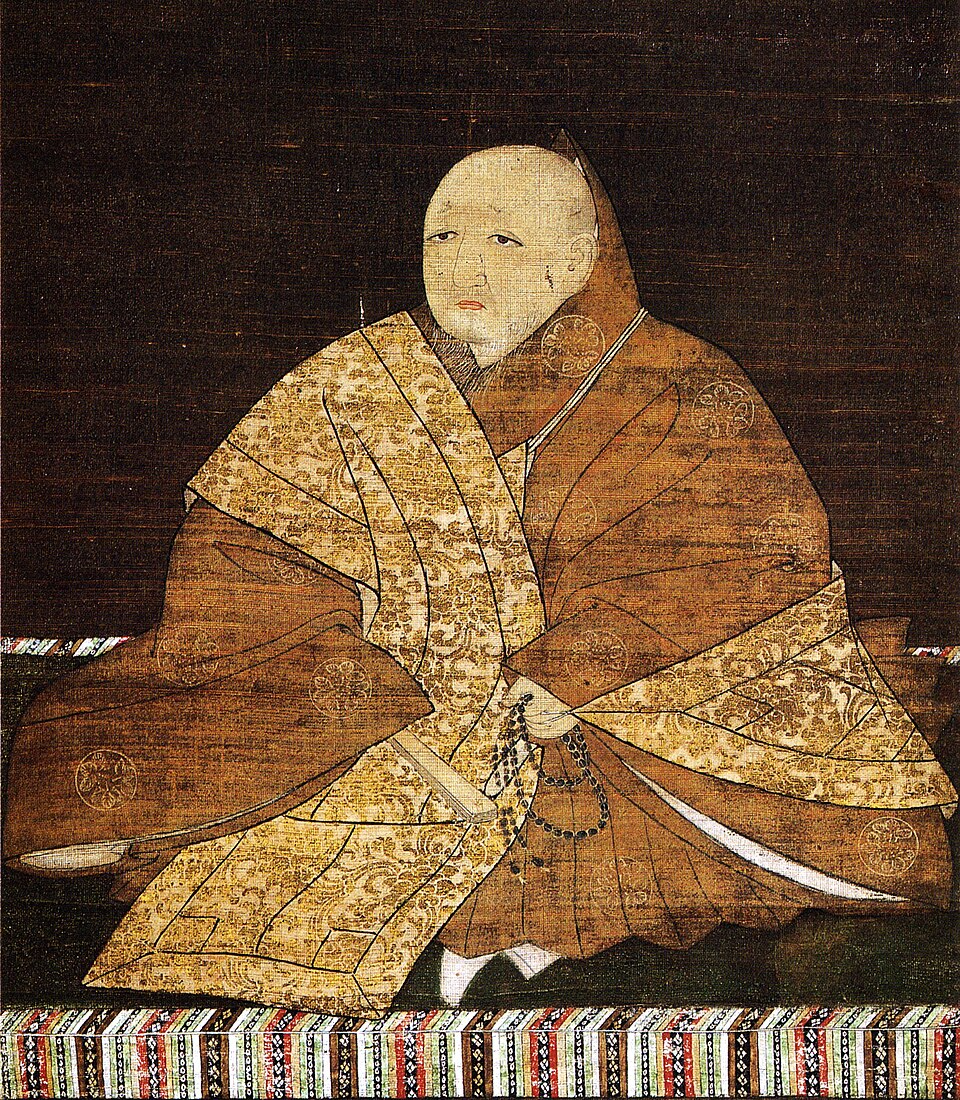
Gekokujō: When Servants Become Masters
Hisahide Matsunaga began as a simple soldier. He ended as lord of a third of Yamato Province. His path there: murder, betrayal, political opportunism. Matsunaga killed his own lord, overthrew his son, murdered the shōgun Ashikaga Yoshiteru and put a puppet on the throne. When he was besieged by Oda Nobunaga in 1577, he blew himself up together with his precious tea kettle – a final act of control in a life that had broken every rule.
The Sengoku period no longer recognised birthright. Anyone who was clever enough and ruthless enough could rise. Gekokujō – “the low overcome the high” – became the defining principle of the era.
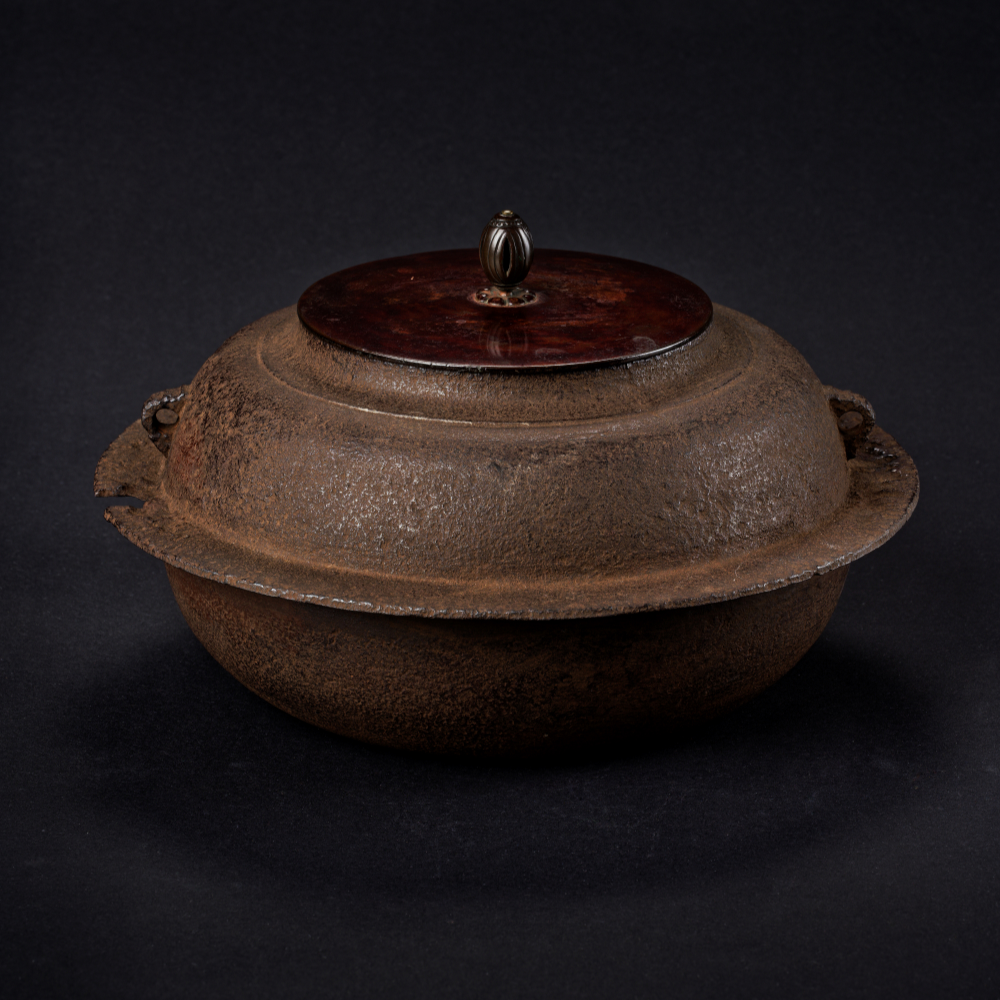
Historians count around 250 significant daimyō who fought for territory during the Sengoku period. Many of them did not come from old noble families, but were samurai who had risen through the ranks, skilful strategists or successful merchants. The Uesugi were originally retainers of the Kantō Kanrei before they stripped them of power. The Hōjō – not related to the famous Kamakura clan – were usurpers who appropriated the name of a former ruling house.
The system worked because loyalty was redefined. What counted was no longer the bond to a lord, but the ability to guarantee protection and plunder. A daimyō who lost battles, had to give up land or could not pay his retainers risked betrayal. No code of honour stopped samurai from changing sides if the new lord offered better terms.
Turnbull describes the case of Matsukura Hidemasa, an ashigaru (light infantryman) who rose to captain through bravery, made a strategic marriage and finally received a fief of his own. His grandson became a daimyō. Three generations from foot soldier to feudal lord – impossible in the rigid hierarchy of the later Edo period, everyday life in the Sengoku period.
The New Weapons: Arquebus and Ashigaru
In 1543 Portuguese traders landed on the island of Tanegashima, south of Kyushu. They brought goods, stories from distant lands – and two arquebuses. The local daimyō, Tanegashima Tokitaka, immediately recognised the potential. He bought both weapons for an outrageous sum and ordered his smiths to copy them.
Within thirty years Japan was producing more firearms than any European nation. The Sengoku daimyō had understood: the arquebus was an equaliser. An ashigaru – a simple foot soldier, often a part-time peasant – could kill a mounted samurai at 50 metres after a few weeks of training. The warrior elite’s centuries-old sense of superiority began to crumble.
The Battle of Nagashino (1575) became a textbook example of the new warfare. Oda Nobunaga placed 3,000 arquebusiers behind palisades and divided them into three ranks. While the first rank fired, the others reloaded – a continuous barrage. When the famous Takeda cavalry attacked, the riders rode into a wall of lead. Even the feared “Red Devils” of Takeda Katsuyori, armoured and disciplined, collapsed under the hail. The arquebus had replaced the cavalry as the dominant arm.
But firearms alone did not win wars. What distinguished Nobunaga was his ability to revolutionise logistics. While traditional daimyō mobilised their samurai only for campaigns and then sent them home, Nobunaga maintained standing troops. He paid salaries in rice, built storehouses, organised supply lines. His army was more professional, more disciplined – and more expensive. Only daimyō with large territories and efficient tax administration could keep up.
Armour, however, underwent the most radical change. The introduction of the arquebus (teppō) in 1543 forced a fundamental redesign: the old lamellar armours (kozane), made up of hundreds of small scales and effective against arrows, offered insufficient protection against lead balls. With the advent of firearms, armour changed from the wide, box-like constructions of the medieval period to the close-fitting tōsei gusoku.
The ashigaru, long regarded as cannon fodder, rose in status. With the arquebus in hand they were no longer mere auxiliary troops, but the backbone of the armies. Nobunaga and later Hideyoshi recruited peasants en masse, trained them and equipped them. The line between “warrior” and “peasant” blurred. A man could plant rice in summer and storm a castle in autumn.
This development unsettled the established samurai families. If anyone with a weapon could be a warrior, what made a samurai special? The answer came later, under Toyotomi Hideyoshi: the forcible separation of the estates. But in the 1560s and 1570s Sengoku society was still fluid. The weapon in your hand counted for more than your name.
The Three Realm Unifiers: Nobunaga, Hideyoshi, Ieyasu
A Japanese saying sums up the three men who unified Japan by force:
“If the cuckoo does not sing, Nobunaga kills it.
If the cuckoo does not sing, Hideyoshi persuades it.
If the cuckoo does not sing, Ieyasu waits.”
The metaphor is simple, but apt.
Oda Nobunaga was no diplomat. When Buddhist monks of the Enryaku-ji monastery on Mount Hiei opposed him, he burned the temple down – together with 20,000 inhabitants. Men, women, children. “Whoever opposes me dies” was his motto.
Born in 1534 as the son of an insignificant daimyō in Owari, Nobunaga was considered a scatterbrain. His contemporaries called him “Owari no Ōutsuke” – the “great fool of Owari”. But the fool turned out to be a brilliant strategist. In 1560, with 3,000 men, he defeated an army of 25,000 at Okehazama – through a surprise attack in a thunderstorm. The victory catapulted him into the first rank of the Sengoku daimyō.
Nobunaga exploited every innovation: arquebuses, professional troops, modern castles, economic reforms. He promoted trade, monopolised markets, built roads. His castle at Azuchi, completed in 1579, was a marvel of seven storeys, a gilded interior and a strategically perfect location. It embodied his vision: Japan under his absolute control.
But in 1582 his rise came to an abrupt end. Akechi Mitsuhide, one of his generals, rebelled and forced Nobunaga to take his own life in the Honnō-ji temple. The motives for the betrayal remain unclear – insult, calculation of power, personal hatred? Nobunaga died before he could complete his work.
Toyotomi Hideyoshi was the opposite of his lord. Where Nobunaga broke, Hideyoshi forged alliances. Where Nobunaga burned, Hideyoshi bought. Born the son of a foot soldier – some sources call his mother a concubine and his father unknown – Hideyoshi rose through talent. Nobunaga made him a general. After Nobunaga’s death, Hideyoshi avenged his lord within days, defeated Akechi Mitsuhide at Yamazaki and took over the leadership.
By 1590 Hideyoshi had subjugated all the major daimyō – some militarily, many through diplomacy. He offered them autonomy as long as they recognised him as overlord. This strategy worked because Hideyoshi himself was an upstart. He understood the fears of the daimyō, their vanity, their pragmatism.
But Hideyoshi also knew cruelty. In 1587 he issued an edict against Christian missionaries. In 1597 he had 26 Christians crucified in Nagasaki – a signal to foreign powers that Japan would not be colonised. And when his samurai became unemployed after unification, he turned their violence outwards: in 1592 and 1597 he invaded Korea. Both invasions failed miserably – because of supply problems, Korean turtle ships and Chinese intervention troops.
Hideyoshi died in 1598, exhausted and embittered. His son Hideyori was still a child.
Tokugawa Ieyasu had perfected patience. He had been allied with Nobunaga and had served Hideyoshi – but always with one hand on his own sword. When Hideyoshi died, Ieyasu was one of the most powerful daimyō in Japan. He controlled the Kantō plain and had the richest rice fields and the most disciplined troops.
In 1600 the decision came. At Sekigahara two coalitions clashed: the Eastern Army under Ieyasu and the Western Army, which claimed to be fighting for Hideyori’s inheritance. The battle lasted only one day. Ieyasu owed his victory not only to military strength, but to espionage, bribery and the skilful timing of betrayal. Several generals of the Western Army changed sides in the middle of the fighting. The battle was decided before it had properly begun.
Ieyasu waited another 15 years before destroying Hideyoshi’s son. In 1614 and 1615 he besieged Osaka Castle – Hideyori’s last fortress. The first siege ended in a ceasefire. The second in fire, blood and the end of the Toyotomi line. In 1615, after the destruction of Osaka, Japan was finally unified. Ieyasu had won because he lived longer than all the others.
War and Culture: Tea, Theatre, Aesthetics
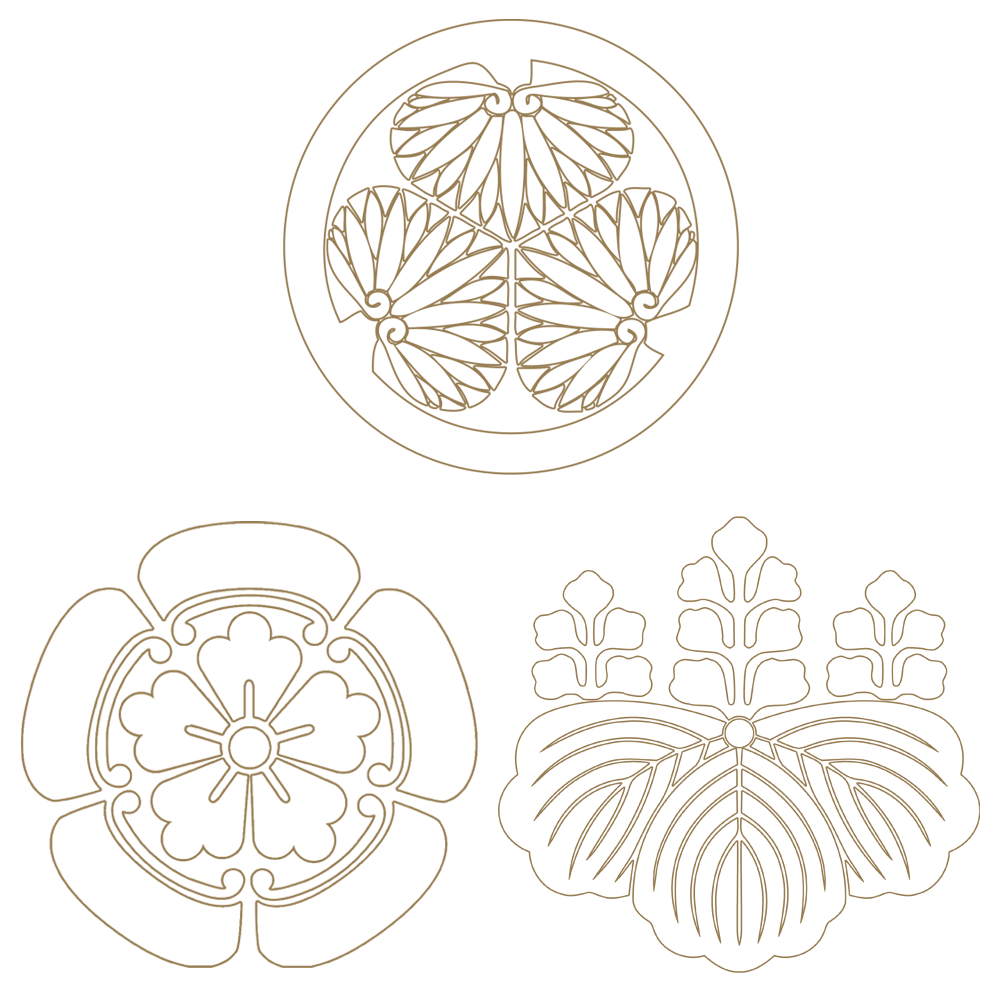
Matsunaga Hisahide – the traitor, murderer and usurper from the gekokujō chapter of this story – owned one of the most famous tea kettles in Japan. When Oda Nobunaga besieged him in 1577 and demanded the surrender of the kettle, Matsunaga blew himself up together with the vessel. This episode is not a curiosity, but a key to understanding the Sengoku period: the same men who besieged castles by day cultivated an aesthetic of radical simplicity by night. Out of the devastation of the civil war grew one of the most creative cultural flowerings in Japan. The courtly elegance (miyabi) of the Heian period gave way to new ideals – wabi, the beauty of the simple, and sabi, the charm of the transient. In a world in which nothing lasted, the broken became an aesthetic principle.
No one embodied this connection between war and culture more strongly than Sen no Rikyū (1522–1591), who shaped the tea ceremony (chanoyu) into the language of power of the Sengoku daimyō. Under Toyotomi Hideyoshi, tea became diplomacy: alliances were sealed over tea, submissions negotiated over tea, political messages encoded in the choice of utensils. Rikyū himself paid for this closeness to power with his life – in 1591 Hideyoshi forced him to commit seppuku, for reasons that are still debated today. Rikyū’s legacy lived on in his pupils. Furuta Oribe (1544–1615), daimyō and tea master first to Hideyoshi, then to Tokugawa Ieyasu, created a new sensibility for the deliberately flawed: deformed shapes, deep cuts, thick layers of glaze.
What the tea bowl was to quiet aesthetics, the Nō stage became to drama. Ever since Zeami Motokiyo (1363–1443) had codified the foundations of Nō theatre, it had been the preferred medium of the warrior elite – an art form that translated stories of fallen heroes, vengeful spirits and the transience of glory into stylised slowness.
The End of the Chaos: From Warrior to Bureaucrat
The irony of the Sengoku period lies in its end. 150 years of war produced a warrior class of unprecedented size – and then war was taken away from it.
Toyotomi Hideyoshi understood the problem: hundreds of thousands of armed men, trained for violence, with nothing to do. His solution was radical. In 1588 he issued the katanagari edict – the “sword hunt”. All peasants had to hand over their weapons. Officially, in order to cast a great Buddha from them. In fact, to prevent uprisings and make the boundary between samurai and peasants insurmountable.
The heino bunri principle – “separation of warriors and peasants” – cemented the new order. From now on: a samurai is a samurai, a peasant is a peasant. No more advancement. No more fluid mobility. The kokudaka system calculated income in rice yields and bound samurai to their lords. Whoever received 100 koku (enough rice for 100 people per year) had to serve for it – and if necessary die.
The Tokugawa shoguns perfected this system. They forbade samurai to leave their lords’ lands. They established the sankin kōtai system: daimyō had to reside in Edo in alternate years, while their families remained there as hostages. The cost of these journeys – hundreds of retainers, magnificent equipment – ruined the daimyō financially and made rebellion impossible.
The samurai themselves were transformed. Warriors became officials. Instead of fighting battles, they administered taxes, settled disputes, studied Confucius. The sword became a status symbol – worn, but rarely drawn. The bushidō code, later glorified as an “ancient code of honour”, only came into being at this time: as a retrospective justification for a warrior class without wars.
The Sengoku Jidai had transformed Japan. It ended the power of the old aristocracy, established a new elite and laid the foundations for 250 years of peace. But the price was high: a rigid society in which birth counted for everything and talent for nothing.
Frequently Asked Questions About the Sengoku Jidai
1. How long did the Sengoku Jidai last?
The Sengoku Jidai began in 1467 with the Ōnin War and officially ended in 1615 with the destruction of Osaka by Tokugawa Ieyasu. In total it covered around 150 years of intense civil war, with the phase of unification under Nobunaga, Hideyoshi and Ieyasu (1560-1615) being particularly brutal.
2. Why is Oda Nobunaga called the “Demon King”?
Nobunaga occasionally referred to himself as Dairokuten-Maō (“Great Demon King of the Sixth Heaven”), a Buddhist figure who prevents enlightenment. The title was a provocation: Nobunaga hated political Buddhism and wanted to position himself as a ruler beyond religious authority. His contemporaries used the term both admiringly and fearfully.
3. How many daimyō fought during the Sengoku period?
Historians count around 250 significant daimyō who fought for territory during the Sengoku Jidai. At the beginning (1467) there were considerably more local warlords, but their number was reduced through conquest and consolidation. At Sekigahara (1600) around 90 daimyō fought against each other in two coalitions.
4. Why did Hideyoshi’s invasion of Korea fail?
The invasions of Korea (1592-1598) failed because of several factors: firstly, Admiral Yi Sun-sin destroyed the Japanese supply lines at sea with his “turtle ships”. Secondly, China intervened with massive forces. Thirdly, Korean guerrillas fought tenaciously. Fourthly, Japan overstretched its logistics – feeding hundreds of thousands of soldiers in a foreign country was impossible.
5. What is the difference between a Sengoku daimyō and an Edo daimyō?
Sengoku daimyō gained power through conquest, cunning and military talent – their legitimacy came from strength. Edo daimyō, by contrast, ruled by appointment of the shōgun and were part of a hierarchical system. Sengoku daimyō had to fight constantly to survive; Edo daimyō administered peaceful territories and became bureaucrats.
6. How did firearms change samurai armour?
The introduction of the arquebus (teppō) from 1543 onwards forced a radical change: the old lamellar armours made of small scales (kozane) offered insufficient protection against lead balls. Armourers – especially the Myōchin and Saotome schools – developed tōsei gusoku (“modern full equipment”) made of solid iron plates that had to be bulletproof.
Visit the Samurai Museum Berlin
Open daily from 10 a.m. to 7 p.m., Auguststraße 68, Berlin-Mitte.
Related Articles
Bibliography
- Turnbull, Stephen (2022): War in Japan 1467-1615. Osprey Publishing.
- Hall, John Whitney (ed.) (1991): The Cambridge History of Japan, Vol. 4: Early Modern Japan. Cambridge University Press.
- Yamamura, Kōzō (ed.) (1990): The Cambridge History of Japan, Vol. 3: Medieval Japan. Cambridge University Press.
- Bottomley, Ian (2021): Essay in Armours of the Samurai. SMB catalogue.
- Absolon, Trevor (2017): Samurai Armour, Volume I: The Japanese Cuirass. Osprey Publishing.
- SMB catalogue 2025: display cases C02V, C04V, C16V, C21V, C31V, C35V, C37V, C40V, F02V, H02V, M03V.
© Samurai Museum Berlin – All rights reserved
You might also like
Nanboku-chō: The War of the Two Imperial Courts (1336–1392)
For 56 years, Japan was ruled by two emperors at once. The Nanboku-chō period: civil war, the collapse of loyalty,…
Read the article
Honda Tadakatsu: The Unbeatable Warrior of the Tokugawa
When Honda Tadakatsu died in 1610 at Kuwana Fortress at the age of sixty-two, he left behind a record unparalleled…
Read the article
Battle of Sekigahara 1600: Japan’s Decision — Won through Betrayal
Sekigahara 1600 — Japan's largest samurai battle, decided by betrayal. Course, strategy, consequences. Exhibits at the Samurai Museum Berlin.
Read the article