The Warrior from Africa
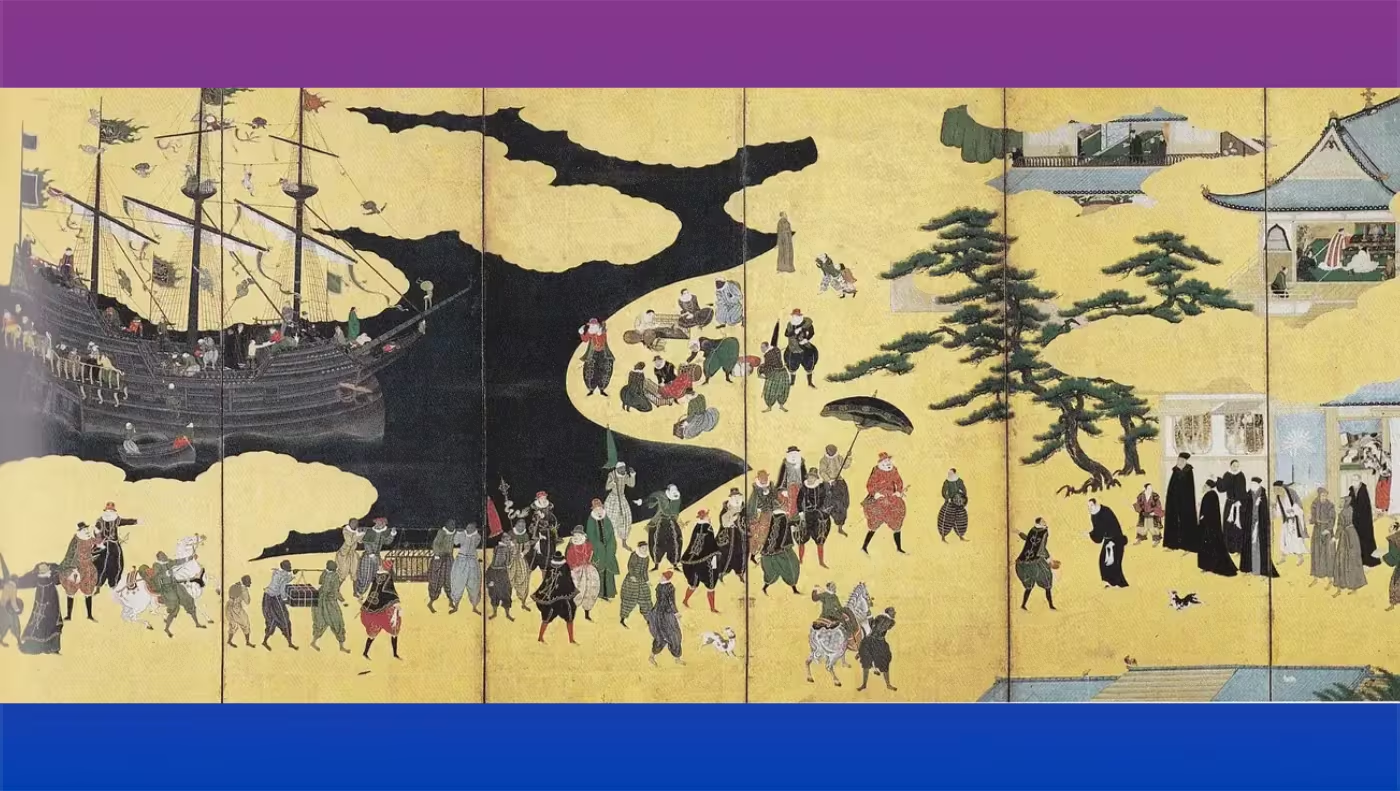
In March 1581, a man walked the streets of Kyoto who threw the city into uproar. His skin was so dark that it shone, and his stature towered a head above most Japanese. Hundreds flocked together to see the stranger – so many that several people were supposedly trampled to death in the crush. The name of this man was Yasuke, and he was to go down in Japanese history as the first documented African.
Between 1581 and 1582, Yasuke served the most powerful warlord in Japan at the time: Oda Nobunaga. In this short time he probably received a house, a stipend and a sword – privileges that apparently made him the first African samurai. Yet despite the fascination his story still exerts today, the historical sources are alarmingly thin. What do we really know about this extraordinary man? And where does speculation begin?
The Arrival in Japan (March 1581)
With the Jesuits to Kyoto
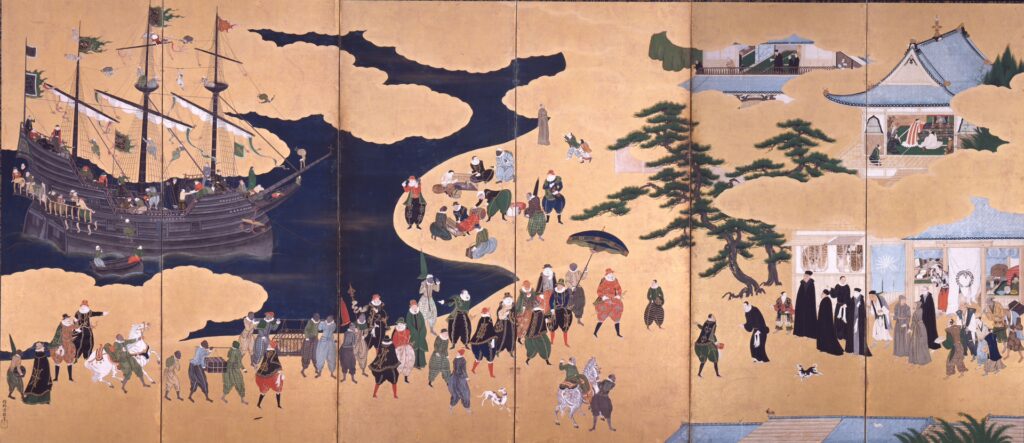
The African warrior did not come to Japan as a free man. He accompanied Alessandro Valignano, the Italian Visitor of the Jesuit mission in Asia, as his bodyguard or servant. Valignano was on a tour of inspection of the Jesuit missions and reached Japan in 1579 via Goa and Macau. The exact route first took the delegation to Kuchinotsu on Kyushu, before they reached the capital Kyoto in March 1581.
The Christian missionary work in Japan was inseparably linked with trade. As early as 1549, the Spanish missionary Francisco de Xavier (1506-1552), co-founder of the Jesuit order, had reached Kagoshima. The missionary work was favoured by the armed conflicts between powerful samurai families during the Sengoku period (1467-1615). At first, the influence of the new religion was welcomed – it was a counterweight to the powerful Buddhist monasteries, which often acted as political rivals.
The sources are largely silent about Yasuke’s origins. Later speculation places his home region in Mozambique, but the historian Thomas Lockley considers a Sudanese or Ethiopian origin more likely – possibly from the Dinka people, who are known for their exceptional height. The only certainty: on his arrival, Yasuke probably spoke Portuguese and had spent years in the service of the Jesuits, possibly as a slave.
The exact date of the arrival in Kyoto is recorded in the diary of the samurai Matsudaira Ietada: 23 March 1581. What happened next was documented by Luís Fróis, the Portuguese Jesuit missionary who himself lived in Kyoto.
Uproar in the Streets
The accounts of his arrival in Kyoto read dramatically. Lockley describes the scene on the basis of contemporary sources:
“People crushed one another to death just to get a look at him… The poor Jesuits feared the mob would tear down the church walls.” (Lockley 2019, p. 99)
The crowd became so dense that several people probably died in the crush – an event that embarrassed the Jesuit mission. Valignano had to withdraw his delegation to a nearby temple to prevent further chaos.
News of Yasuke’s presence also reached Oda Nobunaga, the de facto ruler of central Japan. In 1581 Nobunaga was at the height of his power: he had subjugated most of the rival daimyo, smashed the Buddhist monastic armies and was on the verge of unifying Japan after more than a hundred years of civil war. The Sengoku period (1467-1615) was marked by constant power struggles between regional rulers – Nobunaga was the first to seriously pursue national unification (Turnbull 2022, pp. 59-60).
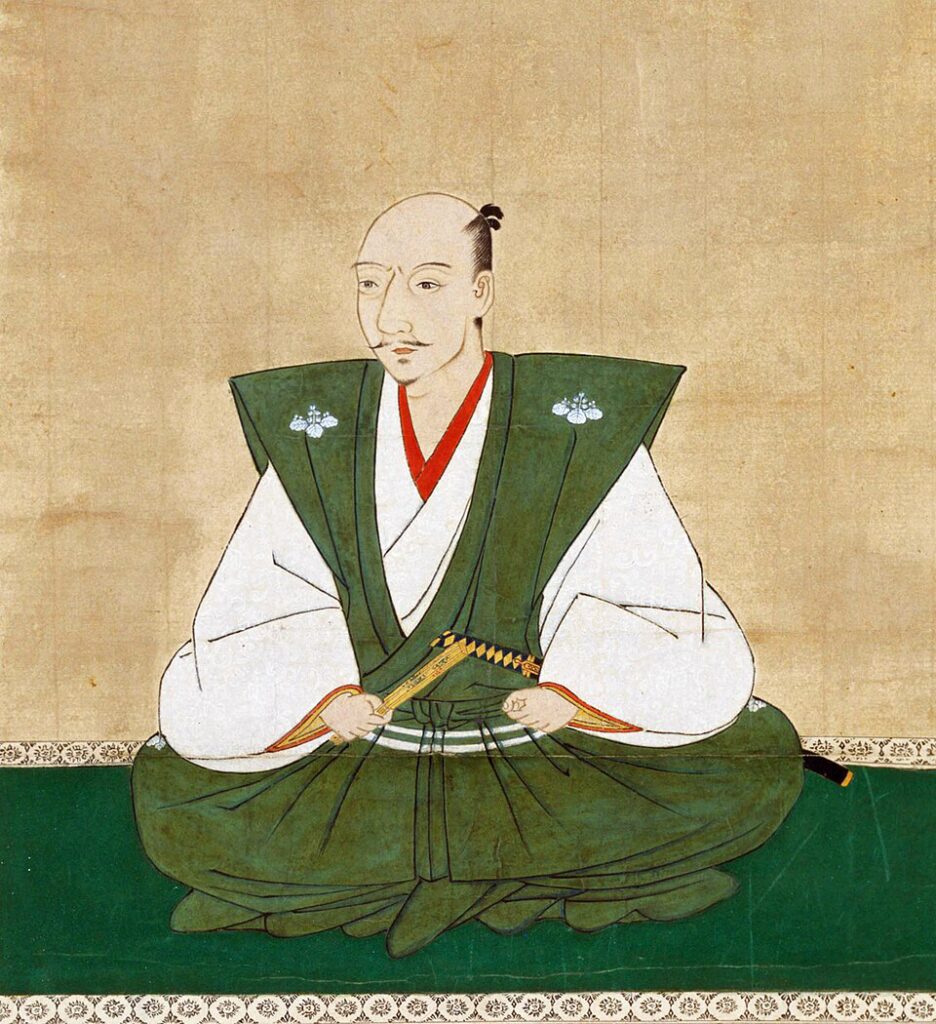
But Nobunaga was not only a brutal warlord – contemporary sources also describe him as a rational ruler with an insatiable curiosity for the new and the foreign.
When Nobunaga heard of Yasuke, he ordered him to be brought to him. What happened next is one of the well-known episodes from his life: at first Nobunaga did not believe that the skin colour was real. Lockley quotes contemporary chronicles:
“Nobunaga did not believe the man’s color was natural… He ordered the man stripped to the waist and scrubbed. But the scrubbing only made his skin shine more blackly.” (Lockley 2019, p. 118, after Shinchō Kōki)
In the Service of Oda Nobunaga (1581-1582)
From Valignano to Nobunaga
Exactly how Yasuke moved from Valignano’s service into Nobunaga’s household is unclear. Valignano may have “presented” him to the daimyo – a diplomatic gesture intended to keep Nobunaga well disposed towards the Jesuits. Perhaps Nobunaga also requested him directly. The sources are silent on these details.
What is certain, however, is that Yasuke – the name was probably a Japanisation of a Portuguese or African name – entered Nobunaga’s service in the spring or summer of 1581. And the privileges he received were extraordinary. Lockley describes the significance of this gesture:
“He was given a house, a stipend, and a katana. In the strict class structure of Japan, the right to carry the sword… was the defining mark of the samurai. Yasuke was no longer a slave; he was a warrior.” (Lockley 2019, p. 135)
These three things – house, stipend and sword – marked him as someone of status. As a man who belonged to the warrior class, even though the sources never explicitly use the word “samurai”.
The Splendour of Nobunaga’s Court
As Nobunaga’s bodyguard, one was surrounded every day by the splendour of the most powerful samurai in Japan. The armours of high-ranking warriors of this era were works of art: iron plates covered with gold leaf, elaborate lacquerwork and symbolic crests that demonstrated clan affiliation and status.
What Were Yasuke’s Duties?
The question of his specific duties for Nobunaga is difficult to answer. The contemporary sources are almost completely silent on it. We know that he was referred to as a kosho – a term meaning “sword bearer” or “weapon bearer”. A kosho belonged to the personal household of a daimyo and was at once bodyguard, servant and possibly confidant.
It is likely that he accompanied Nobunaga at public appearances. His imposing stature – contemporary sources speak of “over six feet” (about 188 cm) – made him impossible to overlook. In a culture that highly valued presentation and status, he was probably also a prestige object: the only black man in all Japan, in the service of the most powerful warlord.
Lockley emphasises the personal relationship between Yasuke and Nobunaga:
“Nobunaga never tired of talking with him… Yasuke opened a window to a world Nobunaga dreamed of conquering but would never see.” (Lockley 2019, p. 145)
In his book, the historian speculates at length about his daily life: he may have learned Japanese, been trained in martial arts, taken part in military campaigns. All this is plausible, but not documented. The sources are silent. Unlike William Adams, the English navigation expert who later served Tokugawa Ieyasu and whose role is extensively documented, for Yasuke we have almost nothing but fragments.
What we know for certain: between 1581 and June 1582, Yasuke was in Nobunaga’s immediate vicinity, standing at his lord’s side.
Info box: Kosho vs. Samurai – What Was Yasuke Really?
Whether he can be called a samurai depends on how the term is defined. In modern usage, “samurai” refers to the entire warrior class of pre-modern Japan. But in the 16th century, the meaning was more fluid.
Kosho (小姓): Personal servant and sword bearer of a daimyo. Typically young men from samurai families who served in a lord’s household and often maintained an intimate relationship with him. His designation as kosho is documented.
Samurai (侍): In the narrower sense, a warrior with a fief (land holdings). In the broader sense, anyone who fought for a daimyo and held the right to bear swords. Yasuke had a sword, but whether he held a fief is unknown.
The sword as a symbol: In Japanese warrior culture, the sword was more than a weapon. The literary scholar Elizabeth Oyler writes about the Heike Monogatari: “Swords […] were not merely instruments of war, but symbols of legitimacy” (Oyler 2006, p. 115). The sword marked the boundary between warrior and non-warrior, between those with the right to use violence and those without. That Yasuke carried a sword was therefore no trifle – it was a fundamental statement of status.
Heino bunri (兵農分離): The “separation of warriors and peasants” was only systematically enforced after 1585 by Toyotomi Hideyoshi (Hall 1991, Cambridge History of Japan Vol. 4, pp. 189-201). In 1581 the boundary between warrior and non-warrior was still fluid. Yasuke lived in a period of transition.
Conclusion: Yasuke was functionally a samurai – he carried weapons, served a daimyo, received a stipend and a house. Whether he formally belonged to the samurai class remains unclear, as the sources never use the term for him. They call him “servant” (kerai) or kosho.
The Battle of Honnō-ji (21 June 1582)
The Betrayal by Akechi Mitsuhide
In the early morning of 21 June 1582, Oda Nobunaga’s life came to an end – and with it Yasuke’s career as servant of Japan’s most powerful ruler.
Nobunaga was staying at the Honnō-ji a Buddhist temple in the heart of Kyoto, where he was spending the night with a small retinue. He was on his way to a campaign against the Mōri clan in the west and was using the temple as a stopover. What Nobunaga did not know: one of his own generals, Akechi Mitsuhide, had decided to betray his lord.
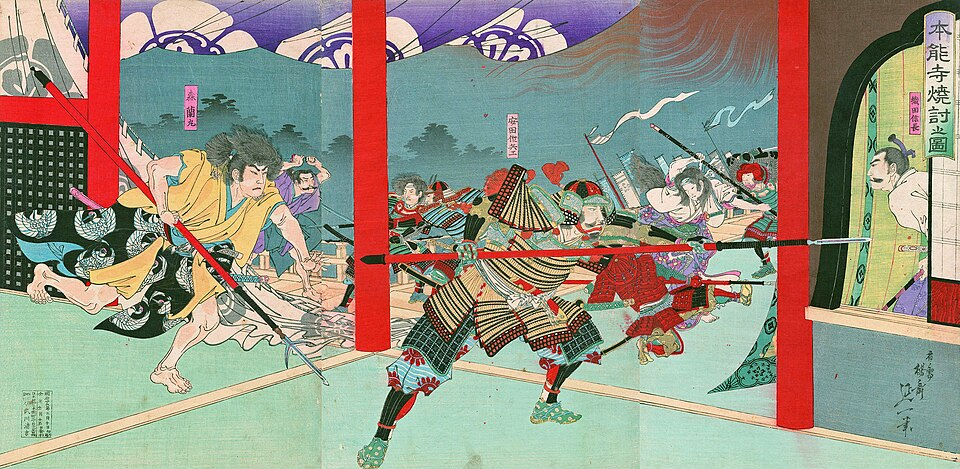
Akechi’s motives are still disputed today. Was it a personal slight? Political ambition? Fear of Nobunaga’s growing cruelty? The contemporary sources are silent. The fact is: Akechi turned his army around in the night – officially on its way to support the western campaign – and marched on Kyoto.
At 6 a.m., Akechi’s troops surrounded the Honnō-ji. Nobunaga had only about 30 to 50 men with him – including Yasuke. What happened next is described in several sources (Hall 1991, Cambridge Vol. 4, pp. 212-218; Lockley 2019, pp. 255-267; Turnbull 2022, p. 78), albeit with differing details:
Nobunaga immediately recognised that the situation was hopeless. Rather than allow himself to be captured, he committed seppuku, ritual suicide. His bodyguard and page Mori Ranmaru assisted him and then set the temple on fire in order to hide Nobunaga’s head from the enemy – for the head of a defeated enemy was a samurai’s ultimate trophy.
While the temple burned, Nobunaga’s men fought against Akechi’s superior force. And among them, it seems, was Yasuke.
Nijō Castle and Akechi’s Verdict
After the fall of the Honnō-ji, he fled with some survivors to Nobunaga’s son and heir, Oda Nobutada, who was staying in the nearby Nijō Castle. But Akechi’s troops followed. Nijō was also besieged, and here too resistance was futile.
Nobutada, like his father, committed seppuku. Yasuke, however, was taken prisoner.
Akechi Mitsuhide decided not to kill the prisoner. The reasoning handed down in the sources sounds shocking to modern ears. Lockley quotes the contemporary Jesuit reports:
“The black man is a beast and does not know anything, and he is not Japanese, so do not kill him but give him to the cathedral.” (Lockley 2019, p. 275, after Jesuit letters)
Akechi did not see Yasuke as a full human being in the same sense as a Japanese samurai. It was a mixture of contempt and pragmatism: in Akechi’s eyes he was not a worthy opponent, and his execution would have been meaningless.
For him, this verdict meant survival. He was handed over to the Jesuits – and disappeared from the history books.
After Nobunaga’s Death: The Disappearance
What happened to him after June 1582 is a mystery. The contemporary sources – the Jesuit letters, Japanese chronicles, war diaries – never mention Yasuke again.
In his book African Samurai, Thomas Lockley devotes several chapters to speculation about his further fate. His main theory: the warrior probably returned to India, possibly to Goa, the main base of the Portuguese Jesuits in Asia. From there he could theoretically have travelled on to Africa – or died in one of the many wars and epidemics that marked the 16th century.
An alternative possibility: Yasuke stayed in Japan. Perhaps he went into hiding, found work as a mercenary or bodyguard for another daimyo. In the chaotic period after Nobunaga’s death – when Toyotomi Hideyoshi was fighting for the succession – an experienced warrior could certainly have found employment.
But all this remains pure speculation. The historical truth is simpler and more sobering: we do not know. Yasuke disappeared from the sources as suddenly as he had appeared. For the contemporary chroniclers, he was evidently of no further interest after Nobunaga’s death.
Was He a “Real” Samurai?
The Question of Status
Whether Yasuke can be called a samurai depends fundamentally on how the term is defined – and in which historical context it is used.
In modern usage, “samurai” refers to the entire warrior class of pre-modern Japan, comparable to the European nobility. But this clear demarcation only emerged in the 17th century, when the Tokugawa shogunate divided society into four rigid estates: warriors (shi), peasants (nō), artisans (kō) and merchants (shō).
In 1581, when he entered Nobunaga’s service, this separation had not yet taken place. The principle of heino bunri – the “separation of warriors and peasants” – was only systematically enforced from 1585 onwards by Toyotomi Hideyoshi (Hall 1991, Cambridge History of Japan Vol. 4, pp. 189-201). Hideyoshi’s famous “sword hunt” of 1588 confiscated all weapons from non-warriors and made the sword the exclusive privilege of the samurai class. But in 1581, theoretically any wealthy peasant could own weapons, and many samurai farmed land on the side.
Yasuke lived in this period of transition. He received a sword – the central symbol of the warrior class. He received a house and a stipend – economic privileges typical of samurai. He served a daimyo as kosho – a position traditionally reserved for sons of samurai families.
Functionally, then, Yasuke was a samurai. He lived like a samurai, fought like a samurai, was treated like a samurai. But the contemporary sources never explicitly call him one. They use terms such as “servant” (kerai) or “sword bearer” (kosho). Possibly because his African origin placed him outside the usual categories in Japanese eyes.
The Myth of the “General”
Recently – especially since the Netflix series “Yasuke” (2021) – an image of the African warrior as a general or high-ranking military leader has become established. This image is historically untenable.
Myth: The black warrior commanded troops and led armies into battle.
Reality: Not a single contemporary source describes the African warrior as a general or mentions that he ever commanded troops. His role was that of a kosho – a personal bodyguard and sword bearer. At Honnō-ji he fought, but as part of Nobunaga’s small bodyguard, not as a troop commander.
Myth: He came from Mozambique.
Reality: The sources are silent about his exact origin. Lockley rather suspects Sudan or Ethiopia (the Dinka people), but we do not know for certain.
Myth: The African warrior saved Nobunaga’s head at Honnō-ji and prevented it from being put on display.
Reality: No source documents this. It was Mori Ranmaru, Nobunaga’s page, who set the temple on fire to hide the head. Yasuke was probably busy with the fighting.
Myth: After 1582 he became a rōnin (masterless samurai) and wandered the country.
Reality: The sources are completely silent about his fate after 1582. Rōnin theories are pure speculation.
Myth: He spoke fluent Japanese and was fully culturally integrated.
Reality: Possible, but not documented. Learning Japanese in 15 months (March 1581 to June 1582) is certainly possible, but the sources never mention his language skills.
Yasuke’s Legacy
For centuries Yasuke was almost forgotten in Japan. The great historical works of the Edo period mentioned him only in passing, if at all. In Europe and Africa nothing was known of him. He was a footnote of history – interesting, but seemingly insignificant.
That has changed in recent decades. In Japan, research by historians such as Kurusu Yoshio in the 1960s led to a rediscovery of Yasuke. In the West, it was Thomas Lockley’s book African Samurai (2019) that made the story accessible to a wider audience. The Netflix anime series “Yasuke” (2021), various video games (most recently Assassin’s Creed: Shadows) and novels have finally established his name in popular culture as well.
But this popularisation comes at a price: the boundary between historical person and fictional character is blurring. Yasuke the samurai general, Yasuke the rōnin avenger, Yasuke the perfectly culturally integrated warrior – all these versions exist in pop culture, but have little to do with the historical Yasuke.
What does Yasuke’s story mean today? It is proof that the world of the 16th century was more global and interconnected than we often think. African slaves in Portugal, Portuguese Jesuits in India, Italian missionaries in Japan, Japanese warlords with an interest in European technology – all this was part of a network that spanned continents.
Further Articles
Visit the Samurai Museum Berlin
Book tickets now and experience the world of the samurai up close.
Conclusion: Between Myth and History
What do we know about Yasuke for certain? Let us summarise the documented facts:
- Arrival: He came to Japan in March 1581 as a companion of Alessandro Valignano.
- Service: He entered Oda Nobunaga’s service and received a house, a stipend and a sword.
- Role: He served as kosho (sword bearer/bodyguard), not as a general or troop commander.
- Honnō-ji: He fought during the attack on Nobunaga on 21 June 1582, was taken prisoner and survived.
- End: After being handed over to the Jesuits, he disappeared from all historical sources.
What do we not know?
- His exact origin (Sudan? Ethiopia? East Africa?)
- His language skills
- His fate after 1582
- Whether he was formally recognised as a “samurai”
Yasuke’s story captivates us precisely because of these gaps. It invites speculation. Between what we know and what we wish we knew lies a gap that we should not fill with fiction if we lay claim to historical truth.
Sources
- Lockley, Thomas & Girard, Geoffrey (2019): African Samurai: The True Story of Yasuke, a Legendary Black Warrior in Feudal Japan. Hanover Square Press.
- Hall, John Whitney (Ed.) (1991): The Cambridge History of Japan, Vol. 4: Early Modern Japan. Cambridge University Press.
- Turnbull, Stephen (2022): War in Japan 1467-1615. Osprey Publishing (Revised Edition).
- Oyler, Elizabeth (2006): Swords, Oaths, and Prophetic Visions: Authoring Warrior Rule in Medieval Japan. University of Hawai’i Press.
- Reff, Daniel T. & Danford, Richard (Eds.) (2014): The First European Description of Japan, 1585: A Critical English-Language Edition of Striking Contrasts in the Customs of Europe and Japan by Luis Frois, S.J. Routledge.
- Cooper, Michael (Ed.) (1965): They Came to Japan: An Anthology of European Reports on Japan, 1543-1640. University of California Press.
© Samurai Museum Berlin – All rights reserved
You might also like

Uesugi Kenshin: The War God of Echigo (1530–1578)
Uesugi Kenshin was deemed invincible – a Buddhist monk who fought in the name of the war god Bishamonten. History,…
Read the article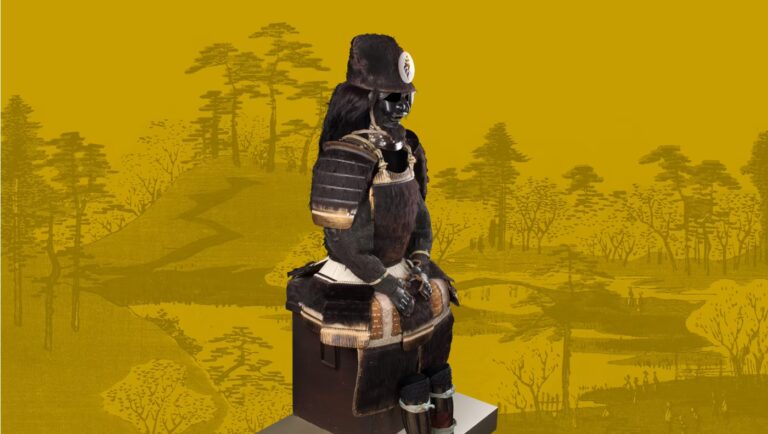
Sengoku Jidai: The Age of the Warring Provinces (1467–1615)
The Sengoku Jidai (1467–1615) was Japan's 150-year civil war. After the collapse of Ashikaga rule, rival daimyō fought for supremacy…
Read the article
Meiji Restoration: The End of the Samurai (1868–1912)
The Meiji Restoration ended 700 years of warrior rule. How Saigō Takamori, the sword ban and Shiroyama sealed the end…
Read the article