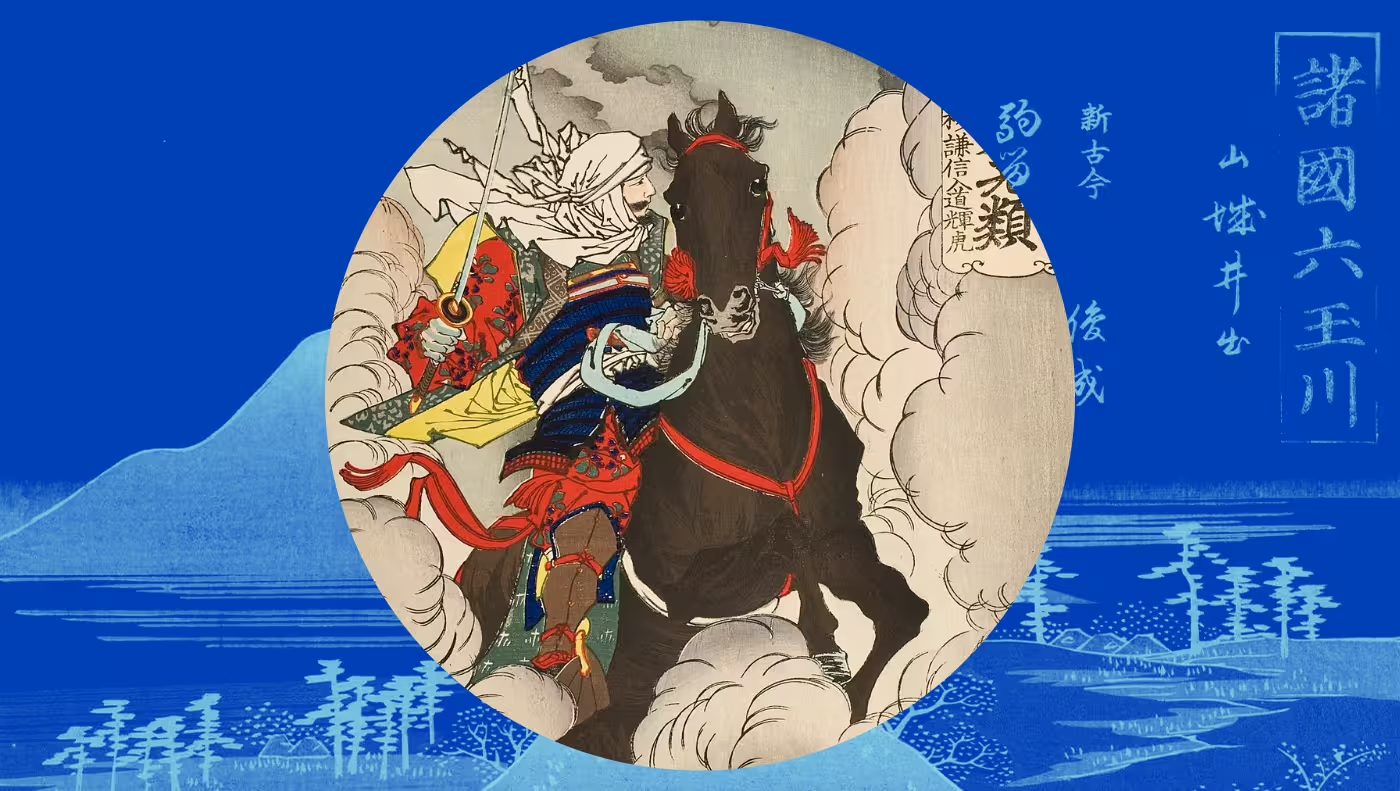
In the fourth month of 1561, Uesugi Kenshin rode straight at Takeda Shingen.
Not with an army. Alone. On a horse, a blade in his hand, in the middle of one of the largest field battles of the Sengoku period. After four unsuccessful encounters at Kawanakajima, his troops had finally broken through Shingen’s left flank — and Kenshin used the moment to do what hardly any daimyō did: to ride into the thick of the fighting himself and go for the enemy he had been fighting for twelve years.
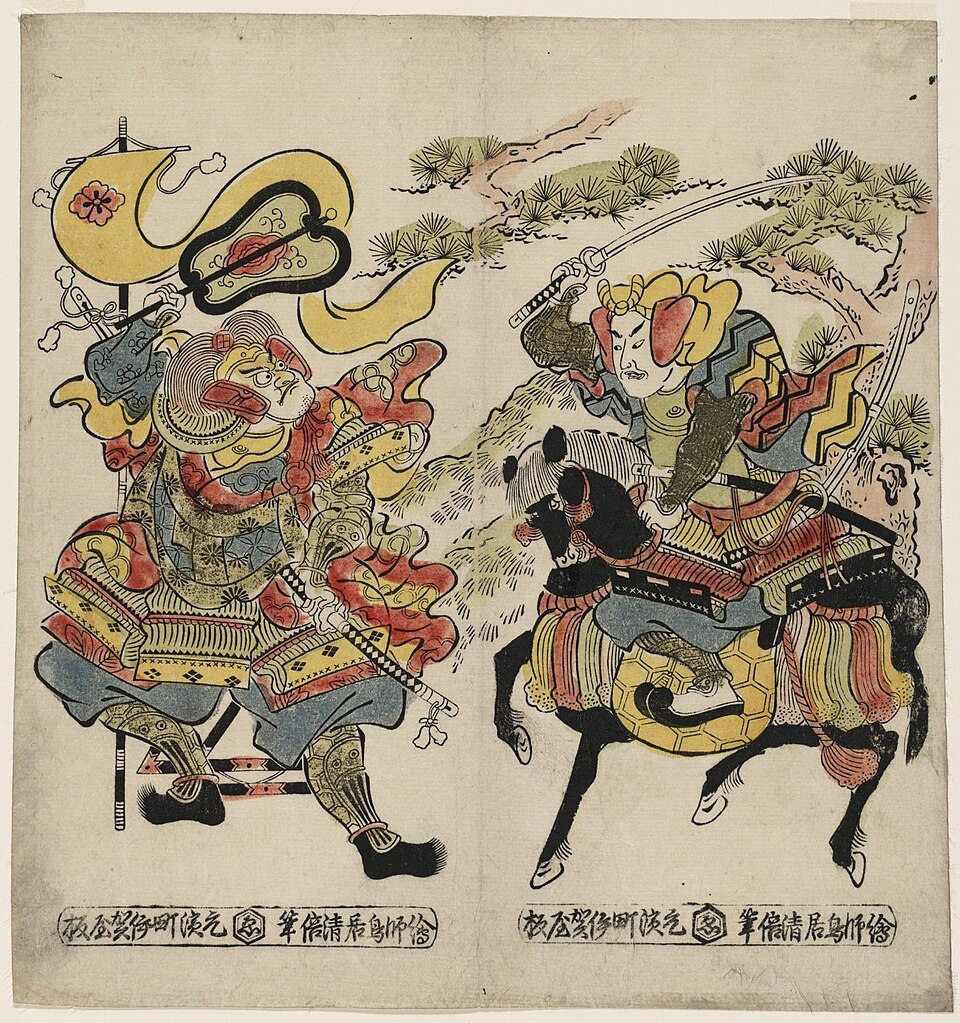
What happened next is as iconic in Japan as hardly any other story from the age of war. Kenshin is said to have brought his horse to a halt next to Shingen’s folding stool and struck at him with his sword. Shingen is said to have parried the blow with his iron war fan.
Whether it really happened like this, we do not know. The oldest sources do not know this scene. It emerged decades later in chronicles that stylised Kenshin into a legend — the invincible war god of Echigo, the favourite subject of Edo-period historical romanticism.[1]
What we do know: Uesugi Kenshin (1530–1578) was one of the most powerful daimyō of the Sengoku period, a military strategist of extraordinary talent — and a monk who had dedicated his life to the war god Bishamonten.
Echigo: The Base of the War God
Today’s Niigata Prefecture — then Echigo Province — lies on the west coast of Japan’s main island, on the Sea of Japan. Geographically isolated by the Ecchū and Shinano mountain ranges, Echigo was a wealthy rice-growing province, but militarily difficult to defend and politically difficult to control. The Uesugi ruled over Echigo, had their main fortress on Mount Kasugayama — and were constantly fighting internal rivals.
Kenshin, born in 1530 as Nagao Kagetora, was the fourth child of Nagao Tamekage. His father died early in battle; the young Kagetora grew up in a Buddhist temple, took his first monastic vows and seemed destined for a religious life. Instead, at the age of twenty, he was called to be clan chief because his older brothers had failed in internal power struggles.
He adopted the name Uesugi — that of the house under whose nominal governorship Echigo stood — and thereby gained symbolic legitimacy. The Uesugi clan was one of the most important warrior clans from the early 15th to the late 19th century, descended from the Fujiwara and divided into three branches.[3]
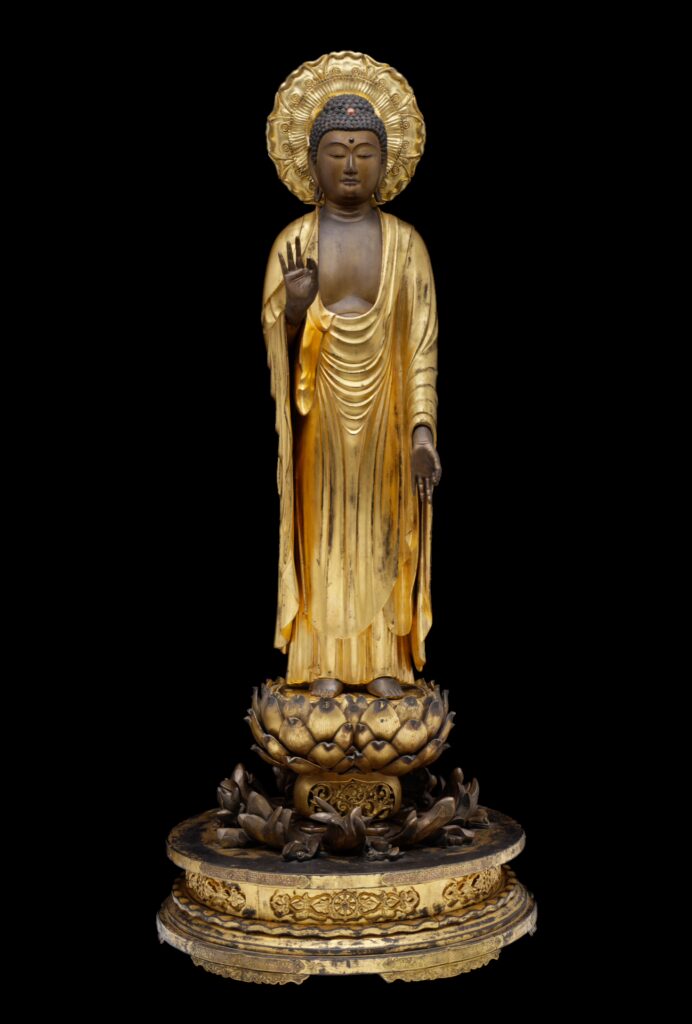
Kenshin’s Buddhism was no diplomatic ornament. He remained unmarried and childless all his life and made no secret of his conviction: he fought for Bishamonten, the Buddhist god of war and wealth.
Turnbull describes Kenshin as a commander who understood war as a religious duty — which on the one hand made him unpredictable (he sometimes attacked when it was tactically unwise because he considered it morally necessary) and on the other hand made him a magnet for warriors seeking spiritual leadership.[2]
The Rivalry with Takeda Shingen: Five Battles for Kawanakajima
Between 1553 and 1564, their armies met five times on the Kawanakajima plain — a lowland in today’s Nagano Prefecture, where the Chikuma and Sai rivers flowed together. The result after five battles: no decisive victory for either side. Kenshin held Echigo; Shingen held Shinano. The border stayed where it was.
Why did they fight at all? The first encounter in 1553 came about because Sanjō daimyō whom Shingen had driven before him sought protection with Kenshin. Kenshin, who claimed a moral duty to defend the weak, took them in — and advanced into Shingen’s territory.
Turnbull shows that, militarily speaking, the Kawanakajima battles were stalemates: both sides had armies of comparable strength (an estimated 10,000–20,000 men on each side, although chronicles give far higher figures), both fought with the advantage of knowing the terrain, and neither side could create a decisive strategic opening for itself.[2]
The fourth battle (1561) is the most dramatic and the best documented. Kenshin’s troops surprised Shingen’s advance corps in dense morning fog — a tactical coup that threw the Takeda ranks into disorder. The famous duel is said to have taken place in the resulting close-combat phase.
Conlan warns against the uncritical adoption of such accounts: the duel narratives come from gunki monogatari (war tales), which were written decades after the events and were made for literary dramatisation, not for historical precision.[1] Who really fought whom in close combat and when, what losses really occurred — this can hardly be reconstructed from contemporary sources.
What can be reconstructed: after the fourth battle of Kawanakajima, Kenshin withdrew. He had not defeated Shingen. He had not lost. The status quo remained.
Today Kawanakajima is an open-air museum and tourist destination. Every autumn, a re-enactment of the battles takes place there — thousands of spectators watch men in historical armour clash.
The duel between Kenshin and Shingen is the centrepiece of every re-enactment: the horseman riding towards the seated commander, the stroke of the sword, the fan that parries it.
The Hōjō Problem and the Limits of the Realm
Kenshin did not only fight Shingen. At the same time he waged war against the Hōjō clan in the south and tried to secure his western flank against the Oda clan.
The Hōjō controlled the Kantō plain — the most fertile region of central Japan, rich and militarily valuable. When Kenshin nominally received the title of Kantō Kanrei (Governor of the Kantō), he saw it as a mandate to enforce the old Uesugi claims against the Hōjō.
This led to campaigns that Turnbull describes as characteristic of Kenshin’s strategy: brilliant mobility, surprising feats of marching, tactical cold-bloodedness — followed by withdrawals when the supply lines became too long.[2]
Cambridge shows the systemic framework: in the Sengoku period, all the great daimyō competed simultaneously on several fronts. No commander could concentrate exclusively on one enemy — anyone who sent his army south risked an attack from the west. This limited all strategic ambitions and made the final unification of Japan a problem for the next generation.[4]
Kenshin had no sons. He adopted two nephews as heirs — Kagekatsu and Kagetora — and thus made the foundation of his clan dependent on his own decision. This was to have dramatic consequences after his death.
The War God and the Merchant: Kenshin’s Economic Policy
There is an image of Uesugi Kenshin that is often forgotten: that of the economic strategist.
Kenshin recognised that Echigo’s geographical location — on the Sea of Japan, with direct access to the trade routes to China and Korea — was a trump card. He promoted the silk trade, controlled the salt supply for inland provinces and used economic ties as a diplomatic instrument.
The most famous story in this context: when the Hōjō and Imagawa wanted to put Kenshin under pressure by blocking salt deliveries to Shingen, Kenshin, according to tradition, sent his own salt into Shingen’s territory — with the message that he fought with weapons, not by depriving people of food.
Whether this story is true has not been proven. It appears in Edo-period sources and fits perfectly with the image of the magnanimous warrior that later generations made of Kenshin. But it illustrates that even the mythology of Kenshin shows him not only as a warrior — but as a politician who demonstrates strength without resorting to the cheapest means.[2]
Death and Succession: The Legacy of the War God
In April 1578, Uesugi Kenshin died — according to consistent sources, of a stroke, possibly in a latrine. The Edo period made a legend out of this too: he was, it was said, poisoned by a ninja who had hidden in the sewer.
He was 48 years old. He had made no clear arrangements for his succession. Kagekatsu and Kagetora immediately began a war over the inheritance — the Otate no Ran, which lasted two years, cost countless fighters their lives and permanently weakened the Uesugi clan.
Kagekatsu won. He later fought on Toyotomi Hideyoshi’s side, then — on the losing side — at Sekigahara in 1600. The Uesugi were banished to Yonezawa (Yamagata) and their sphere of power was drastically reduced. They survived as a small domain into the 19th century.
Kenshin’s military legacy outlived him in another form: his reputation. The Edo period loved him as the antithesis of the unscrupulous power politician — as a warrior who fought for principles, who never acted dishonourably, who was divinely protected. This construction served a society that had left the wars of the Sengoku behind and romanticised them.[2]
Frequently Asked Questions about Uesugi Kenshin
Who was Uesugi Kenshin?
Uesugi Kenshin (1530–1578), born Nagao Kagetora, was daimyō of Echigo Province (today Niigata). He is regarded as one of the most powerful commanders of the Sengoku period, known for his rivalry with Takeda Shingen and his deep Buddhist faith. He saw himself as the secular arm of the war god Bishamonten.
What is Kawanakajima?
A plain in today’s Nagano Prefecture, where Uesugi Kenshin and Takeda Shingen met five times between 1553 and 1564. Neither side achieved a decisive victory.
Did the famous duel between Kenshin and Shingen really take place?
Probably not in the form handed down. Conlan shows that such duels are typical elements of later war tales (gunki monogatari) and are not based on contemporary documents. The story only appears in chronicles decades after the events.
Why did Kenshin remain unmarried?
For religious reasons. Kenshin had taken Buddhist monastic vows in his youth and kept to them. He adopted two nephews as heirs — which after his death led to the Otate no Ran (1578–1579), an internal war of succession that permanently weakened the Uesugi clan.
How did Uesugi Kenshin die?
Of a stroke in April 1578, at the age of 48. Later legends tell of poisoning by a ninja — this is not historically documented. He left no clear arrangements for his succession.
Visit the Samurai Museum Berlin
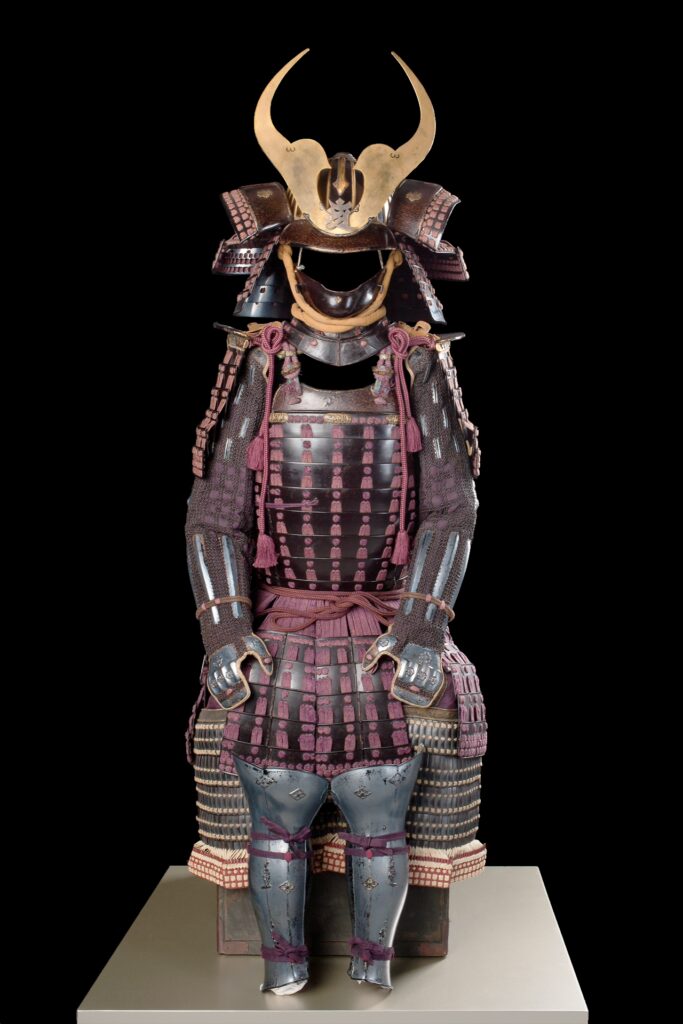
The Samurai Museum Berlin shows armour elements of the Uesugi clan. The Buddhist symbols — manji, Fudō Myōō flames — speak directly of the religious worldview of the war god of Echigo. Open daily from 10 a.m. to 7 p.m., Auguststraße 68, Berlin-Mitte.
Related Articles
- Sengoku Jidai: The Age of Warring Provinces
- Takeda Shingen: The Tiger of Kai
- Kabuto: The Helmet of the Samurai
- Toyotomi Hideyoshi
Sources and Further Reading
- [1] Conlan, Thomas D. (2022). Samurai Sourcebook. Hackett Publishing. Used: critique of duel narratives; gunki monogatari as literary constructions.
- [2] Turnbull, Stephen (2022). War in Japan 1467–1615. Osprey Publishing. Used: battles of Kawanakajima (pp. 49–51); Kenshin’s tactics; the Kawanakajima duel as “believed to have fought”; conflicts with the Hōjō.
- [3] Samurai Museum Berlin (2025). SMB Catalogue 2025. Display case C011H: armour elements of the Uesugi clan, Buddhist symbols (manji, Bishamonten, Fudō Myōō); description of the Uesugi clan (M. Gerlich).
- [4] Hall, John Whitney (ed.) (1991). The Cambridge History of Japan, Vol. 4: Early Modern Japan. Cambridge University Press. Used: multi-front strategy of the Sengoku daimyō; structural limits of unification.
- [5] Varley, H. Paul (1994). Warriors of Japan as Portrayed in the War Tales. University of Hawaii Press. Used: literary construction of daimyō biographies; gunki monogatari.
© Samurai Museum Berlin – All rights reserved
You might also like
Honda Tadakatsu: The Unbeatable Warrior of the Tokugawa
When Honda Tadakatsu died in 1610 at Kuwana Fortress at the age of sixty-two, he left behind a record unparalleled…
Read the article
Miyamoto Musashi: Life, Duels & The Book of Five Rings
Miyamoto Musashi – 60 duels, not a single defeat too few. The life, philosophy & Book of Five Rings of…
Read the article
Heian Period: The Rise of the Warrior Class (794–1185)
The Heian period created the samurai. How provincial administrators became a warrior caste – and why the sword played hardly…
Read the article