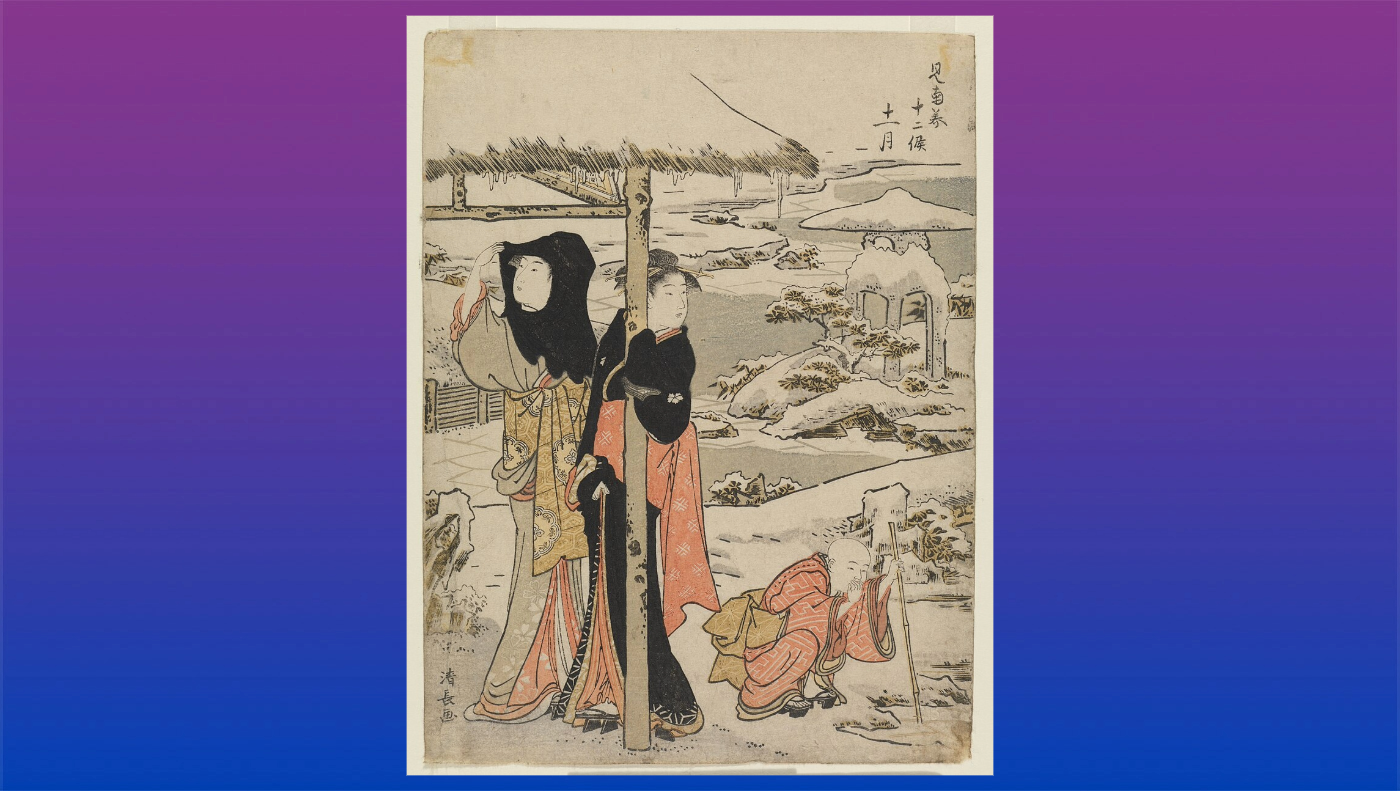
Edo — today’s Tōkyō — was one of the largest cities in the world around 1800; some sources even say it was the largest. Over a million people lived there. A city that never wanted to sleep and whose government nevertheless tried to enforce exactly that.
The Four-Class Society: Ideal and Reality
The Tokugawa shogunate ordered society according to the Confucian shi-nō-kō-shō model: samurai, peasants, artisans, merchants. In practice the hierarchy was more permeable than the theory: merchants became richer than many samurai, whose fixed rice stipends were devalued by the growing money economy.[1]
Below the four classes stood the eta and hinin — groups associated with ritually impure occupations. Their discrimination was institutionalised by the state.
Samurai in Peacetime: Bureaucrats with Swords
Warriors became administrative officials: they kept records, supervised markets, settled disputes. The Hagakure should be read as protest literature: an attempt to preserve the spirit of the warrior at a time when being a warrior had become an “office job”.[2]
→ Edo-period objects: Samurai Museum Berlin
Urban Life: Chōnin Culture
The real cultural energy came from the chōnin — the townspeople. The concept of iki (cool, urban elegance) was their ideal. Ukiyo-e, kabuki theatre and the pleasure quarters (yūkaku) were the media of this counterculture. The shogunate tried to censor it. It regularly failed.[3]
Thanks to temple schools (terakoya), the literacy rate rose to a level that was exceptional for the pre-modern era. This prepared the ground for the rapid modernisation of the Meiji period.[1]
The End: Bakumatsu and Perry
The last phase of the Edo period (1853–1867) is called the Bakumatsu. When Commodore Perry’s steamships dropped anchor, the price of sakoku isolation became apparent: in military technology, Japan was at the level of 1600. What followed was one of the most determined modernisations in history.
Frequently Asked Questions
How long did the Edo period last?
From 1615 to 1868 — 265 years. Japan’s longest era of peace, also known as the Pax Tokugawa.
What was the shi-nō-kō-shō system?
The Confucian four-class model: samurai (shi), peasants (nō), artisans (kō), merchants (shō). A theoretical ranking of value, not economic reality — merchants were at the very bottom, but often became richer than samurai.
What was iki?
Iki was the aesthetic ideal of urban chōnin culture: cool, casual elegance without ostentation. A cultural response to the Confucian ideal of virtue of the samurai.
What was the Bakumatsu?
Bakumatsu (1853–1867) refers to the last phase of the Edo period — from Perry’s arrival to the shōgun’s surrender of power. This period was marked by so many upheavals that it is often regarded as a transitional era in its own right.
Why were samurai often in debt in the Edo period?
They received fixed stipends in rice (koku), while the economy changed into a money economy and prices rose. At the same time, their status forbade them from engaging directly in trade. Chronic indebtedness was built into the system.
Visit the Samurai Museum Berlin
At the Samurai Museum Berlin the Edo period is documented through magnificent ceremonial armour, daishō pairs and art objects. Daily 10 a.m.–7 p.m., Auguststraße 68.
Related Articles
Bibliography
- [1] Hall, John Whitney (1991): Cambridge History of Japan Vol.4. CUP. Ch. 11–14.
- [2] Yamamoto Tsunetomo (1716): Hagakure. German ed. Anaconda 2012.
- [3] Atkins, E. Taylor (2017): A History of Popular Culture in Japan. Bloomsbury.
- [4] Totman, Conrad (2005): A History of Japan. Blackwell.
© Samurai Museum Berlin – All rights reserved
You might also like
Shōgun & Daimyō: The Rulers of Feudal Japan
In Edo there was a man who ruled over everything — and was officially nothing. Japan was a system of…
Read the article
Yasuke: Japan’s First African Samurai?
Yasuke served Oda Nobunaga 1581–1582. What is historically documented? Facts vs. myths about Japan's first Black samurai. Samurai Museum Berlin.
Read the article
Battle of Sekigahara 1600: Japan’s Decision — Won through Betrayal
Sekigahara 1600 — Japan's largest samurai battle, decided by betrayal. Course, strategy, consequences. Exhibits at the Samurai Museum Berlin.
Read the article