
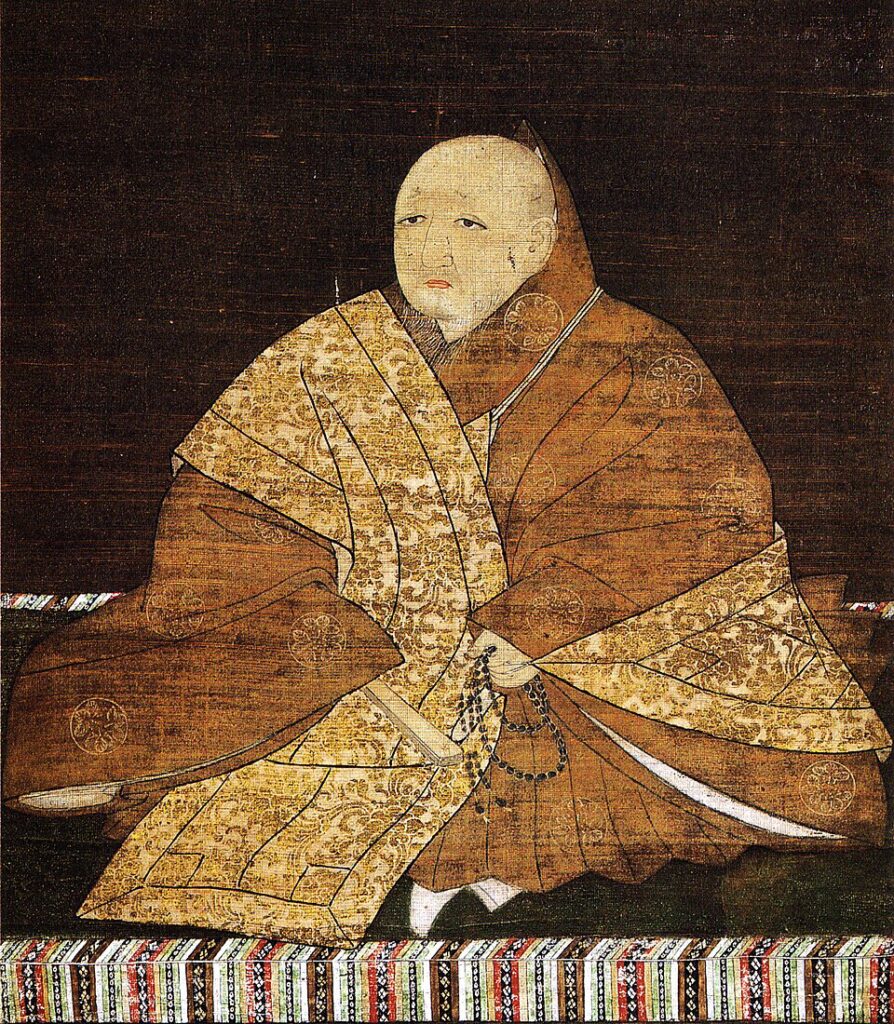
A shogun (Japanese 将軍, shōgun) was Japan’s supreme military commander and the de facto ruler of the country. The full title was Sei-i Tai-Shōgun (征夷大将軍) – “barbarian-subduing commander-in-chief”. Between 1185 and 1868 three shogunal dynasties ruled Japan: the Minamoto in Kamakura, the Ashikaga in Kyoto and the Tokugawa in Edo. While the emperor remained on the throne as religious head, real power lay in the hands of these military rulers for almost 700 years.
In 1185 Minamoto no Yoritomo faced a decision that was to change Japan for ever. The Genpei War had been won, the rival Taira annihilated, his own brother Yoshitsune on the run. In Kyoto an emperor sat on the Chrysanthemum Throne – powerless, dependent on Yoritomo’s swords. But Yoritomo did not move to the capital. He stayed in Kamakura, an insignificant coastal town in the east, and built something new there: a government of warriors for warriors.
What followed was one of the most enduring political experiments in history. The emperor continued to reign – but he no longer governed. A warrior with the old title of “shogun” took over real power without ever claiming the throne. This system of shadow rule was to last 683 years, through three dynasties, civil wars and the longest peace Japan has ever known.
This is the story of the shoguns.
What Does “Shogun” Mean?
The term shogun (将軍) literally means “general” or “commander”. The full official title Sei-i Tai-Shōgun (征夷大将軍) can be translated as “commander-in-chief for the subjugation of the barbarians”. The title did not originate as an office of rule, but as a temporary military commission.
In the late 8th century, the imperial court waged campaigns against the Emishi – indigenous peoples in northern Honshu who resisted central power. For these campaigns the emperor appointed commanders with extraordinary powers. As early as 794 Ōtomo no Otomaro held the title of Sei-i Tai-Shōgun, but the best-known early holder was Sakanoue no Tamuramaro, appointed in 797, who successfully ended the Emishi wars. Further shōguns followed in the frontier wars of the Heian period, but the appointment always ended with the campaign. The title was a commission, not an office.
This changed fundamentally when Minamoto no Yoritomo received the same title in 1192. He transformed it: the temporary command became a hereditary position, the field commander a ruler.
Three related terms are important for understanding:
Shogun denotes the person – the military ruler himself.
Bakufu (幕府, literally “tent government”) denotes the shogun’s government. The term comes from Chinese military practice, in which commanders directed operations from a headquarters tent. In a figurative sense, bakufu means the entire administrative structure under the shogun.
Shogunate is the Western term for the political system as a whole – the era of military rule including its institutions.
The irony of the title lay in its original meaning. “Barbarian subduer” – that sounded like frontier wars in the distant north. But the later shoguns no longer subdued barbarians. They subdued Japan itself. The archaic title became the façade for something entirely new: a military dictatorship that left the emperor on the throne but drew all real power to itself.
The Birth of the Shogunate – Kamakura (1185–1333)
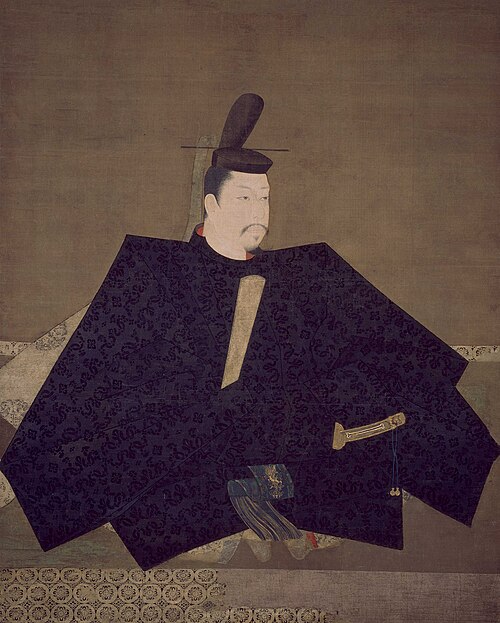
Minamoto no Yoritomo – The First Shogun
Minamoto no Yoritomo was not a born warrior. He was a survivor. As a child he had witnessed the destruction of his family by the Taira and was banished to the provinces. Twenty years later he rose up, gathered the warriors of the east around him and waged a war of annihilation against his enemies.
The Genpei War (1180–1185) ended with the naval battle of Dan-no-ura, in which the Taira fleet was destroyed. But Yoritomo had not fought himself. While his brothers Yoshitsune and Noriyori fought the battles, he stayed in Kamakura and built up an administration. The historian Sansom describes him as “cold and astute”. He understood that military glory was fleeting, but institutions endured.
The chronicler Jien, a Buddhist monk and contemporary of the Genpei wars, analysed this epochal break in his Gukanshō (c. 1220) with unusual precision. Jien recognised that a new order had begun with the Hōgen and Heiji disturbances (1156–1160) – an order in which military power finally displaced courtly authority.
In 1185 Yoritomo set up the first bakufu. Jeffrey P. Mass emphasises that it was less a military dictatorship than a judicial authority: “The bakufu was a military regime dedicated to keeping warriors away from the battlefield and also to finding judicial answers to the feuds and disputes that were plaguing society.” Yoritomo created two key offices: the shugo (守護) acted as military governors in each province, responsible for order and the mobilisation of warriors. The jitō (地頭) administered individual estates and collected taxes. Both positions were loyal to Kamakura, not to the imperial court.
In 1192 the emperor granted him the title of Sei-i Tai-Shōgun. The appointment was less a triumph than a formalisation of reality: Yoritomo was already ruling. The title merely gave his power a traditional veneer.
Yoritomo’s paranoia became legendary. He had his brilliant brother Yoshitsune – the victor of Dan-no-ura – hunted down as a traitor. Yoshitsune died in 1189 in the mountains of the north, surrounded by enemies sent by his own brother. “Yoshitsune is the quintessential failed hero,” writes Paul Varley, “his brilliance on the battlefield matched only by his political naivete.”
The System of Dual Rule
The Kamakura shogunate did not replace the imperial court – it overlaid it. The historian Mason describes this as a “dual polity”: two centres of power, one realm. The emperor in Kyoto kept his religious functions and remained the formal source of all legitimacy. But real decisions were made in Kamakura.
After Yoritomo’s death in 1199, power passed not to his weak sons, but to the Hōjō – the family of his widow Masako. The Hōjō ruled as regents (shikken) for underage or powerless shoguns who were themselves mere puppets. It was an irony of history: the shoguns who had disempowered the emperor themselves became extras. The Hōjō regency system perfected administration through institutions such as the samurai-dokoro (military office) and the mandokoro (financial and administrative council), which functioned even without strong leading personalities.
The system proved itself in crisis. When the Mongols attacked Japan in 1274 and 1281, the bakufu coordinated the defence. The first invasion caught the warriors at Hakata Bay on Kyushu unprepared – Mongol mass tactics against Japanese individual fighters. Between the invasions the bakufu had a stone wall built along the coast. The kamikaze storms that destroyed the invasion fleets were interpreted as a divine sign. But victory brought no booty, and the warriors who had fought remained unrewarded. Thomas Conlan shows that loyalty in medieval Japan was “not an abstract moral obligation but a contractual exchange” – service in return for land. No land, no loyalty. Ishii Susumu adds: “There were many causes for the warriors’ dissatisfaction, one being the lack of reward land in the aftermath of the Mongol invasions.”
The unpaid debts of the Mongol war undermined the system. In 1333 the Kamakura shogunate fell – not to external enemies, but through the uprising of its own warriors.
The Kenmu Restoration – The Failed Experiment (1333–1336)
The fall of the Kamakura shogunate opened a short but revealing interlude. Emperor Go-Daigo, who had led the anti-Hōjō coalition, attempted the unthinkable: a return to direct imperial rule without a military intermediary. In 1334 he proclaimed the Kenmu era – the “restoration” of imperial power.
The experiment failed in less than three years. Go-Daigo rewarded his courtly advisers instead of the warriors who had fought for him. He ignored the reality that Yoritomo had recognised a century earlier: Japan could not be governed from Kyoto, not without the network of shugo and jitō that controlled the provinces. Ashikaga Takauji, his most important military ally, turned against him.
Paradoxically, the Kenmu Restoration proved that Japan needed a military intermediary. The emperor alone could neither keep order nor distribute land. The brief episode confirmed the logic of the shogunate – and cleared the way for the second.
The Ashikaga Shogunate – Splendour and Chaos (1336–1573)
The Divided Dynasty
The second shogunate began with betrayal. Ashikaga Takauji had initially fought for Emperor Go-Daigo against the Kamakura bakufu. But when the emperor failed to reward the warriors appropriately, Takauji changed sides. In 1336 he drove Go-Daigo out of Kyoto and installed a more compliant emperor. Go-Daigo fled to the mountains of Yoshino and founded a rival court there.
What followed was the Nanbokuchō – the era of the “Southern and Northern Courts” (1336–1392). Two emperors claimed the throne, and Japan sank into a civil war that lasted generations. The Ashikaga shoguns now resided in Kyoto itself, in the heart of the old imperial city. It was a symbolic statement: we are no longer the coarse warriors of the east. We are the new masters of culture.
Michele Marra analyses how the Ashikaga legitimised their power through “verbal actualization” – through cultural achievement instead of military strength. Where the Kamakura shoguns ruled by sword and administration, the Ashikaga ruled through patronage. John Whitney Hall confirms: “Under the auspices of the third and sixth Ashikaga shoguns (Yoshimitsu and Yoshinori), a military government for the first time gained possession of all aspects of secular authority.”
Cultural Flowering in Wartime
The paradox of the Muromachi period: while armies ravaged the land, Japan’s classical aesthetics emerged. Under the third shogun, Yoshimitsu (r. 1368–1394), culture flourished as never before. Yoshimitsu was more prince than general. He had the legendary Golden Pavilion (Kinkaku-ji) built, promoted Noh theatre and cultivated trade relations with China.
His grandson Yoshimasa (r. 1449–1473) took the paradox to extremes. While his rule was politically disastrous – he could neither relieve famines nor settle power struggles – he created lasting cultural achievements with the Silver Pavilion (Ginkaku-ji) and his promotion of the tea ceremony. Yoshimasa was the worst shogun and the best patron of culture in his dynasty.
The Ashikaga shoguns laid the foundations of what is today regarded as “traditional Japanese culture”: the tea ceremony, the art of flower arrangement (ikebana), the austere Zen gardens. All this arose at a time when daimyō were waging war on one another and peasants were starving.
But the cultural flowering concealed political weakness. The later Ashikaga shoguns were puppets of powerful vassals. Hall states soberly that “neither shogun nor shugo acquired the capacity for enforcement needed to fully exercise their legal authority.” In 1467 the Ōnin War broke out – a succession dispute that reduced Kyoto to rubble and ushered in the Sengoku period Sengoku Jidai, the “age of warring states”. The shogunate continued to exist nominally, but the shoguns controlled little more than their own palace walls. Japan disintegrated into over a hundred rival territories.
The Three Unifiers – The Way Back to Order
Three men ended the century of chaos – with three radically different strategies.
Oda Nobunaga (1534–1582) chose destruction. He was the first commander to use firearms systematically, and he did not hesitate to burn down Buddhist monasteries that resisted his power. At the time of his death Nobunaga controlled a third of Japan, but never took the title of shogun. He needed no old legitimation – his guns spoke for themselves.
Toyotomi Hideyoshi (1537–1598) chose bureaucracy. Having risen from foot soldier to unifier of the realm, he united Japan through a mixture of military force and administrative sophistication. The sword hunt (katanagari) of 1588 disarmed the peasants, and the land survey (Taikō kenchi) recorded every rice field. He too never became shogun – as a man without a noble title, he lacked the genealogical prerequisite.
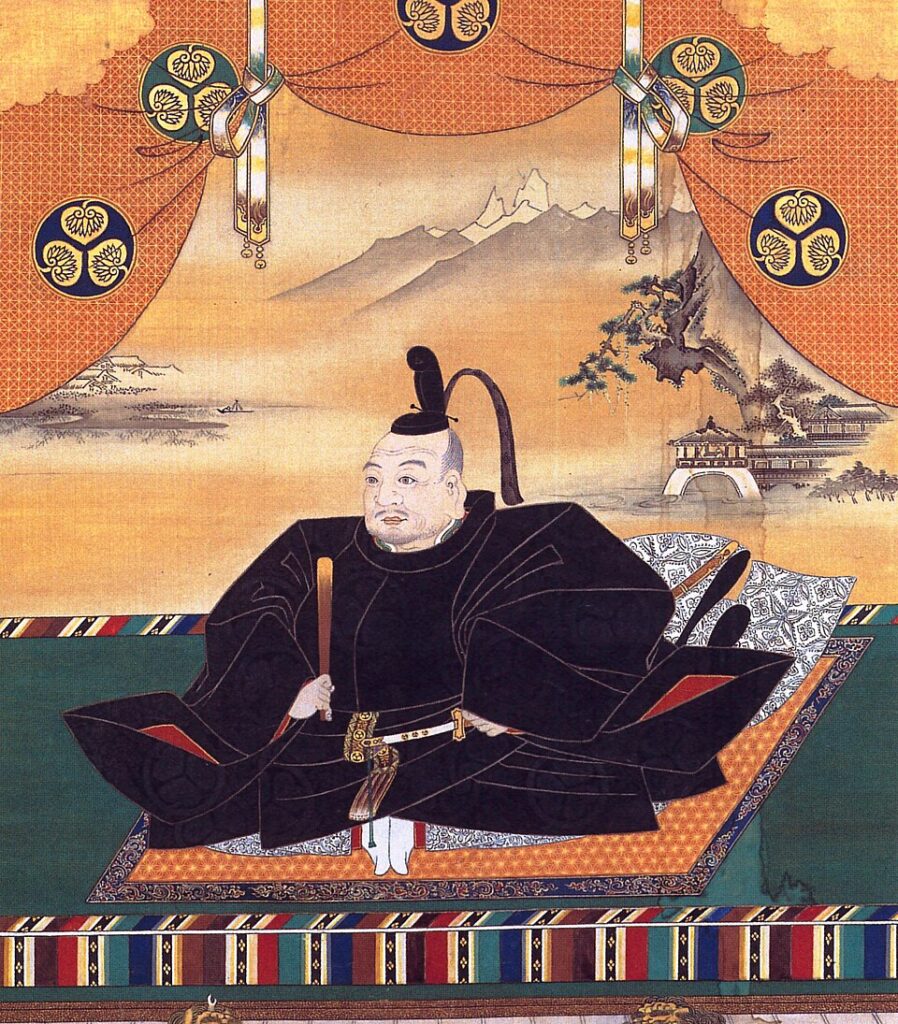
Tokugawa Ieyasu (1543–1616) chose patience. While Nobunaga and Hideyoshi united Japan with fire and sword, he remained their ally – loyal, calculating, waiting. When Hideyoshi died in 1598, Ieyasu was the most powerful daimyō in the land.
The Tokugawa Shogunate – 250 Years of Peace (1603–1868)
Sekigahara and the Founding
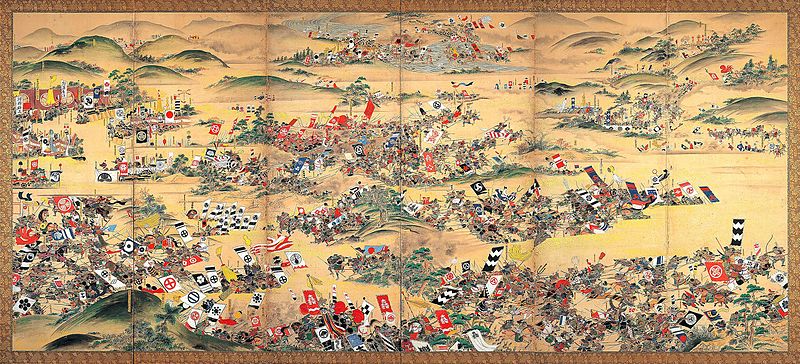
The Battle of Sekigahara (1600) decided Japan’s future. It was less a tactical masterpiece than a political triumph. Ieyasu won not through troop movements, but through the pre-arranged betrayal of Kobayakawa Hideaki, who changed sides with 15,000 men and fell on his former allies from behind. The war was over in hours.
In 1603 the emperor appointed Ieyasu shogun. It was the beginning of the longest period of peace in Japan’s history – more than 250 years without major war.
The Bakuhan System
The Tokugawa shogunate perfected the art of control. John Whitney Hall defines the system as “federal absolutism”: the bakufu in Edo controlled foreign policy, currency and ideology, while the roughly 260 daimyō retained extensive autonomy in their domains (han) – taxes, justice, local administration.
The most ingenious instrument of control was sankin-kōtai – “alternate attendance”. Every daimyō had to spend alternate years in Edo and in his domain. His family remained permanently in the capital – de facto as hostages. The journeys swallowed enormous sums. The daimyō impoverished themselves on the roads to Edo, while their warriors became courtiers. Harold Bolitho emphasises that the system was not only repressive: “Sankin-kōtai served cultural exchange, not just suppression.” The roads to Edo became arteries of cultural exchange.
Sakoku – Selective Isolation
The Tokugawa shoguns did not seal Japan off hermetically from the world – they controlled access. The sakoku policy (literally “closed country”), introduced gradually from the 1630s onwards, banished the Portuguese and Spanish, but retained four carefully controlled points of contact: Nagasaki for the Dutch and Chinese, Tsushima for Korea, Satsuma for the Ryūkyū Kingdom and Matsumae for trade with the Ainu in the north.
The Persecution of Christians and the Shimabara Rebellion
The sakoku policy also had a religious dimension. The Christian mission, which since the arrival of the Jesuit Francis Xavier in 1549 had at times won over 300,000 converts, was perceived as a threat to the social order. The bakufu banned Christianity and persecuted believers with increasing severity. The Shimabara Rebellion (1637–38), in which Christian peasants and masterless samurai held a fortress on the Shimabara peninsula, ended in a massacre of an estimated 37,000 people. In the eyes of the bakufu, the rebellion confirmed the danger of foreign religion and accelerated the final closure of the ports to Iberian ships.
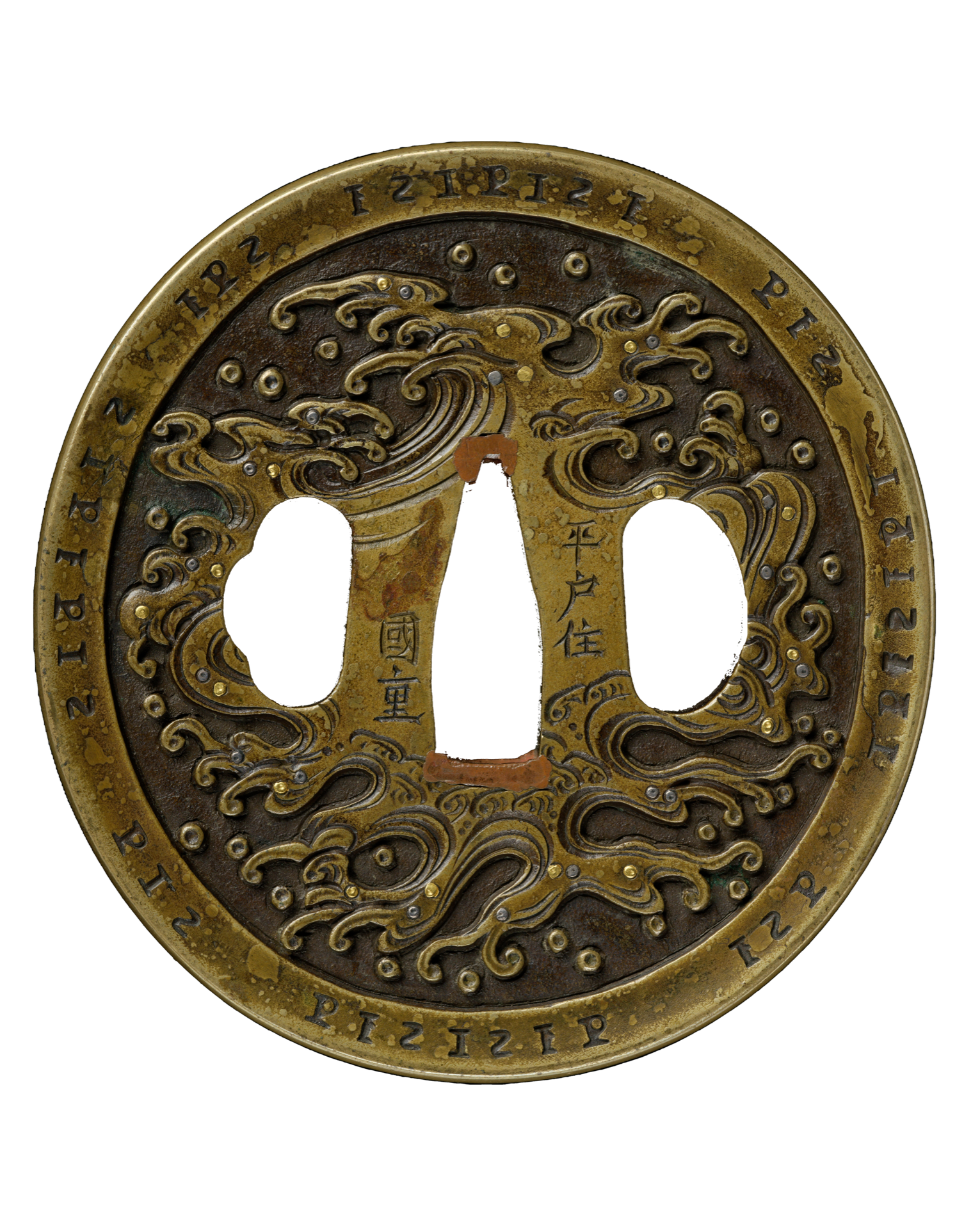
Samurai Without War
The long peace confronted the samurai with an existential problem. Eiko Ikegami describes the “Tokugawa paradox”: “The Tokugawa state was built upon the collective victory of the samurai class, yet its survival depended on suppressing the very violence that had brought it to power”. Men whose fathers had still died on battlefields now managed rice stores and copied documents. The sword, once a tool of survival, became a status symbol.
Real cultural power shifted. The Genroku era (1688–1704) brought an explosion of bourgeois art: kabuki theatre, ukiyo-e woodblock prints, the novels of Ihara Saikaku, the dramas of Chikamatsu Monzaemon. The chōnin – merchants and artisans – now set the tone. Many samurai fell into debt to the very merchants they officially despised. The story of the 47 rōnin (1703), in which masterless samurai avenge their murdered lord and die for it, became the symbol of this tension between old warrior honour and the new bureaucratic order.
The Tokugawa system had ended war. But it had also robbed the warriors of their purpose.
The Shogun and the Emperor
The relationship between shogun and emperor was one of the strangest political arrangements in world history. For almost 700 years a military ruler governed Japan while the emperor remained on the throne – powerless, but inviolable.
Why did the shoguns not simply abolish the emperor?
The answer lies in the nature of Japanese legitimacy. The emperor (tennō) was not only a political ruler, but the religious head of Shintō – a direct descendant of the sun goddess Amaterasu. This line of descent, mythical or not, made him the only source of supreme authority. A shogun could rule, but only the emperor could legitimise.
Oleg Benesch points to an irony: “Loyalty to the emperor… was largely a modern invention.” The samurai of the Kamakura and Muromachi periods served their direct lords, not an abstract imperial institution. But they needed the emperor as a source of legitimacy. The certificate of appointment as shogun was worthless without the imperial seal.
Michele Marra analyses this dynamic as “verbal actualization” – the linguistic realisation of power. The shogun needed the emperor’s ritual words to present his rule as legitimate. It was a trade-off: the emperor conferred titles, the shogun guaranteed the security of the court.
The practical consequences were clear. At times the imperial court in Kyoto became so impoverished that funeral ceremonies had to be postponed for lack of money. The Ashikaga shoguns financed the court – and thereby controlled it completely. Yet none dared to depose the emperor.
The reason was strategic: whoever removed the emperor lost his own justification. Any ruler who reached for the throne would have made himself the enemy of all the others. The emperor was more useful as a symbolic figure than as a rival.
Mason and Caiger describe the emperor of the shogunal era as someone who “reigned but did not rule”. It was a formula that remained astonishingly stable. Even when the Ashikaga shoguns lost their power and Japan plunged into chaos, the emperor remained on his throne.
The End of the Shogunal Era
The Black Ships
On 8 July 1853, four American warships steamed into Edo Bay. Commodore Matthew Perry brought a letter from President Fillmore – and guns that made any resistance pointless. The “black ships” (kurofune) revealed the military weakness of the Tokugawa shogunate with brutal clarity.
Japan had shut itself off from the world for over two centuries. Now it faced a choice: opening up or annihilation. The bakufu chose to open up. The so-called “unequal treaties” with the Western powers followed – humiliating agreements that deprived Japan of tariff autonomy and jurisdiction over foreigners.
The result was a crisis of legitimacy. How could a shogunate that called itself “barbarian subduer” capitulate to barbarians? The years between 1853 and 1868 – the bakumatsu – became the death throes of a dying system. Bolitho diagnoses a systemic fatigue that began long before Perry: the rigid order of estates could no longer respond to economic dynamism.
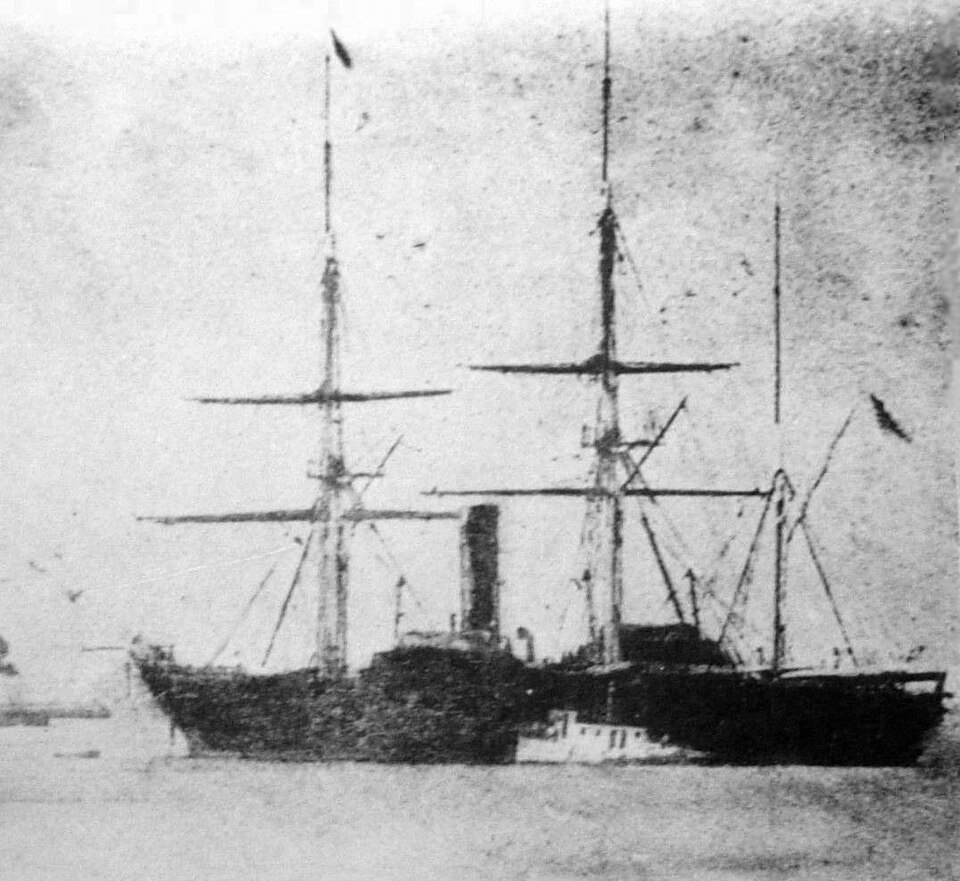
The Boshin War (1868–1869)
The Meiji Restoration was not a clean transition. In January 1868 the power struggle escalated into open civil war. The Battle of Toba-Fushimi south of Kyoto lasted only four days, but it decided the conflict in favour of the imperial troops from Satsuma and Chōshū. Tokugawa Yoshinobu fled to Edo.
The war dragged on for a year and a half. The siege of Aizu Castle in the autumn of 1868 became the symbol of the resistance of the Tokugawa loyalists. Only in June 1869, with the capture of the Goryōkaku fortress on Hokkaidō from the troops of Admiral Enomoto Takeaki, did the last armed resistance end.
One man stood between the fronts. Yamaoka Tesshū (1836–1888), sword master, Zen Buddhist and calligrapher, negotiated with Saigō Takamori in March 1868 the conditions for the peaceful handover of Edo – a city of over a million inhabitants. The surrender without bloodshed saved Edo from destruction.
The Meiji Restoration
The revolution came not from below, but from the margins. Young samurai from the south-western provinces of Satsuma and Chōshū – areas that had been in opposition to the Tokugawa since Sekigahara – forged an unusual alliance. Their battle cry: sonnō jōi – “Revere the emperor, expel the barbarians.”
The irony was twofold. First, these samurai did not really want to expel the barbarians – they wanted to learn from them in order to modernise Japan. Second, they used the emperor, whom the shoguns had marginalised for centuries, as the symbol of their revolution.
In 1867 the last shogun, Tokugawa Yoshinobu, formally returned his power to the emperor. In 1868 the victors proclaimed the “restoration” of imperial power. The fifteen-year-old Emperor Mutsuhito ascended the throne as Meiji – “enlightened rule”.
Beasley describes the revolution as an “aristocratic revolution”: an upheaval from above, led by samurai who, as their first official act, abolished their own class. The shogunate was history. But its legacy shaped Japan for ever.
The Legacy of the Shoguns
The shoguns are history. But their shadows reach into the present.
In popular culture, the term “shogun” experienced a renaissance. James Clavell’s novel Shōgun (1975) made millions of Western readers familiar with feudal Japan – albeit through a romanticised lens. The 2024 adaptation reached a global audience and sparked new interest in the era.
In his epilogue, Oleg Benesch analyses the transformation of the image of the samurai in the modern era. The salaryman culture of Japan’s economic miracle deliberately drew on warrior rhetoric: loyalty to the company, readiness for sacrifice to the point of self-abandonment, the boss as a modern daimyō. Benesch calls this the “corporate warrior” – a figure whose ideological roots lay not in the historical shogunate, but in its reinvention.
For the supposedly “old” values were often modern constructions. Bushidō, which today is regarded as an ancient code of honour, was largely formulated in the Meiji period – when Japan needed a national identity that could compete with Western concepts. The shoguns themselves would hardly have known the term.
What remains is a complex legacy. The shoguns created a system that shaped Japan for over seven centuries: the tension between symbolic and real power, the art of indirect control, the ability to absorb foreign influences without giving up one’s own identity.
Frequently Asked Questions about the Shogun
1. What is the difference between the shogun and the emperor?
The emperor (tennō) was the religious head of Japan and the formal source of all legitimacy. The shogun was the supreme military commander and de facto ruler. The emperor “reigned but did not rule” – a system that lasted for almost 700 years.
2. How many shoguns were there in Japan?
Japan had about 50 shoguns in total in three dynasties: the Minamoto/Kamakura shoguns (1185–1333), the Ashikaga shoguns (1336–1573) and the Tokugawa shoguns (1603–1868). With 15 shoguns, the Tokugawa line was the longest and most stable.
3. Why did the shogunate end in 1868?
The arrival of the Western powers from 1853 onwards revealed the military weakness of the Tokugawa shogunate. Reform forces from the provinces of Satsuma and Chōshū used the emperor as a symbol to overthrow the bakufu and modernise Japan on the Western model.
4. Are there still descendants of the shoguns today?
Yes. The Tokugawa family still exists. The current head of the family is Tokugawa Tsunenari (b. 1940), a direct descendant of Tokugawa Ieyasu. The family cultivates its historical heritage, but has no political function.
5. What does “bakufu” mean?
Bakufu (幕府, literally “tent government”) denotes the shogun’s military government. The term comes from Chinese military practice, in which commanders directed operations from a headquarters tent. In a figurative sense, bakufu means the entire administrative structure under the shogun.
6. What was the sakoku policy?
The sakoku policy (“closed country”) was the isolation of Japan under the Tokugawa shōguns from the 1630s until 1853. Japan was not, however, completely sealed off: controlled external contacts existed via Nagasaki (Dutch, Chinese), Tsushima (Korea), Satsuma (Ryūkyū) and Matsumae (Ainu).
7. How did one become shogun?
The title was formally conferred by the emperor, but in practice it was hereditary within the ruling dynasty. The prerequisite was (claimed) descent from the Minamoto clan – which is why Toyotomi Hideyoshi, despite his power, could never become shogun. The Tokugawa constructed a genealogical link to the Minamoto so as to be able to claim the title.
Visit the Samurai Museum Berlin
Experience the history of the shōguns at first hand in our permanent exhibition: star helmets from the Kamakura period, Sengoku battle armour, the Tokugawa sashimono and the unique nanban-dō object of the Bakumatsu era. Open daily from 10 a.m. to 7 p.m., Auguststraße 68, Berlin-Mitte.
Related Articles
- Samurai: History, Culture and Legacy
- Tokugawa Ieyasu: Japan’s Last Unifier
- Sengoku Jidai: The Age of Warring States
Bibliography
- Benesch, Oleg: Inventing the Way of the Samurai. Oxford University Press, 2014.
- Conlan, Thomas: State of War: The Violent Order of Fourteenth-Century Japan. University of Michigan, 2003.
- Friday, Karl: Samurai, Warfare and the State in Early Medieval Japan. Routledge, 2004.
- Hall, John Whitney (ed.): The Cambridge History of Japan, Vol. 4: Early Modern Japan. Cambridge University Press, 1991.
- Ikegami, Eiko: The Taming of the Samurai: Honorific Individualism and the Making of Modern Japan. Harvard University Press, 1995.
- Ishii, Susumu: “The Decline of the Kamakura Bakufu.” In: Yamamura (ed.), Cambridge History of Japan, Vol. 3, 1990.
- Jansen, Marius B. (ed.): The Cambridge History of Japan, Vol. 5: The Nineteenth Century. Cambridge University Press, 1989.
- Marra, Michele: Representations of Power. University of Hawai’i Press, 1993.
- Mason, R.H.P. & Caiger, J.G.: A History of Japan. Tuttle Publishing, 1997.
- Mass, Jeffrey P.: “The Kamakura Bakufu.” In: Yamamura (ed.), Cambridge History of Japan, Vol. 3, 1990.
- Oyler, Elizabeth: Swords, Oaths, and Prophetic Visions. University of Hawai’i Press, 2006.
- Sansom, George: A History of Japan to 1334. Stanford University Press, 1958.
- Turnbull, Stephen: The Samurai: A Military History. Routledge, 1996.
- Varley, Paul: Warriors of Japan as Portrayed in the War Tales. University of Hawai’i Press, 1994.
- Yamamura, Kozo (ed.): The Cambridge History of Japan, Vol. 3: Medieval Japan. Cambridge University Press, 1990.
- Samurai Museum Berlin – exhibition catalogue and display case documentation, 2025.
© Samurai Museum Berlin – All rights reserved
You might also like
Bushidō: The Code of Honour
Bushidō – the samurai code of honor. Nitobe's 7 virtues, historical reality, Hagakure, modern adaptations. Facts instead of myths, with…
Read the article
Tea Ceremony: Why Sen no Rikyū Convinced the Samurai to Drink Tea
In April 1591, Sen no Rikyū, Japan’s most important tea master and personal tea adviser to the most powerful man…
Read the article
Seppuku: The Ritual Suicide of the Samurai
Seppuku – history, ritual and meaning of the stomach-cutting. From battle tactic to Edo ceremony: what really drove the samurai…
Read the article